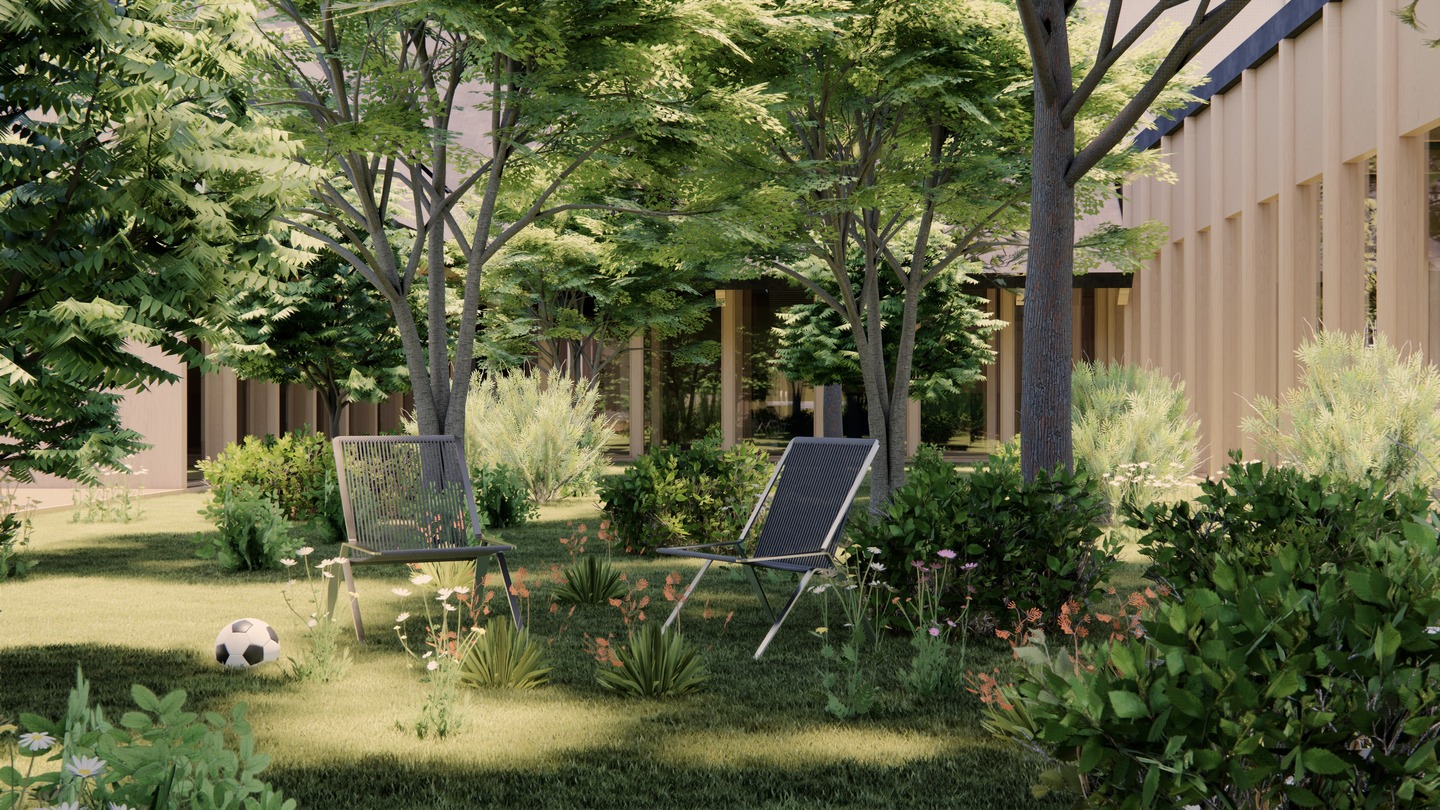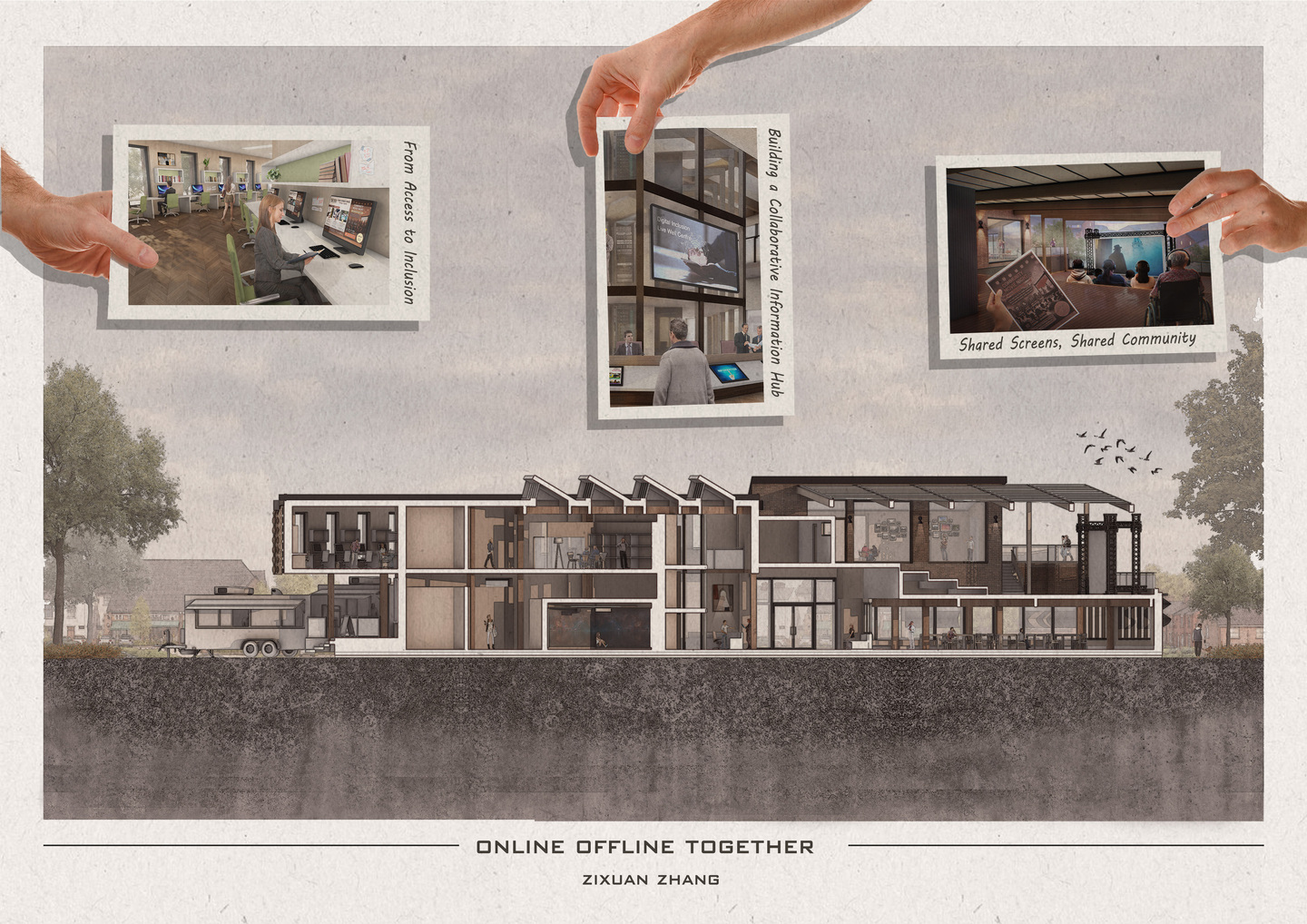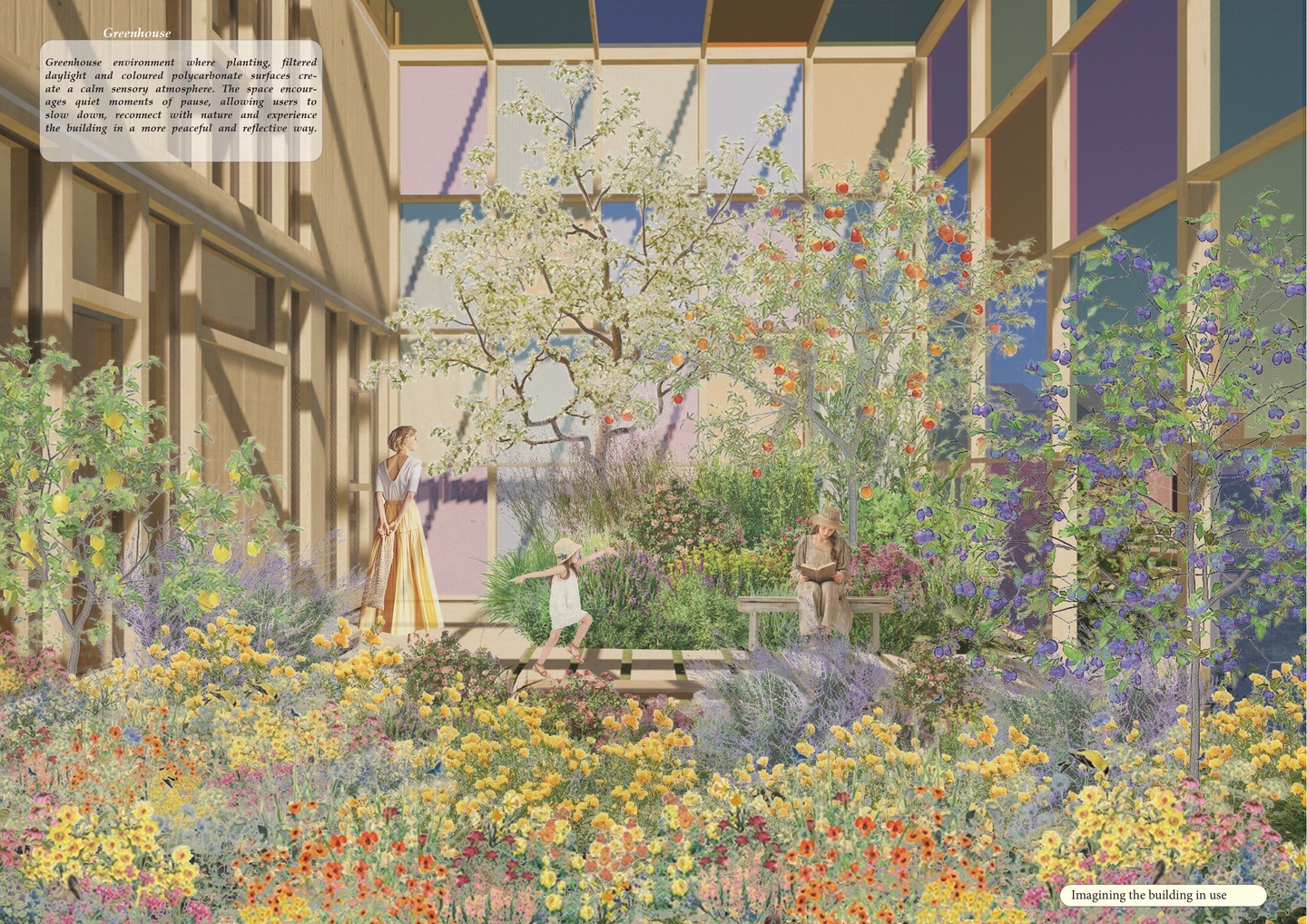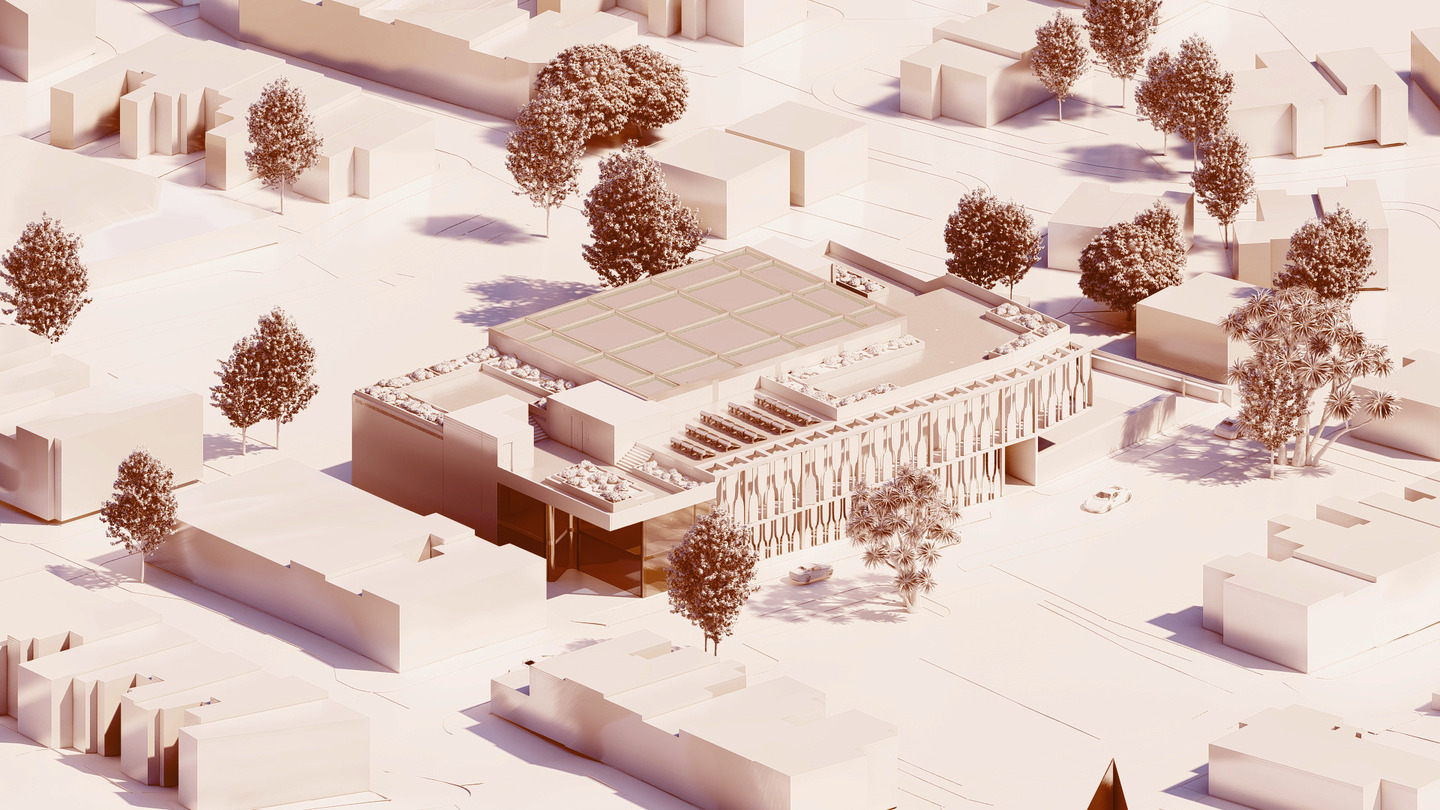


&rchitecture explores how architecture can respond to inequality, climate emergency, and changing social needs by starting with difference. We ask what happens when architecture begins with different ambitions, is made through different methods, and works with different people.
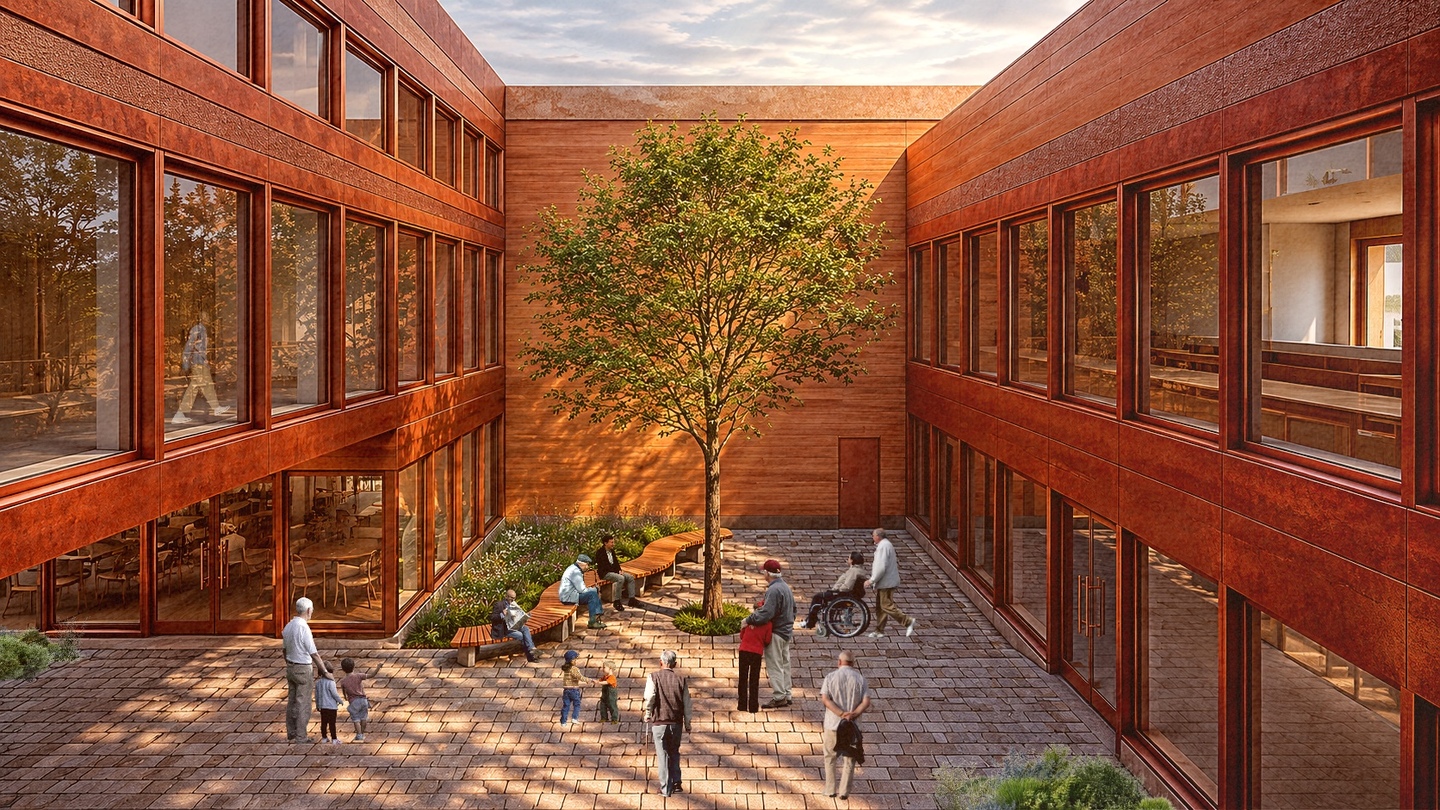
Working in Moston, North Manchester, students engaged with neighbourhoods experiencing significant disparities in healthy life expectancy. Projects were developed in relation to the Greater Manchester Live Well agenda, exploring how architecture can support place-based health, care, and community infrastructure.
The work is structured through five Creative Practices: cultures, users, places, programmes, and resources. Together, these frame architecture as an ethical, social, and environmental act — one that prioritises inclusion, collective space, and equitable access to wellbeing.
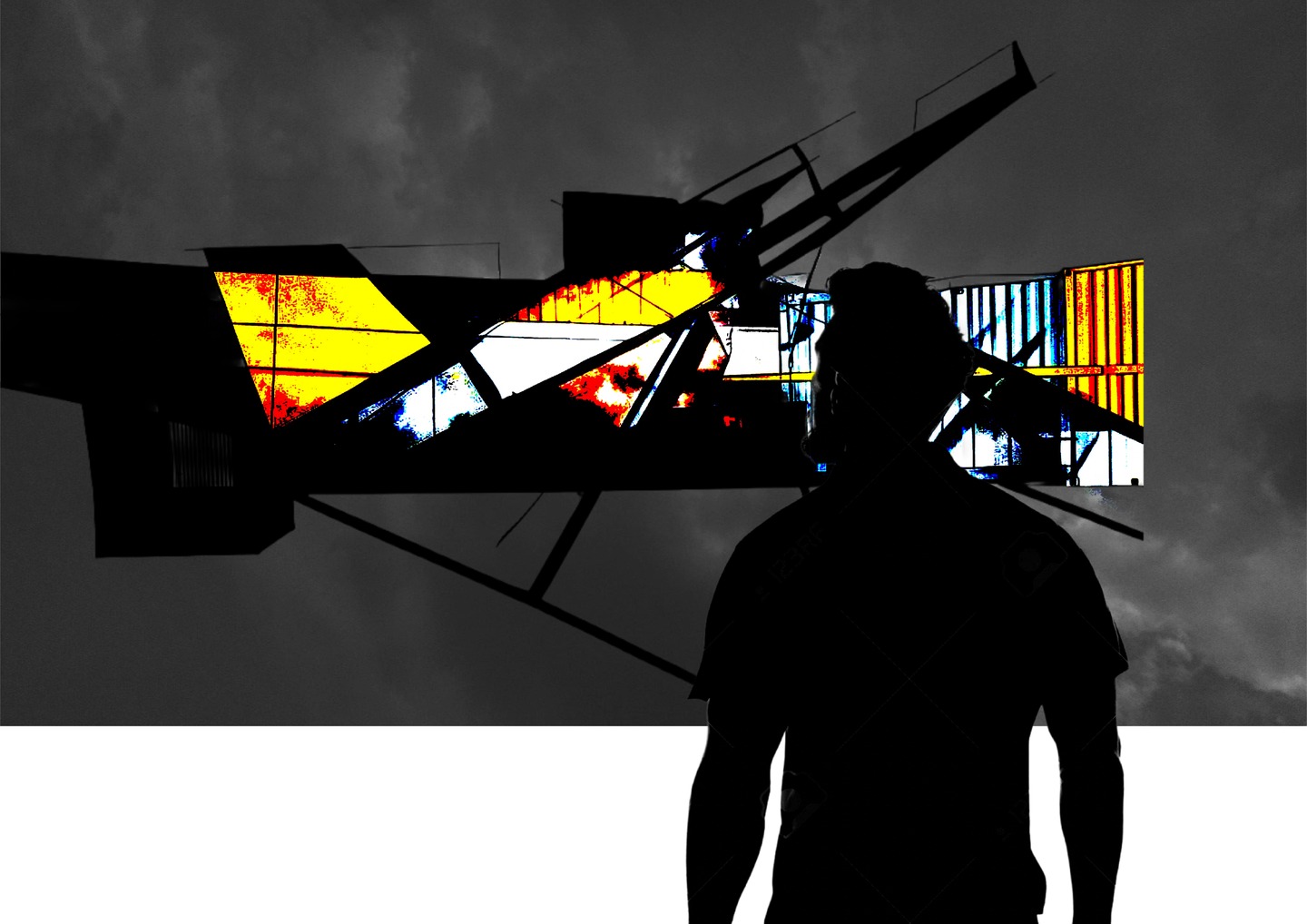
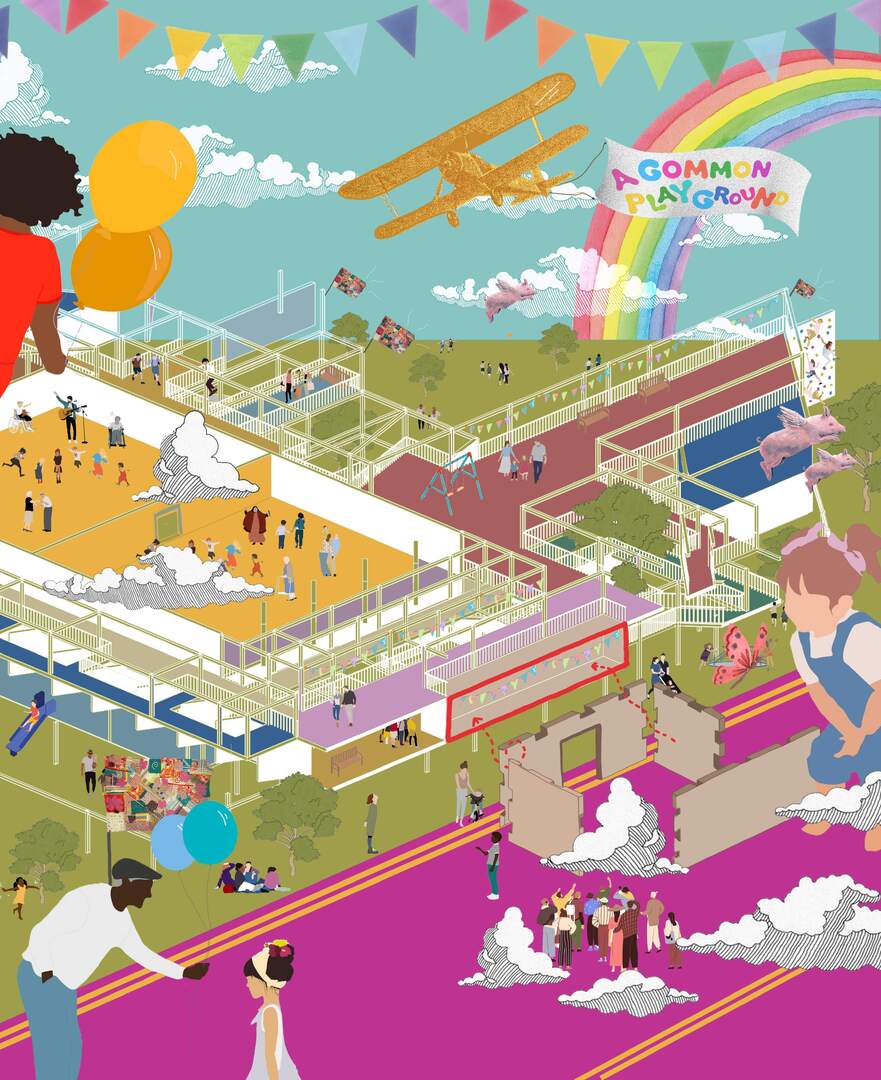
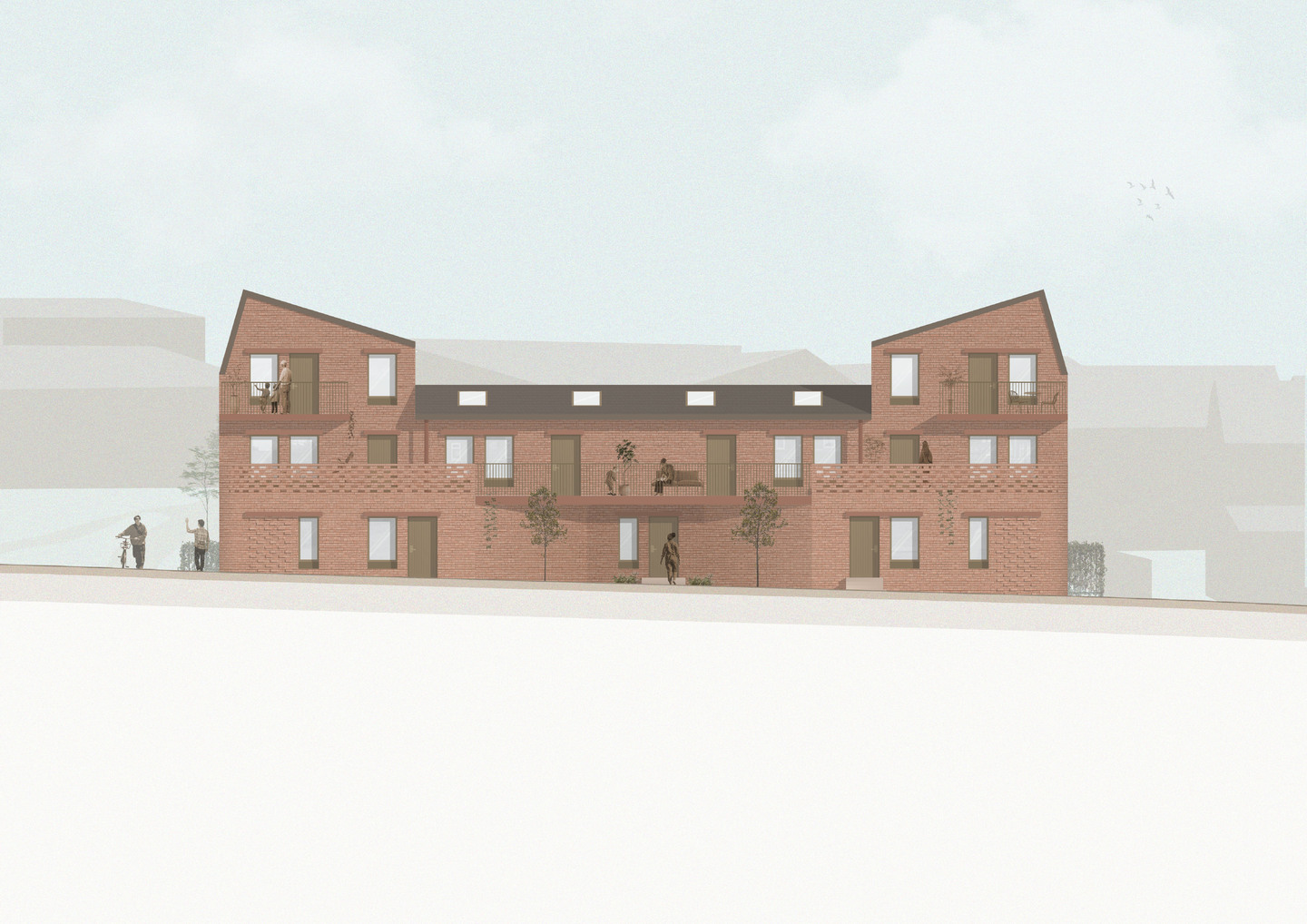
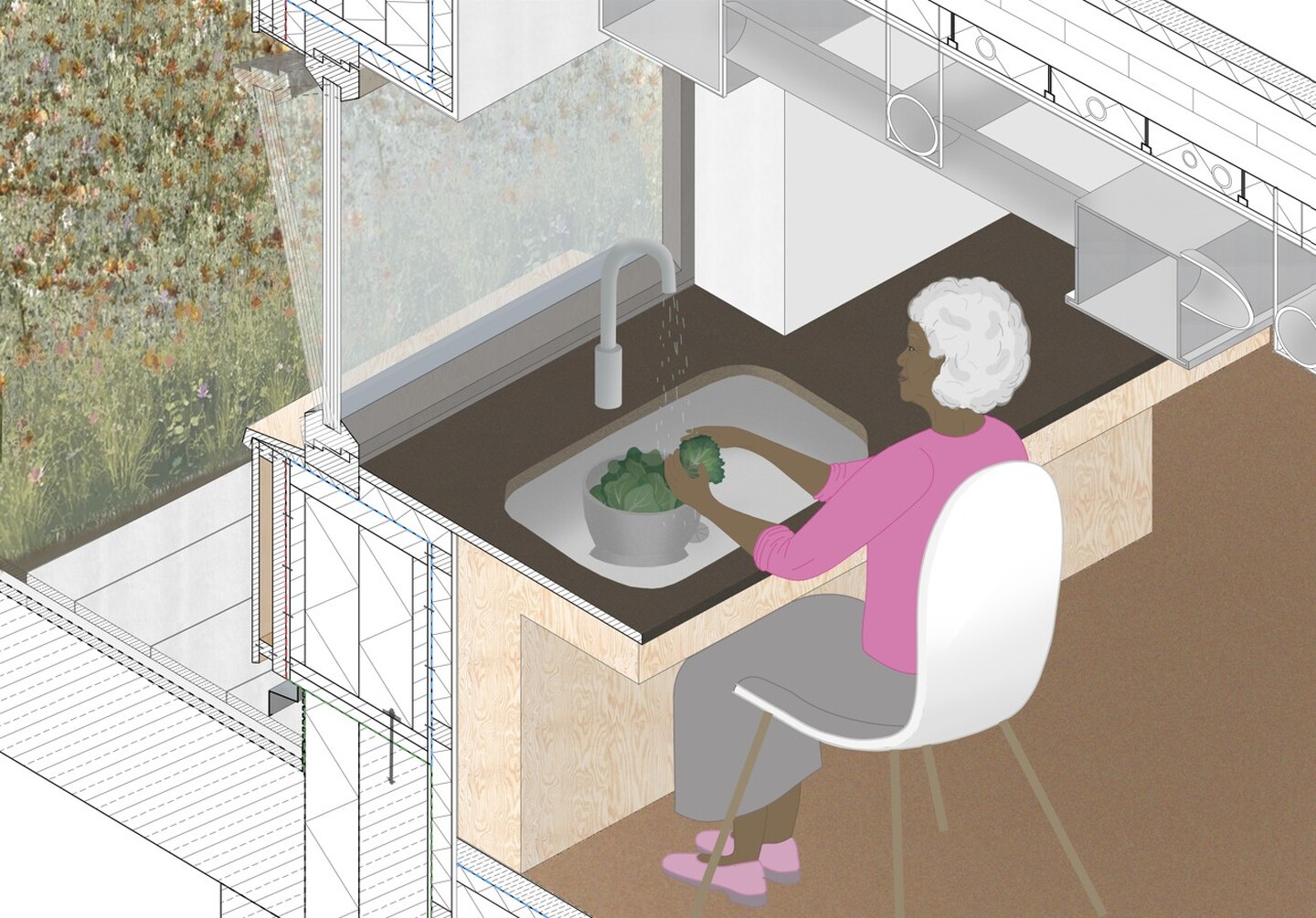
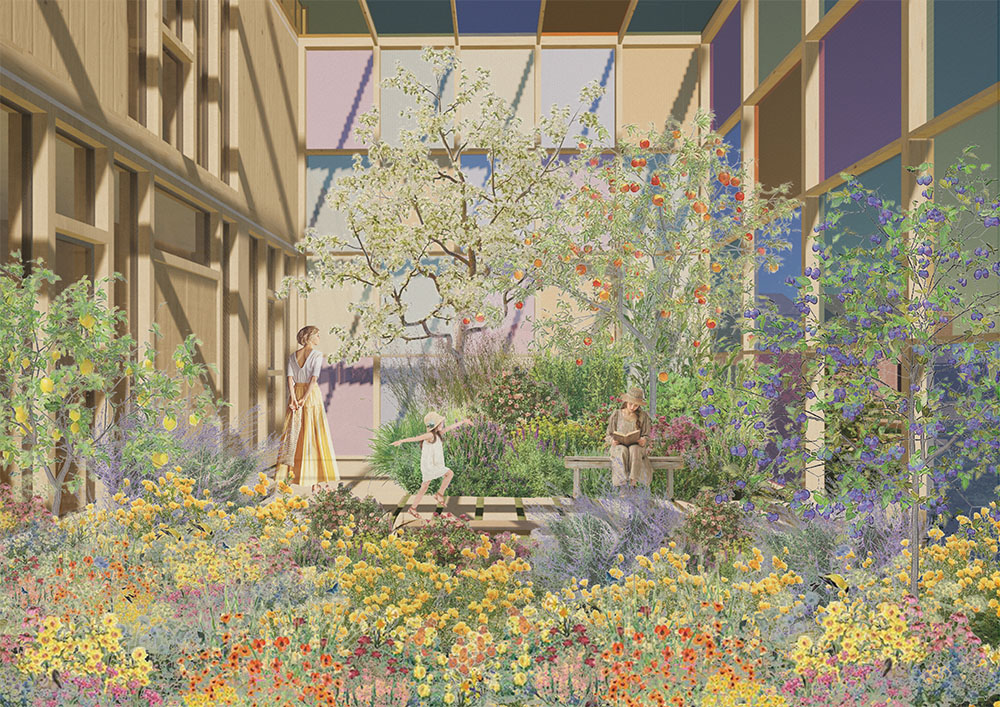
Students employ a diverse range of creative methods to test and evolve their ideas, moving between drawing, modelling, film, collage, narrative, and spatial montage. These approaches are used not only to represent proposals, but to generate design thinking — enabling students to question assumptions, engage different users, and imagine alternative futures.
&rchitecture positions architecture not as a fixed object, but as a relational practice, shaped by care, collaboration, and the realities of contemporary urban life.