

The Truth Commission
Oldham has worn many faces: home to generations of hard-working miners, a town with a vibrant theatre culture, and, most notably, the global epicentre of the cotton mill industry. The textile boom ushered in a period of mechanical and engineering innovation that firmly placed Oldham on the world stage. This industrial legacy has left the town as a microcosm of stories, lived experiences, and collective memory. Yet much of this heritage is overshadowed by the widespread deprivation across the borough, with up to 64% of children in Oldham living in poverty (according to figures published by the DWP).
My father was born in 1950s Oldham to coalminer and millworker parents. His experience of growing up amid socio-economic precarity, combined with my interest in the role of polyvocalism in architecture, became the driving force behind this design research.
This thesis draws parallels between the failing social infrastructure and physical disintegration of Oldham in order to better understand the widespread poverty experienced by many. Through an exploration of the intersections between the personal and the political, and the past and the present, this project asks:
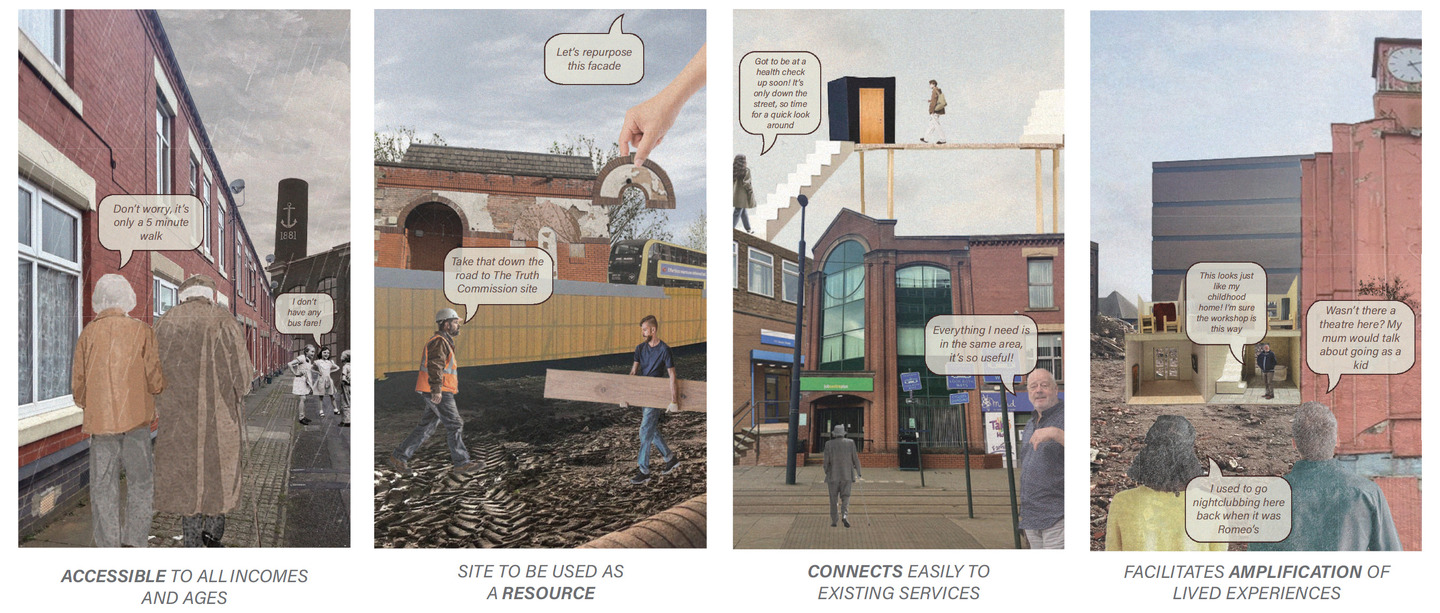
How can architecture contribute to the destigmatisation of poverty and amplify lived experiences in support of social wellbeing?
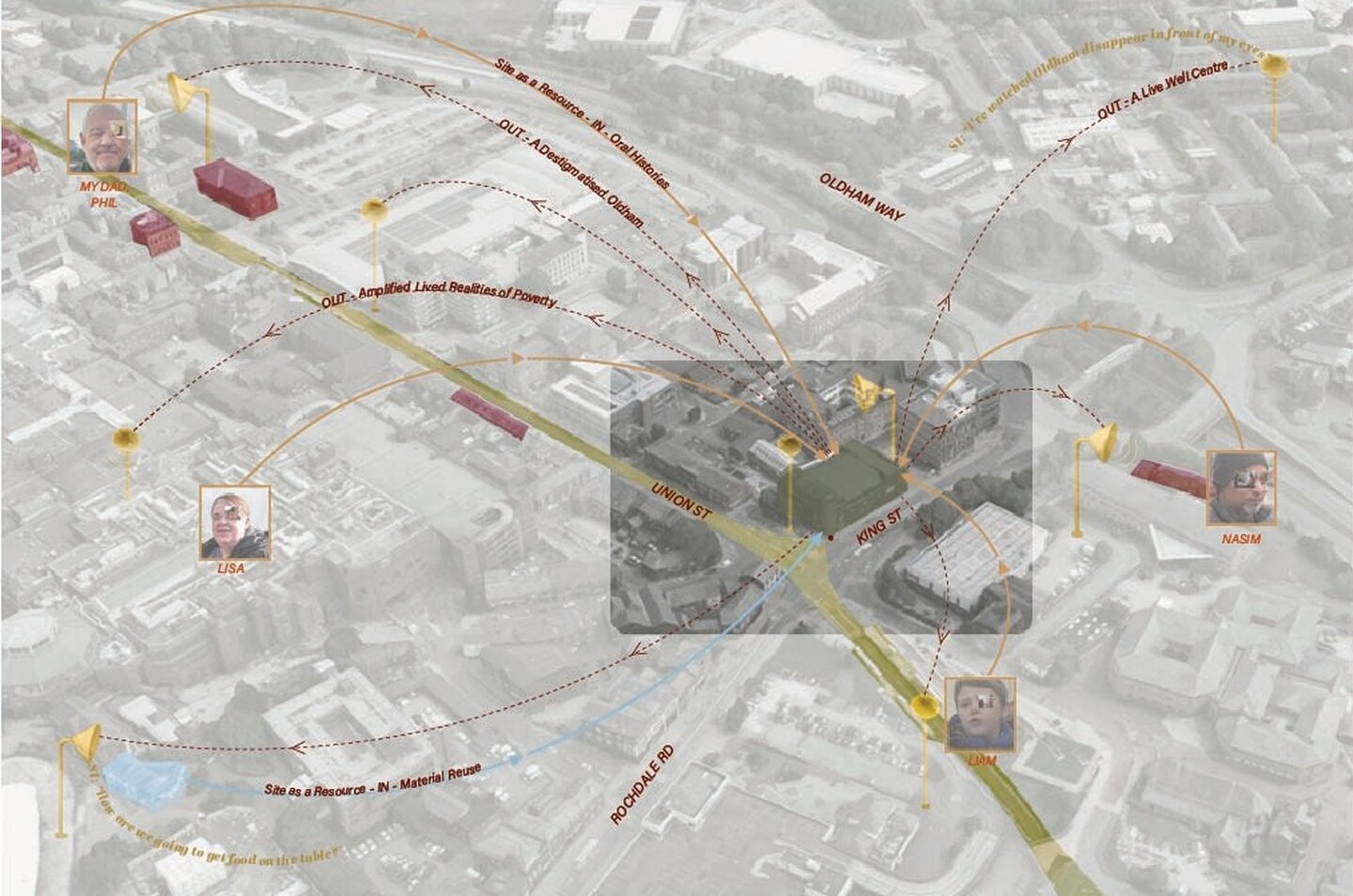
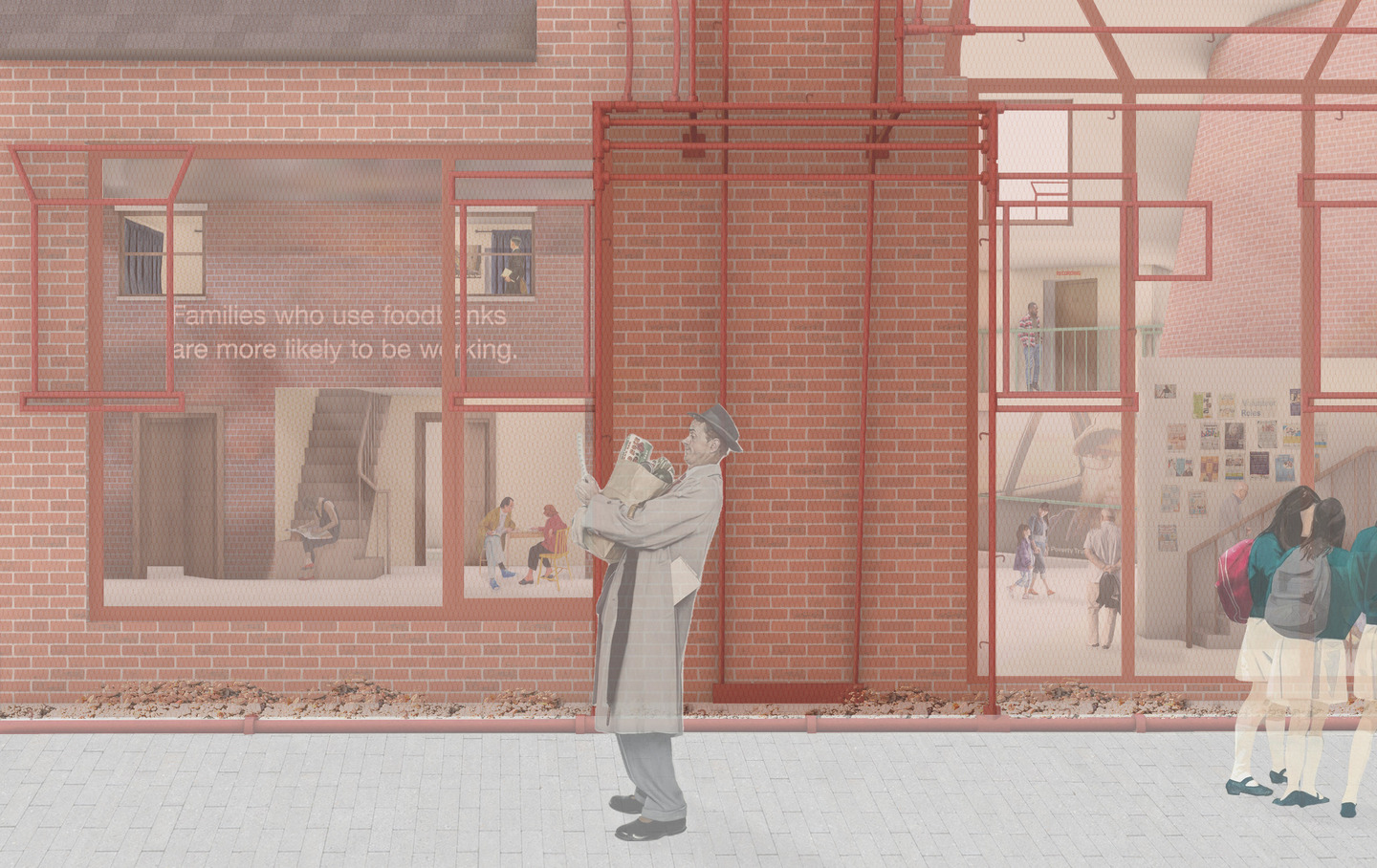
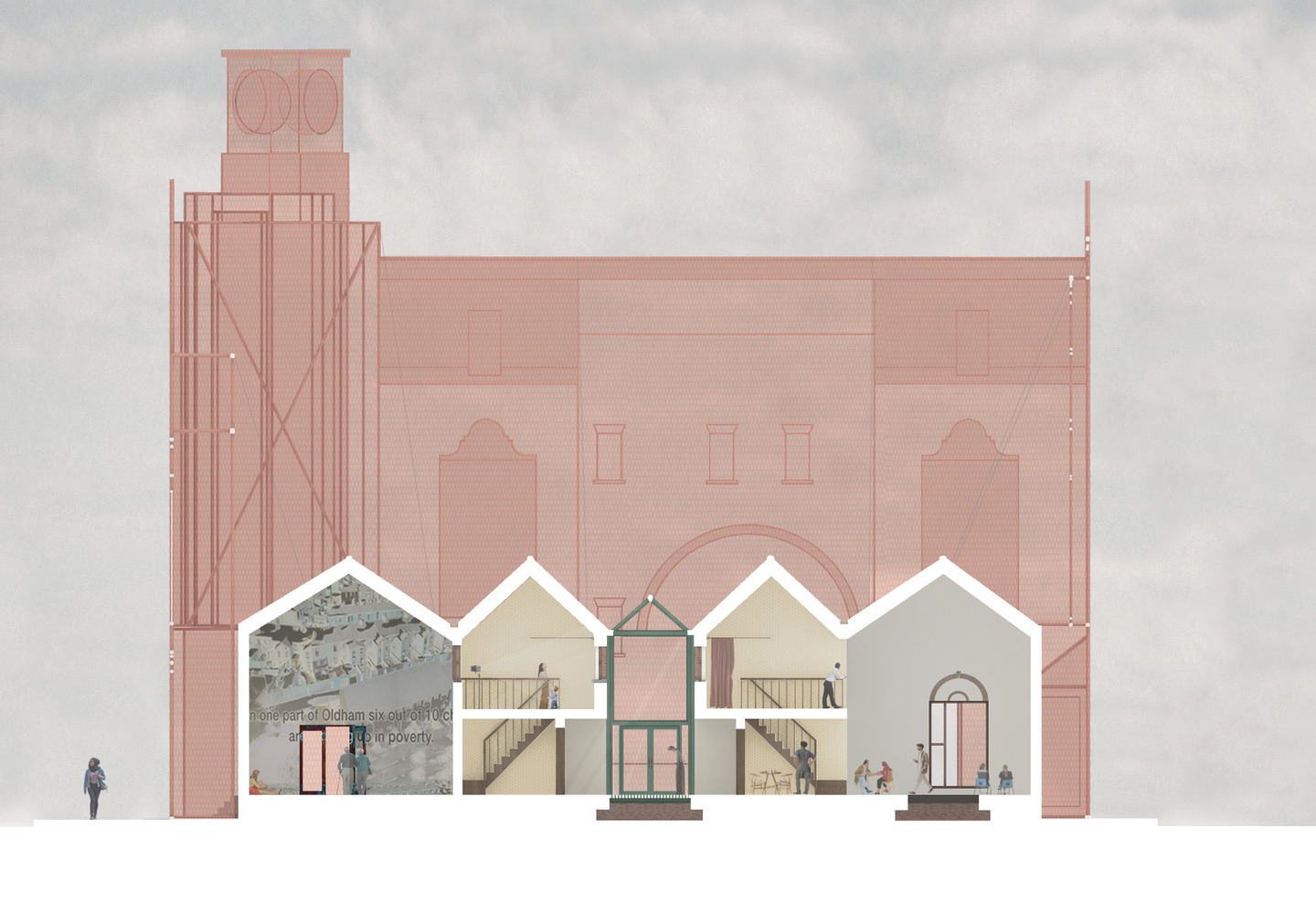
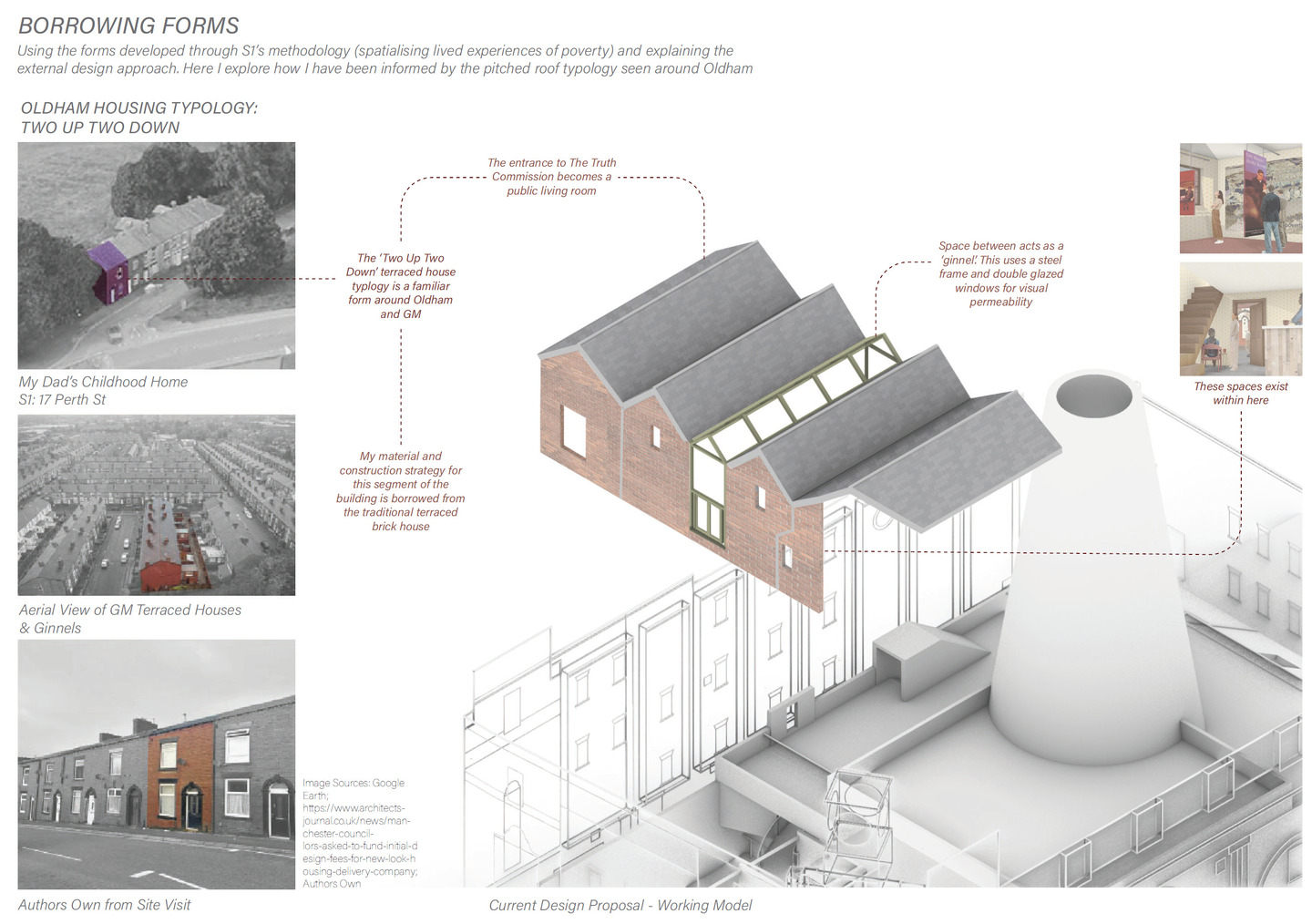
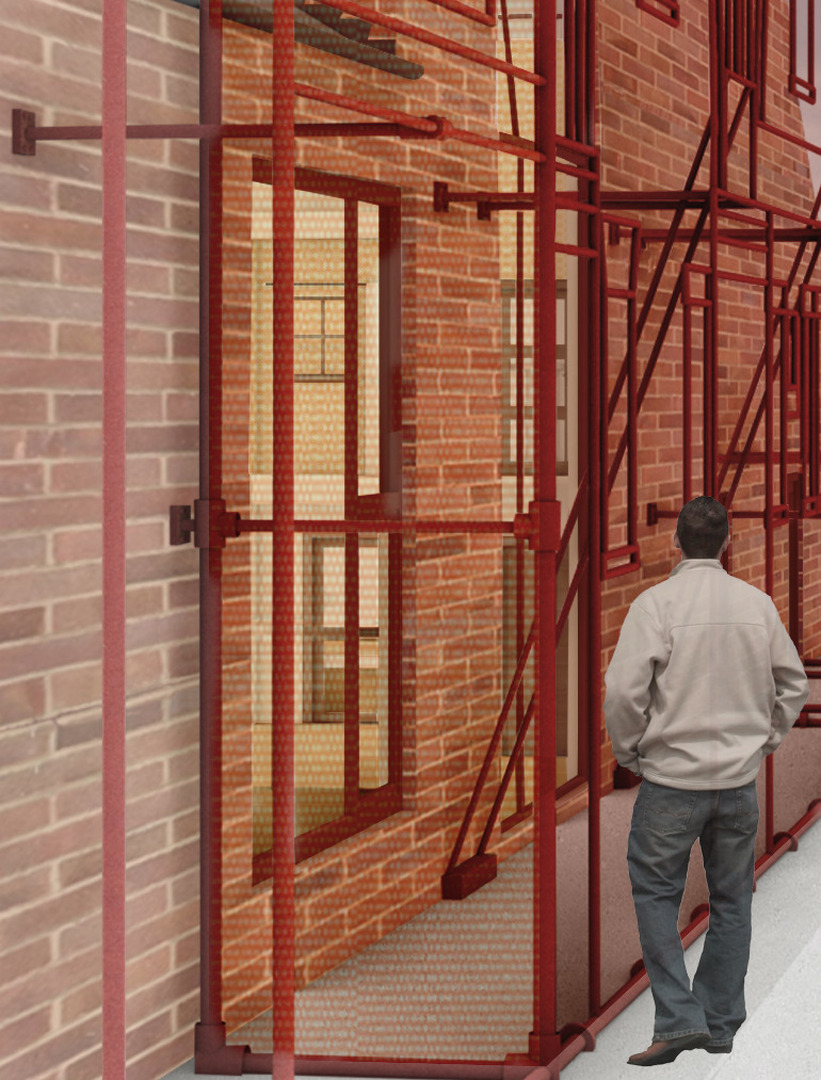
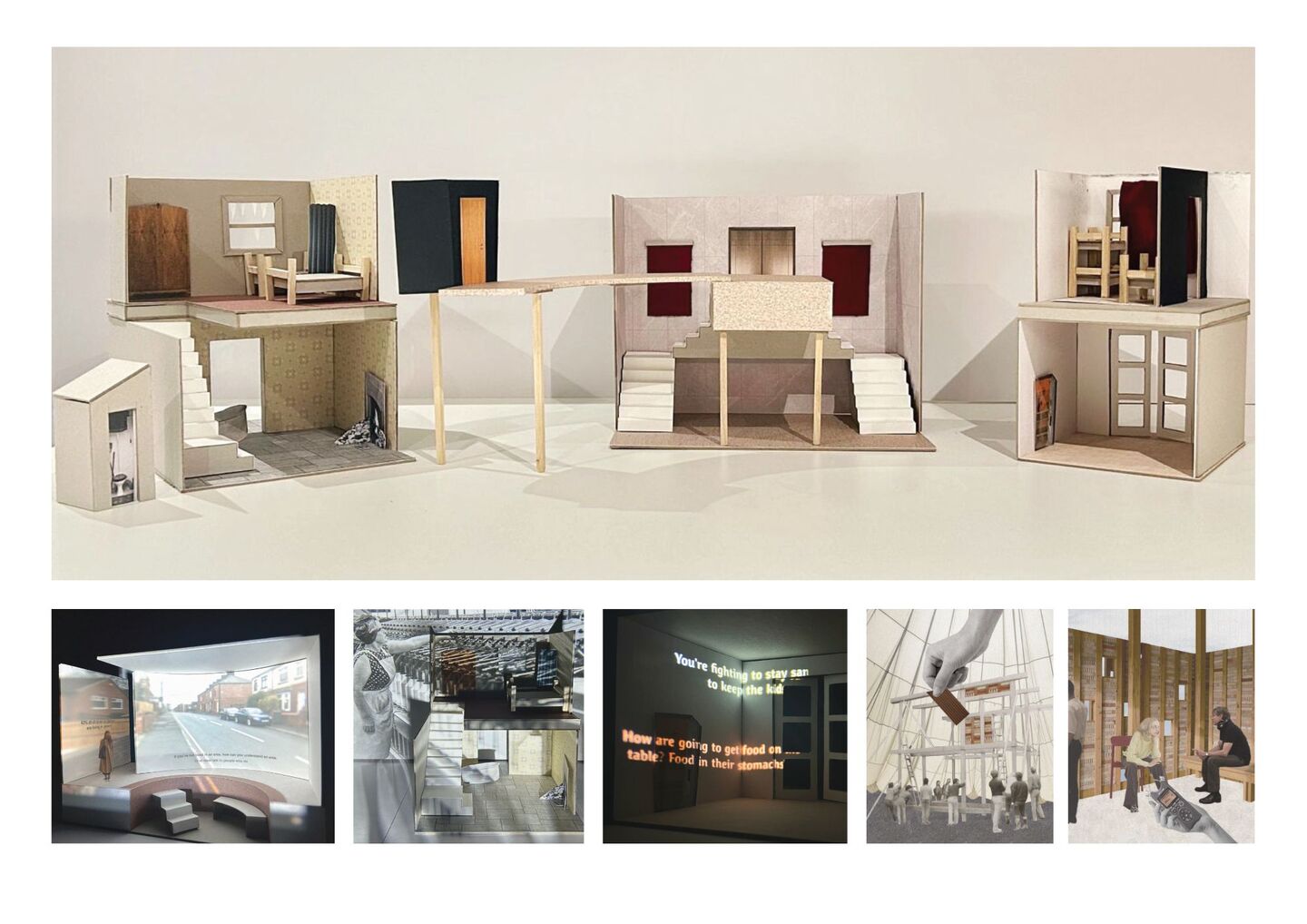
The principal design methodology for the project is the spatialisation of lived experience. Drawing upon primary oral histories and secondary research, memories of poverty were modelled and translated into an architectural proposal through amalgamating borrowed forms.
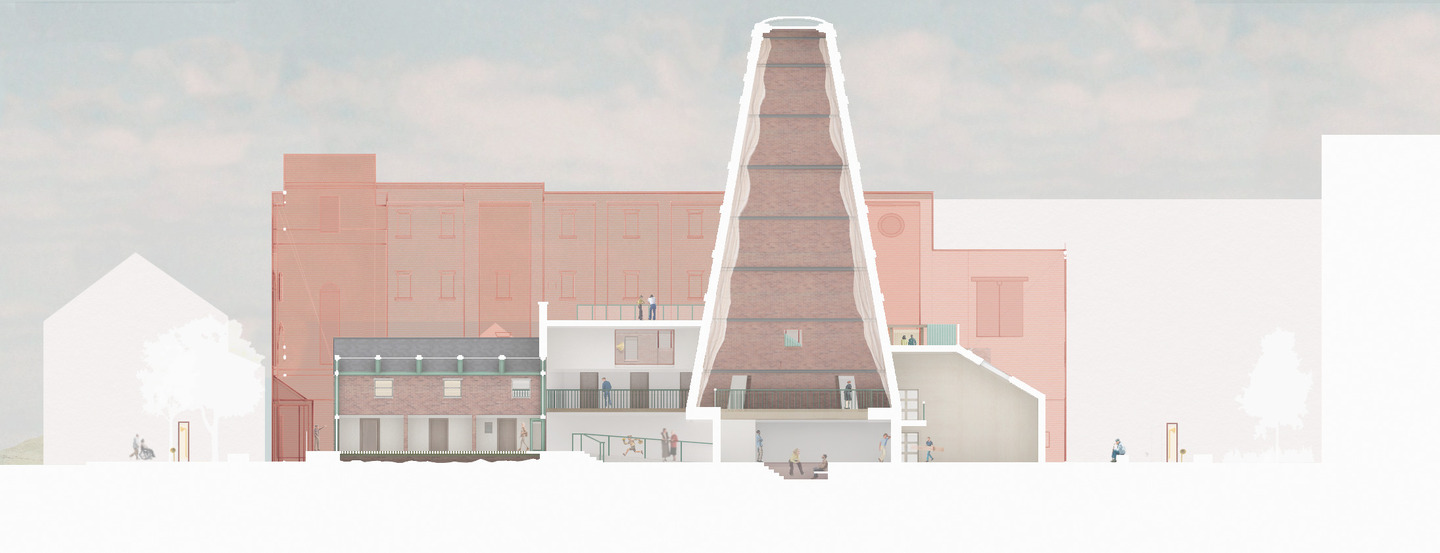
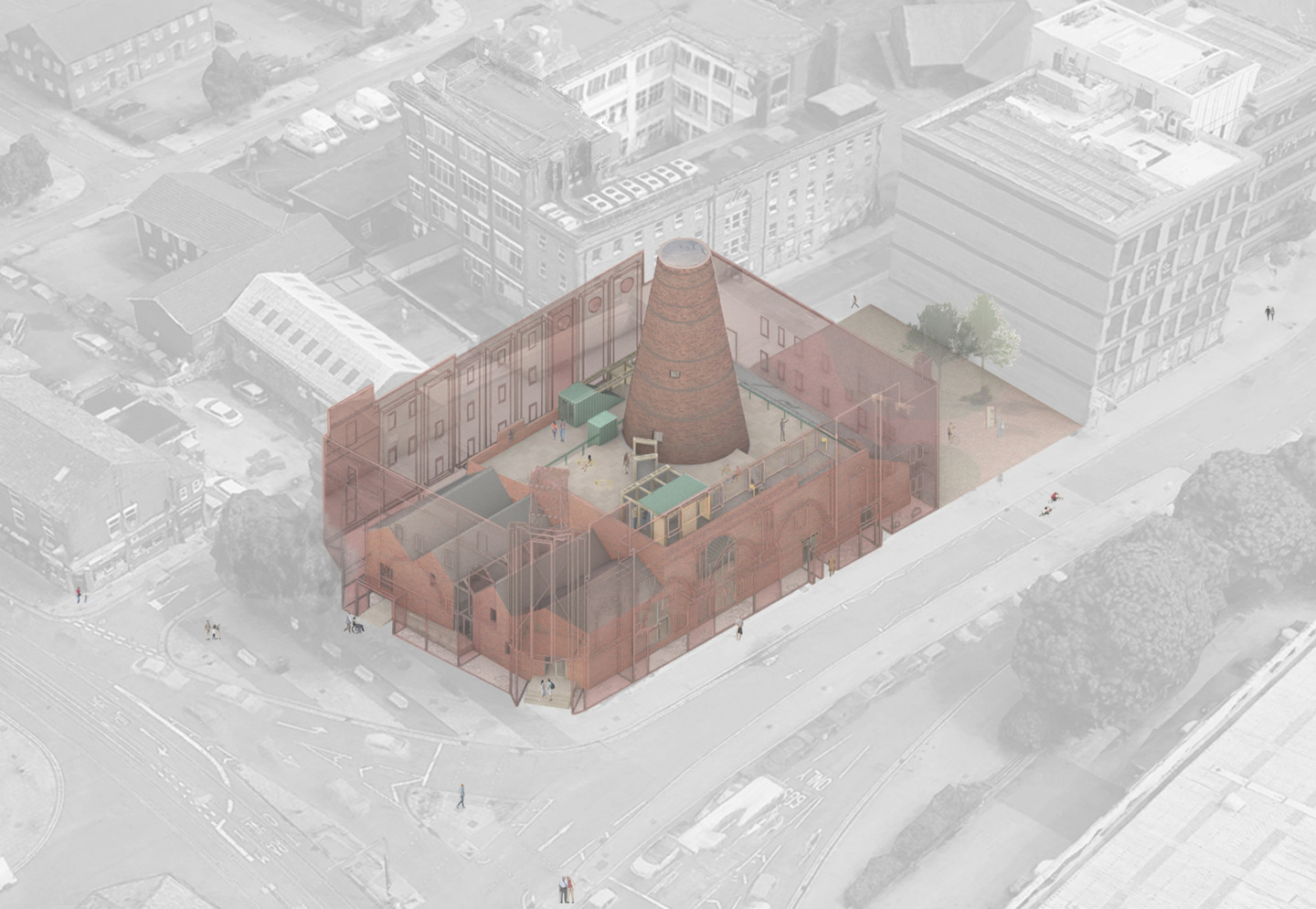
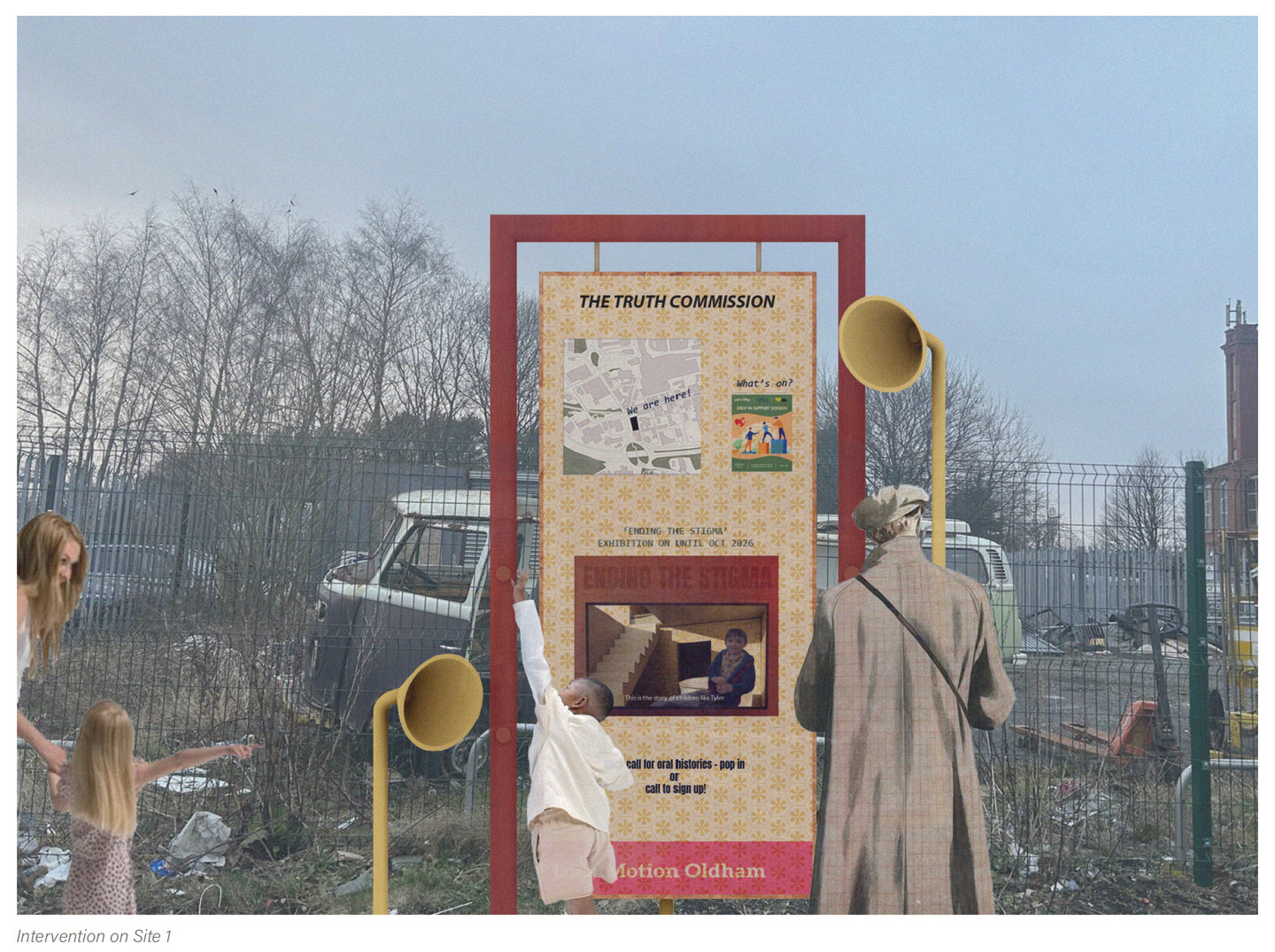
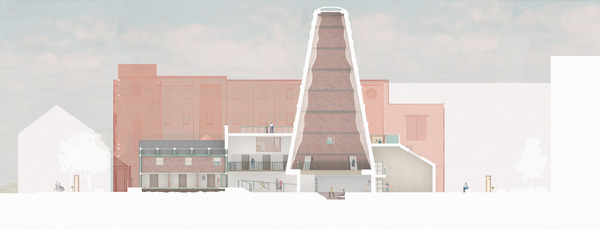
The programme includes exhibition spaces, conversation forums, oral history recording rooms, and skills workshops. Through these spaces and activities, knowledge, skills, and experiences can be exchanged, fostering agency and supporting individual and collective wellbeing. The Truth Commission therefore becomes a space that amplifies, preserves, and destigmatises lived experiences of poverty, providing a cathartic and democratic centre for dialogue, engagement, and community empowerment.