

Lifting Community While The Water Rises
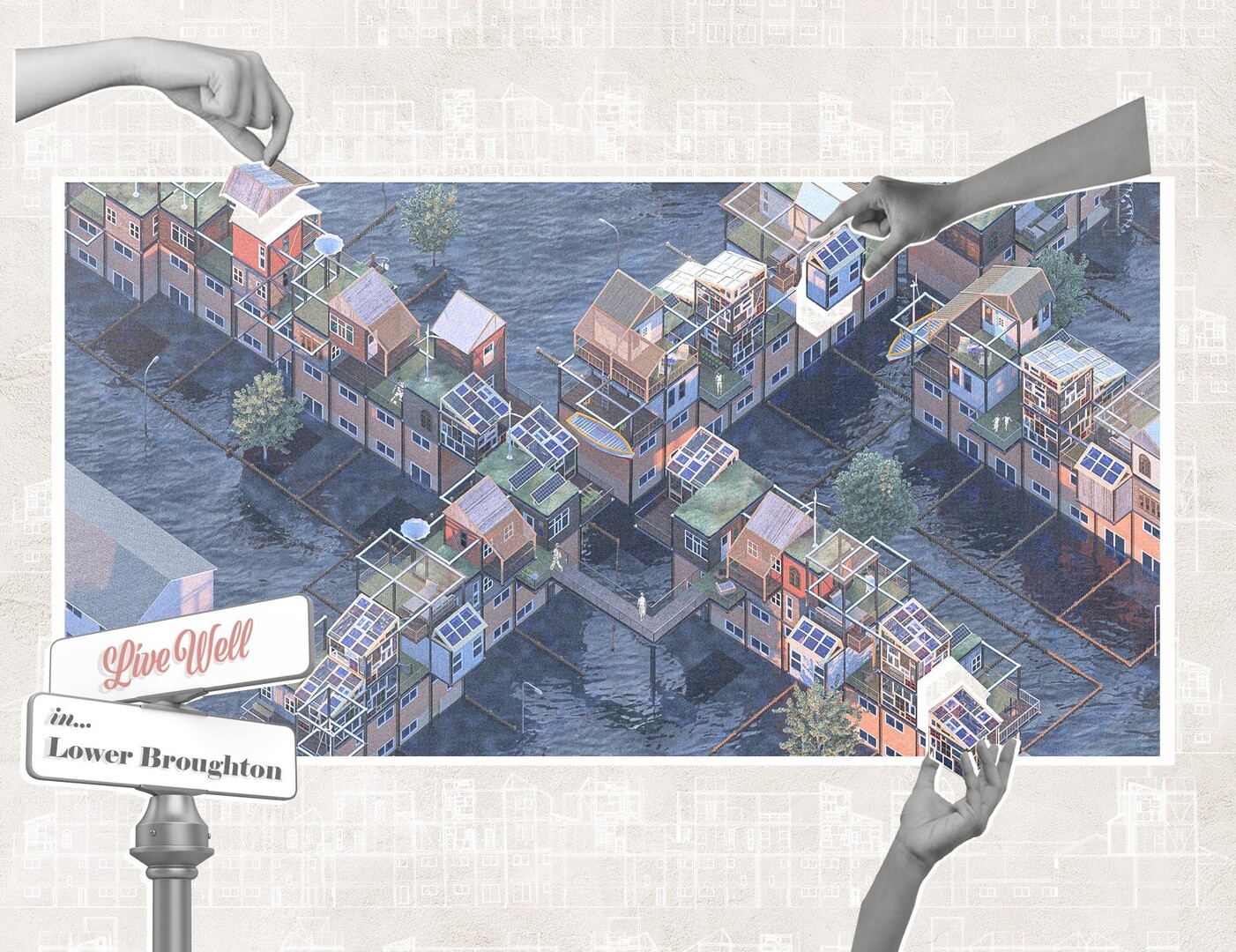
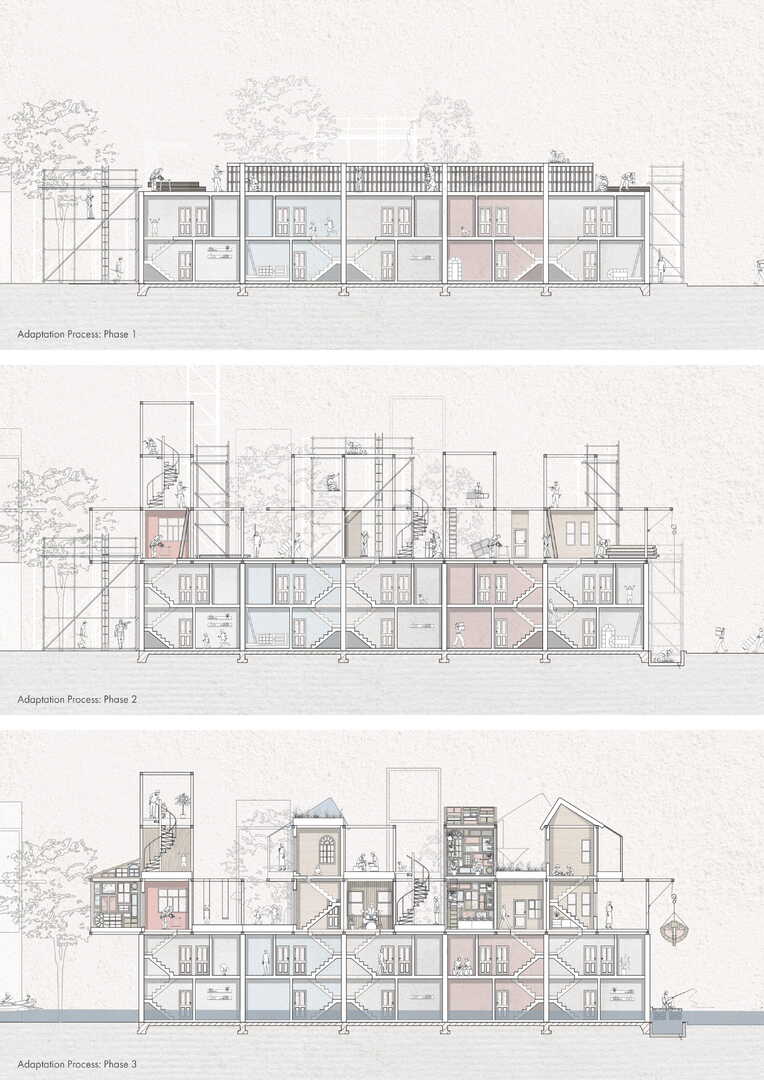
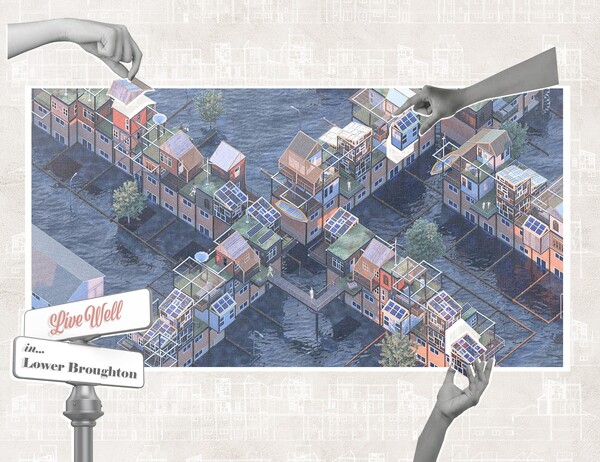
This thesis approaches climate-responsive design through slow, collective change, creating an adaptable system for living with water. Rather than proposing demolition and replacement, the project investigates how existing buildings can gradually evolve in response to climate change and shifting community needs. This approach protects the existing community fabric while reducing embodied carbon and construction waste.
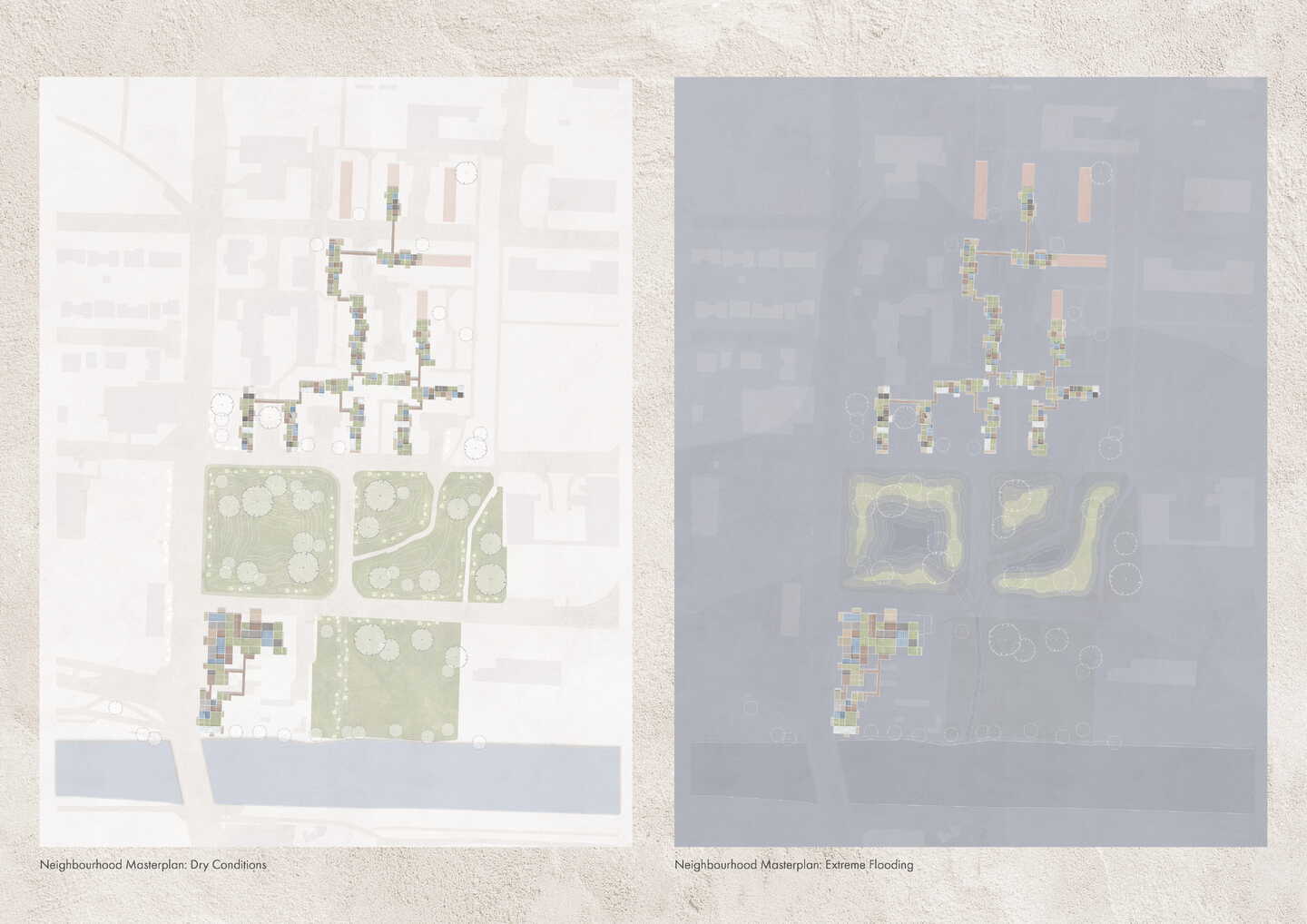
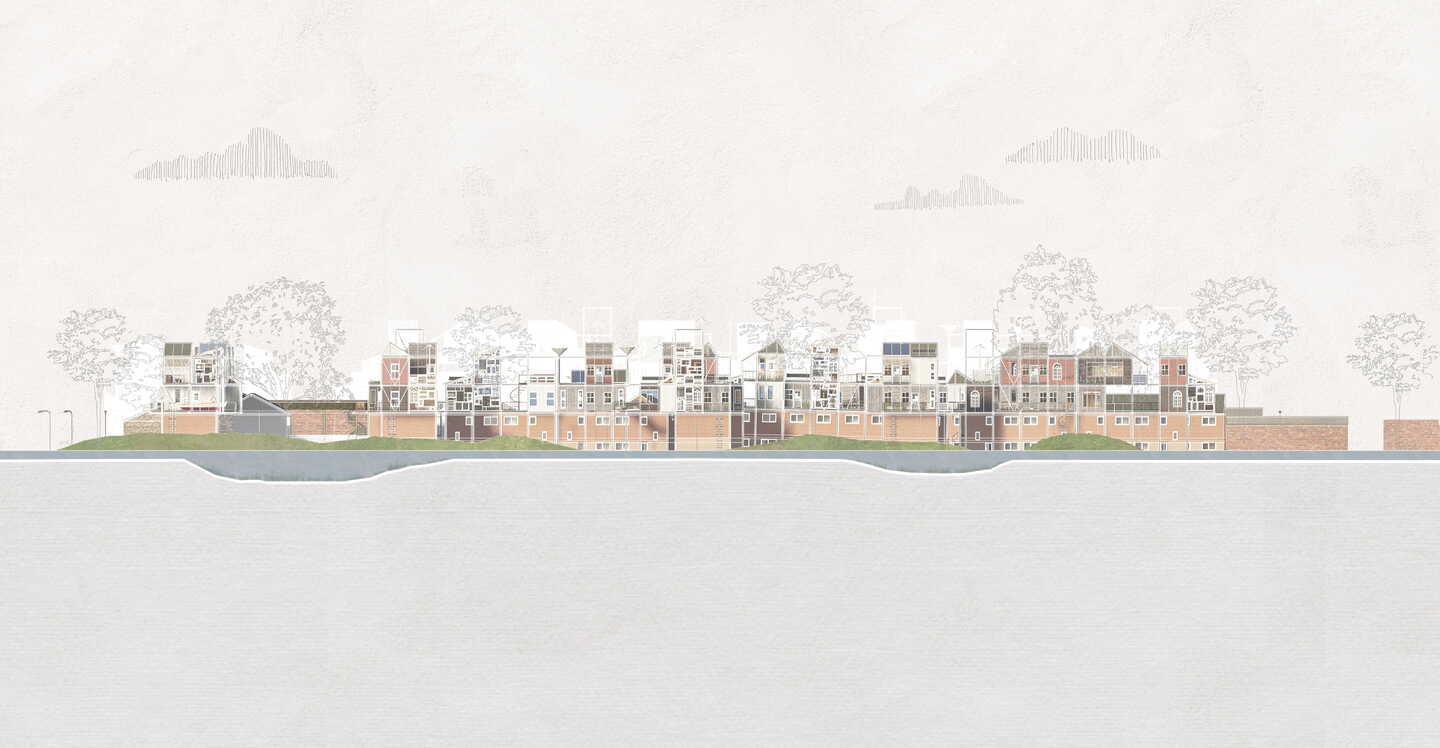
The site is located in Lower Broughton, Salford, within Flood Zone 3a, where flooding is already frequent and projected to intensify with climate change. The neighbourhood also experiences higher levels of deprivation than the UK average. This combination of social vulnerability and environmental risk made it a key site for increasing long-term flood resilience.
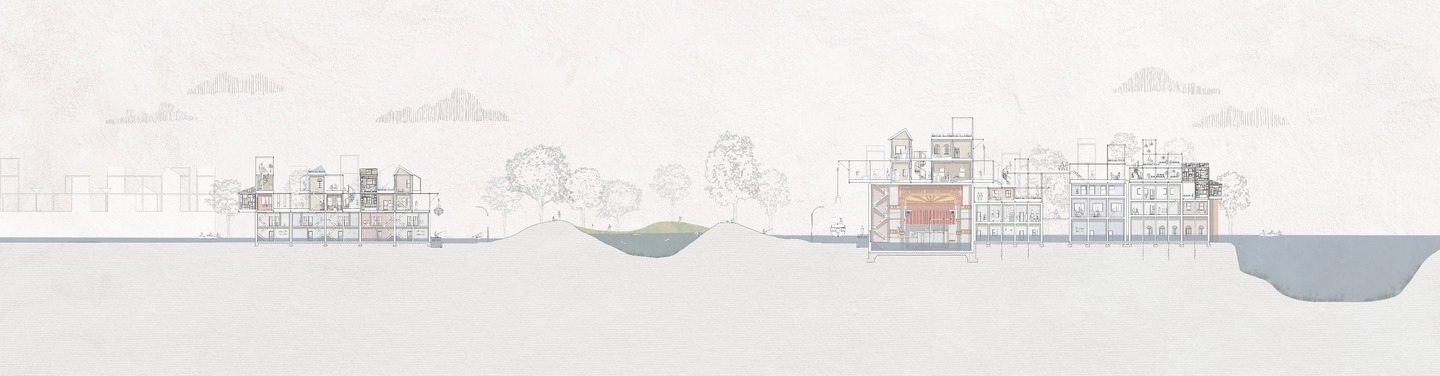
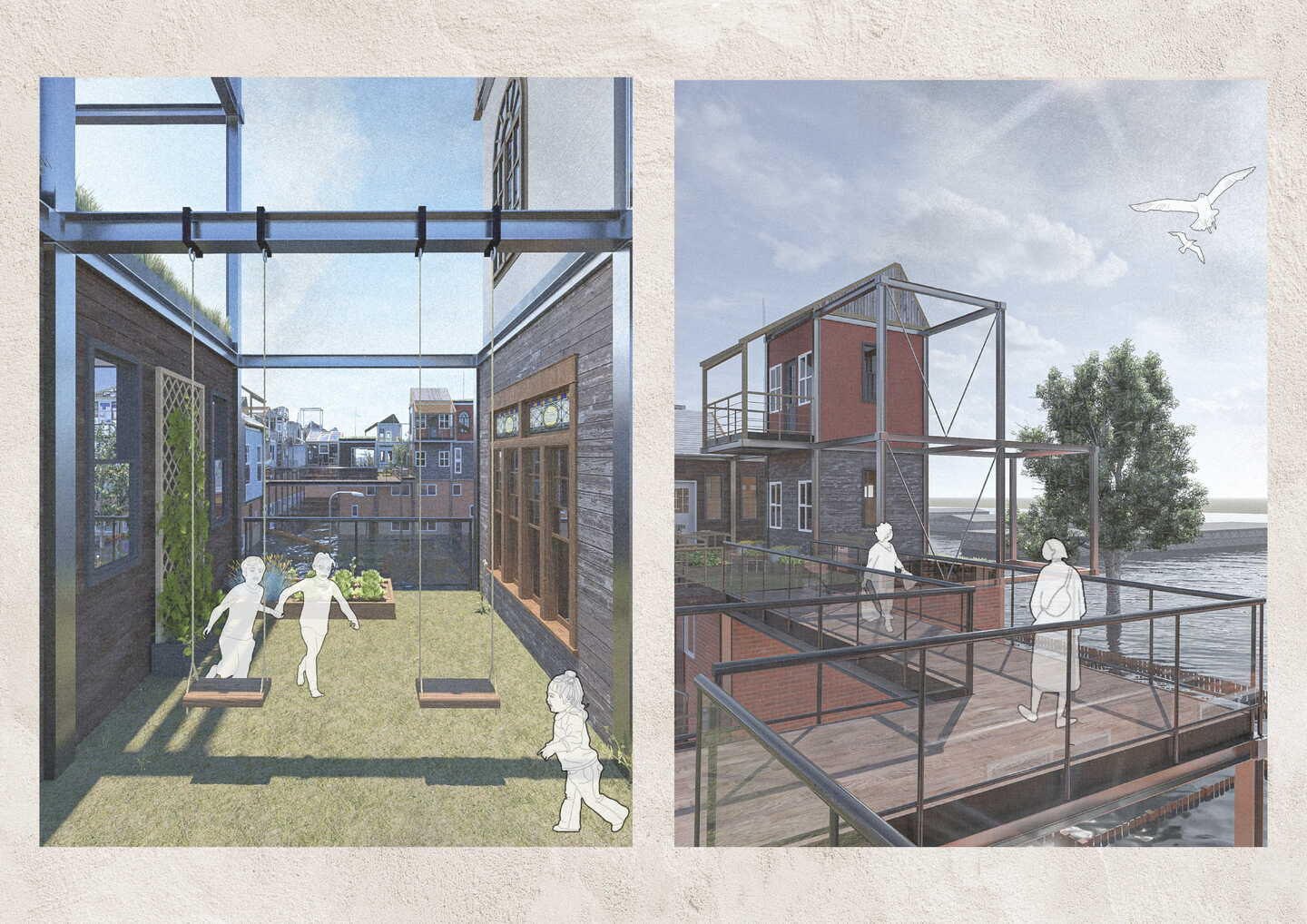
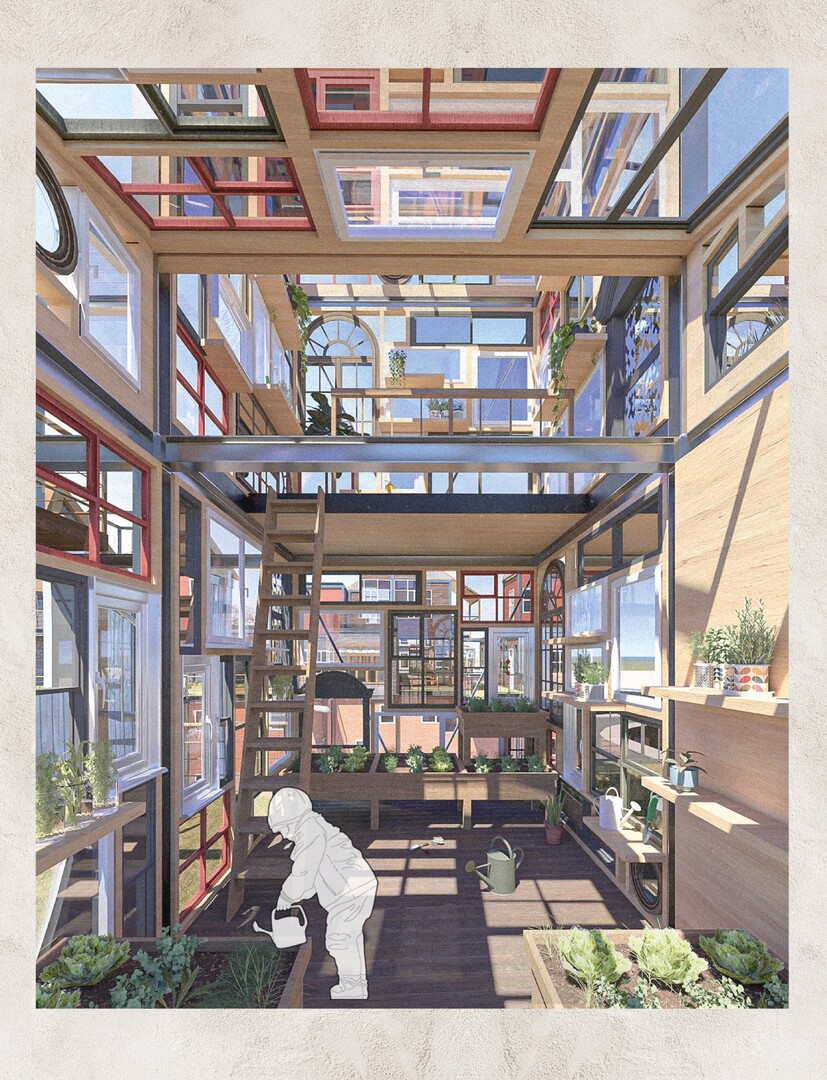
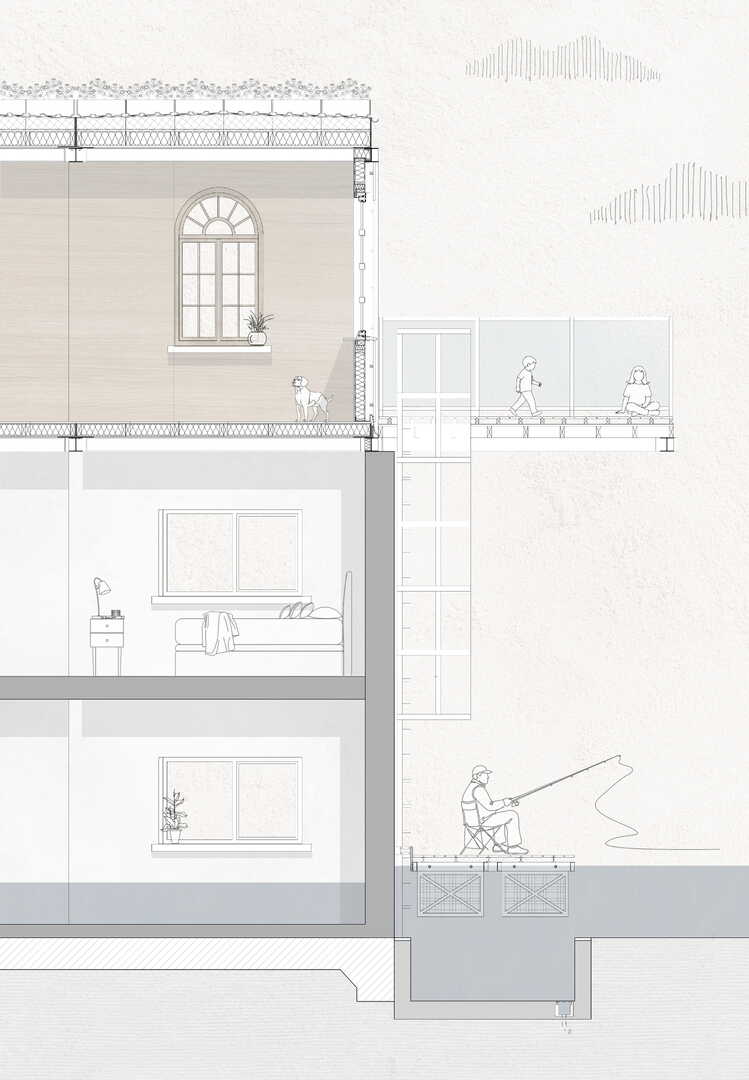
Through a framework of community-led adaptation, skill-sharing and material circularity, the proposal enables the neighbourhood to incrementally adapt to rising water levels. The abandoned Victoria Theatre is transformed into a community workshop and materials library, supporting wider strategies of adaptation and repair. Steel harvested from local disused industrial buildings is recycled into a modular structural frame supporting elevated living spaces. Interchangeable infill panels, produced from reclaimed materials and salvaged components, create a flexible construction system designed for collective assembly, maintenance and adaptation.
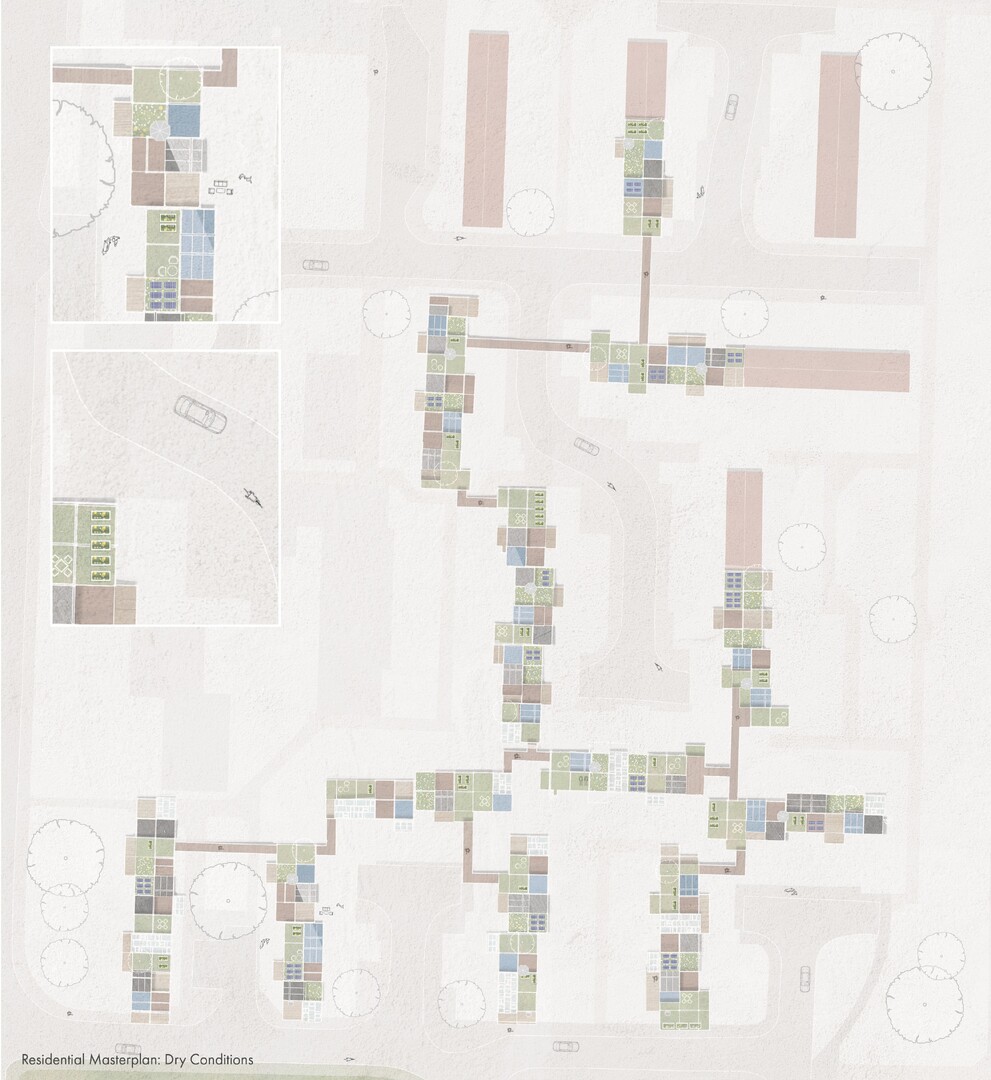
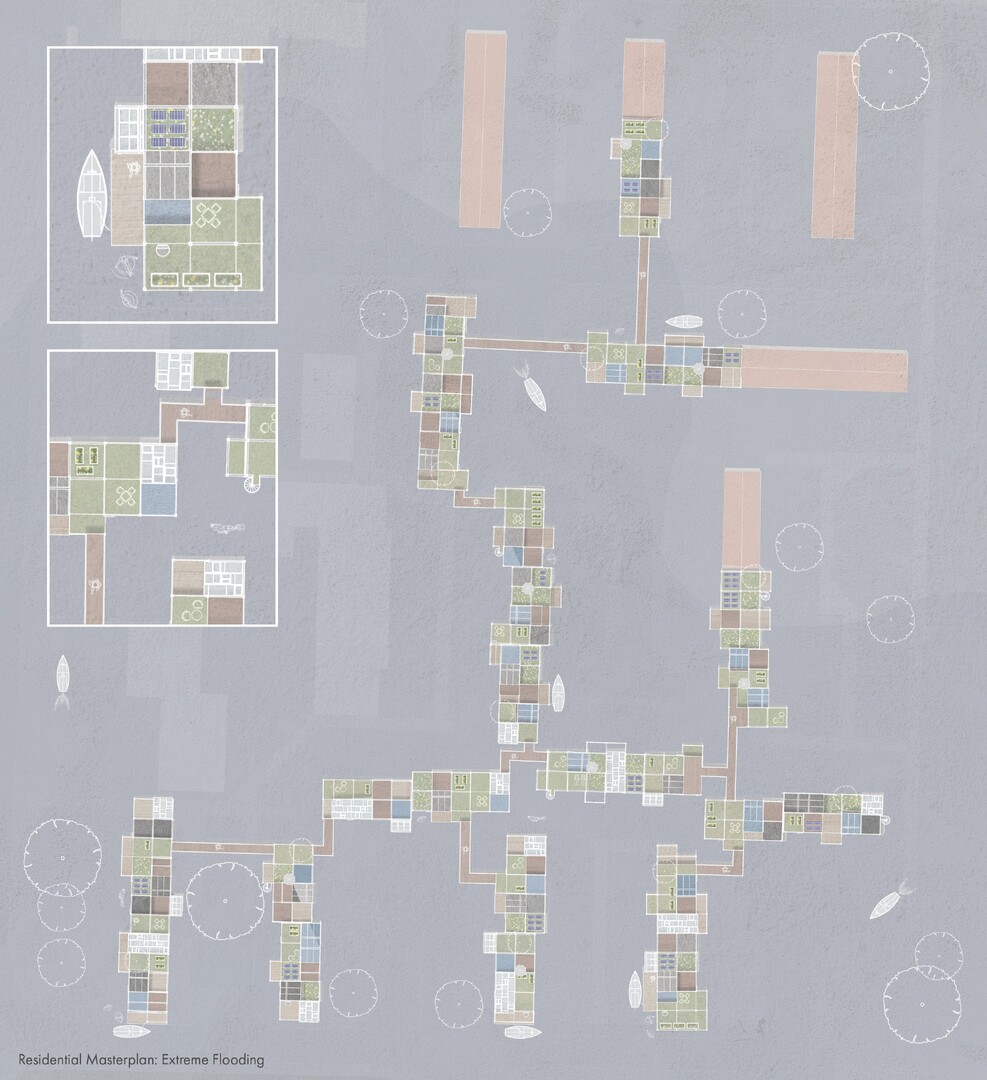
The landscape strategy introduces dry retention basins, vegetated swales and flood-resilient trees to slow surface runoff and reduce flood risk. Elevated walkways and floating decks maintain connectivity during flooding events, while greenhouses made from reclaimed windows and raised gardens support urban farming and help address food insecurity.
As climate predictions continue to shift, fixed solutions become increasingly unreliable over time. By developing an adaptable framework rather than a singular outcome, the project responds to changing environmental conditions and evolving resident needs. In doing so, it reframes architecture less as the proposal of complete solutions and more as the creation of systems that communities can collectively shape, maintain and transform over time.