

POIESIS
About
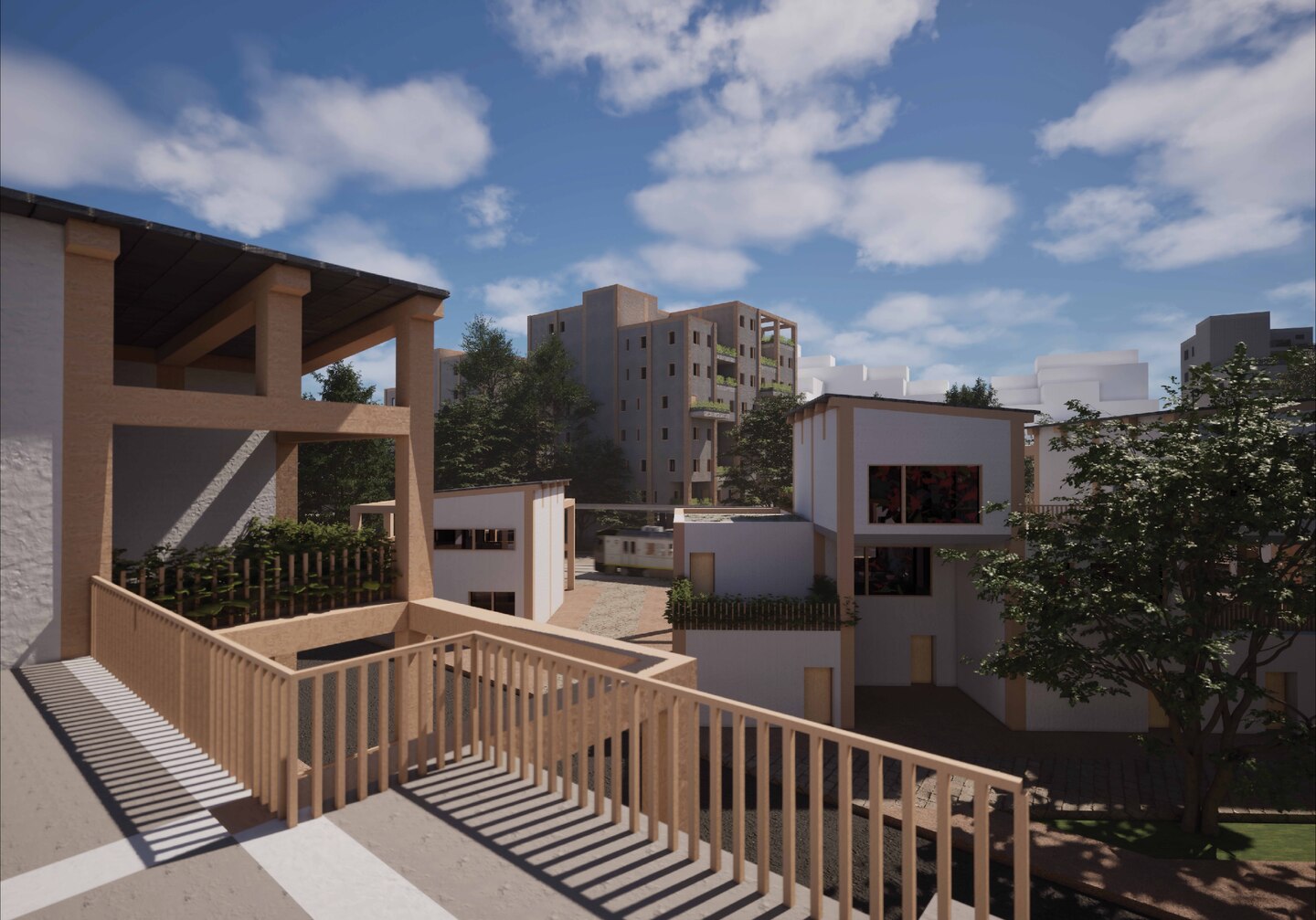
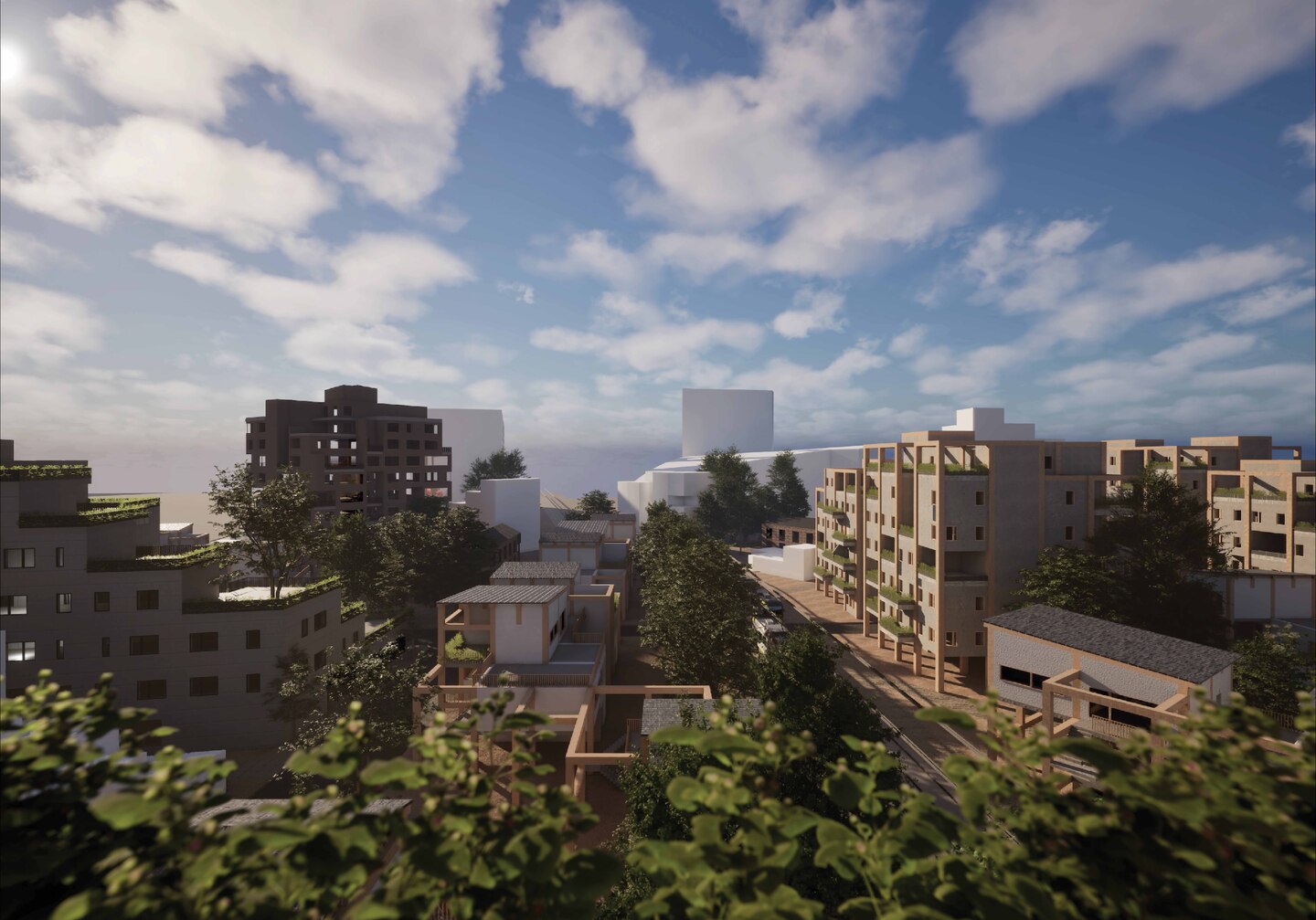
I work at the intersection of how architecture can foster more equitable, participatory and socially meaningful forms of urban life. I am particularly interested in the relationship between computational design, placemaking and spatial justice, investigating how digital methods can move beyond optimisation to become tools for understanding and shaping the social dynamics of cities.
POIESIS
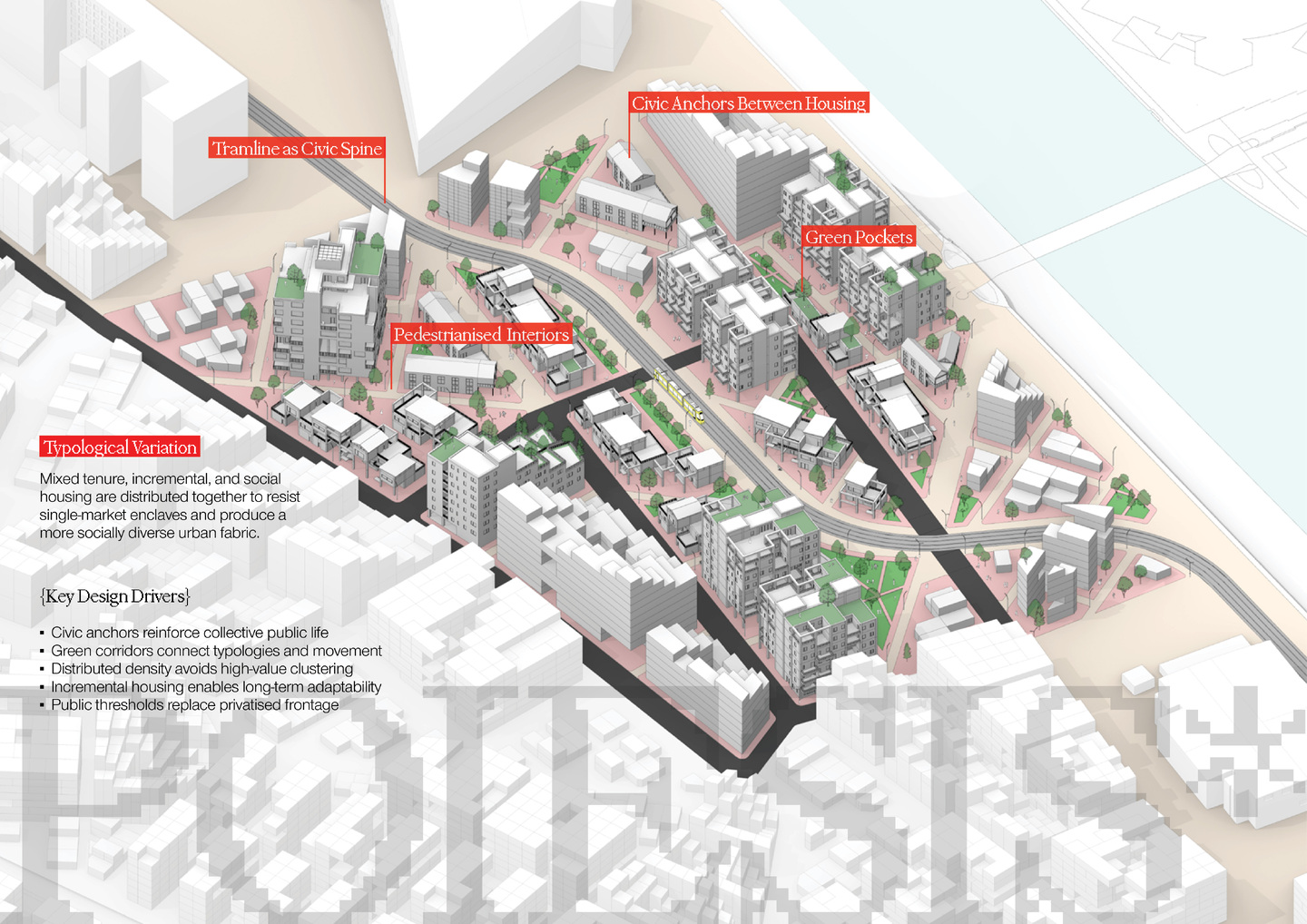
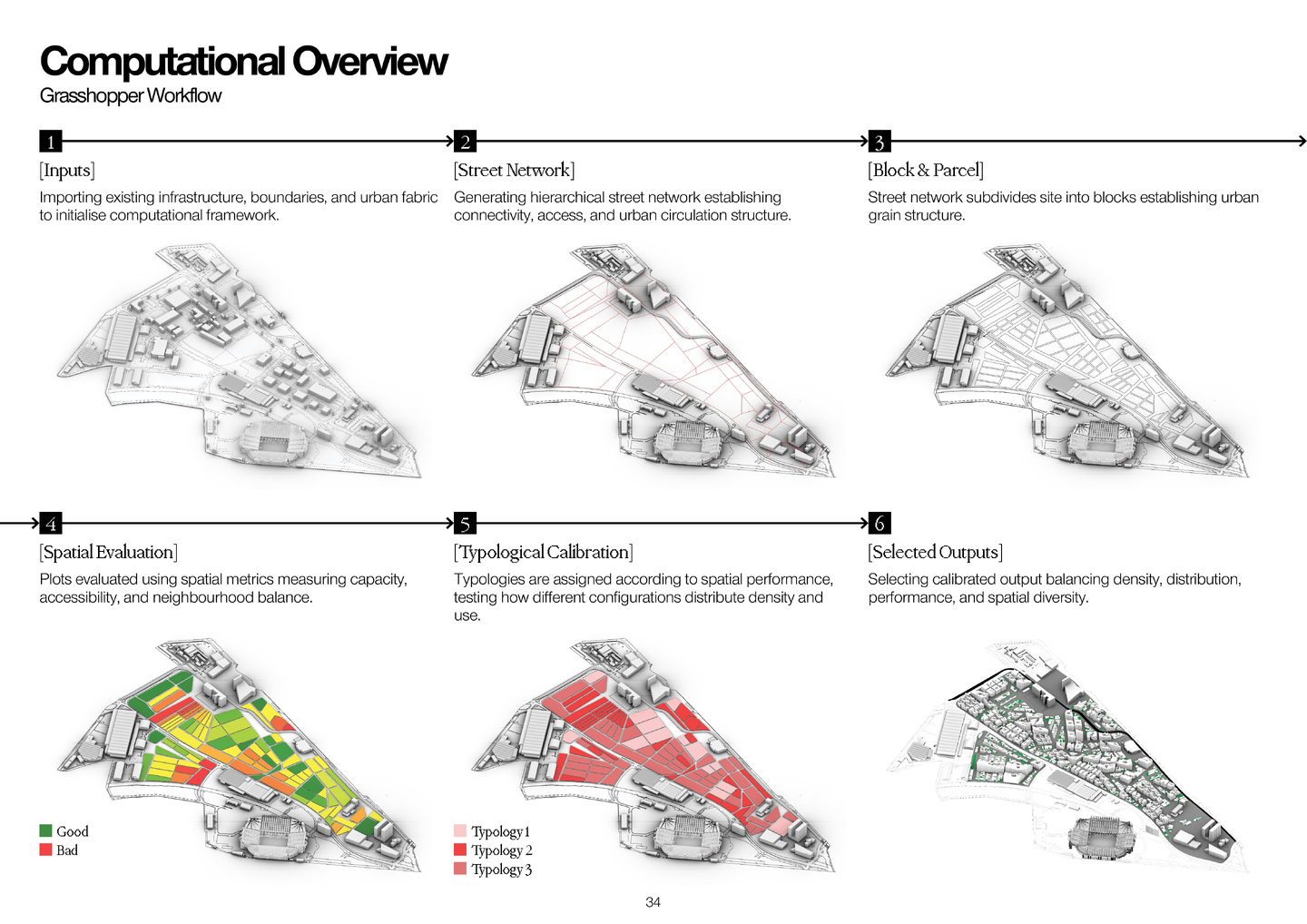
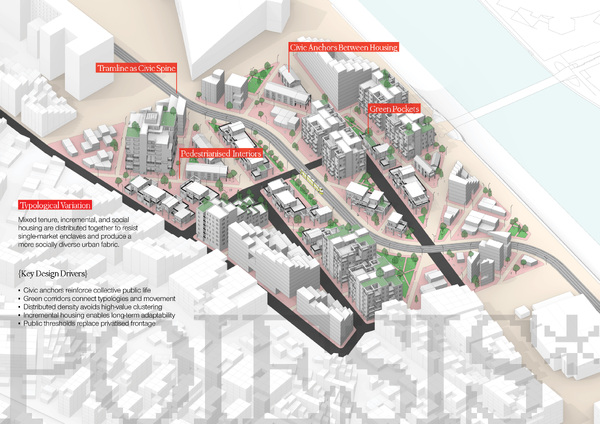
At MSA, my focus has been on how computational design can support more equitable forms of city-making. By developing bespoke workflows in Grasshopper that integrate evolutionary algorithms, spatial analysis and architectural design, I explored how multiple urban priorities, from accessibility and housing equity to public space and ecological performance, can be negotiated simultaneously. For me, computation is not about automating design, but about expanding the architect's capacity to understand complexity, test alternatives and make more informed spatial decisions.
Approach
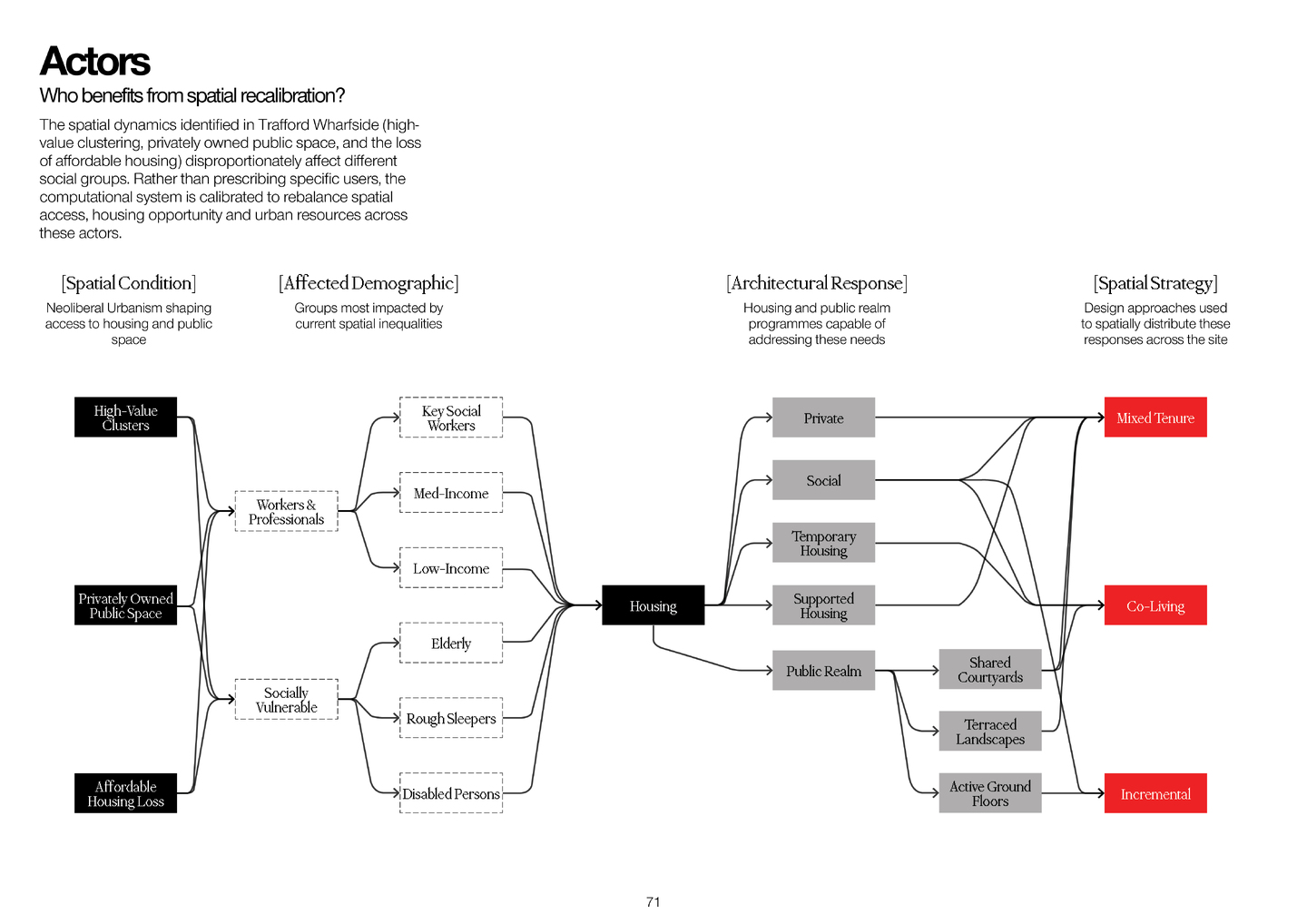
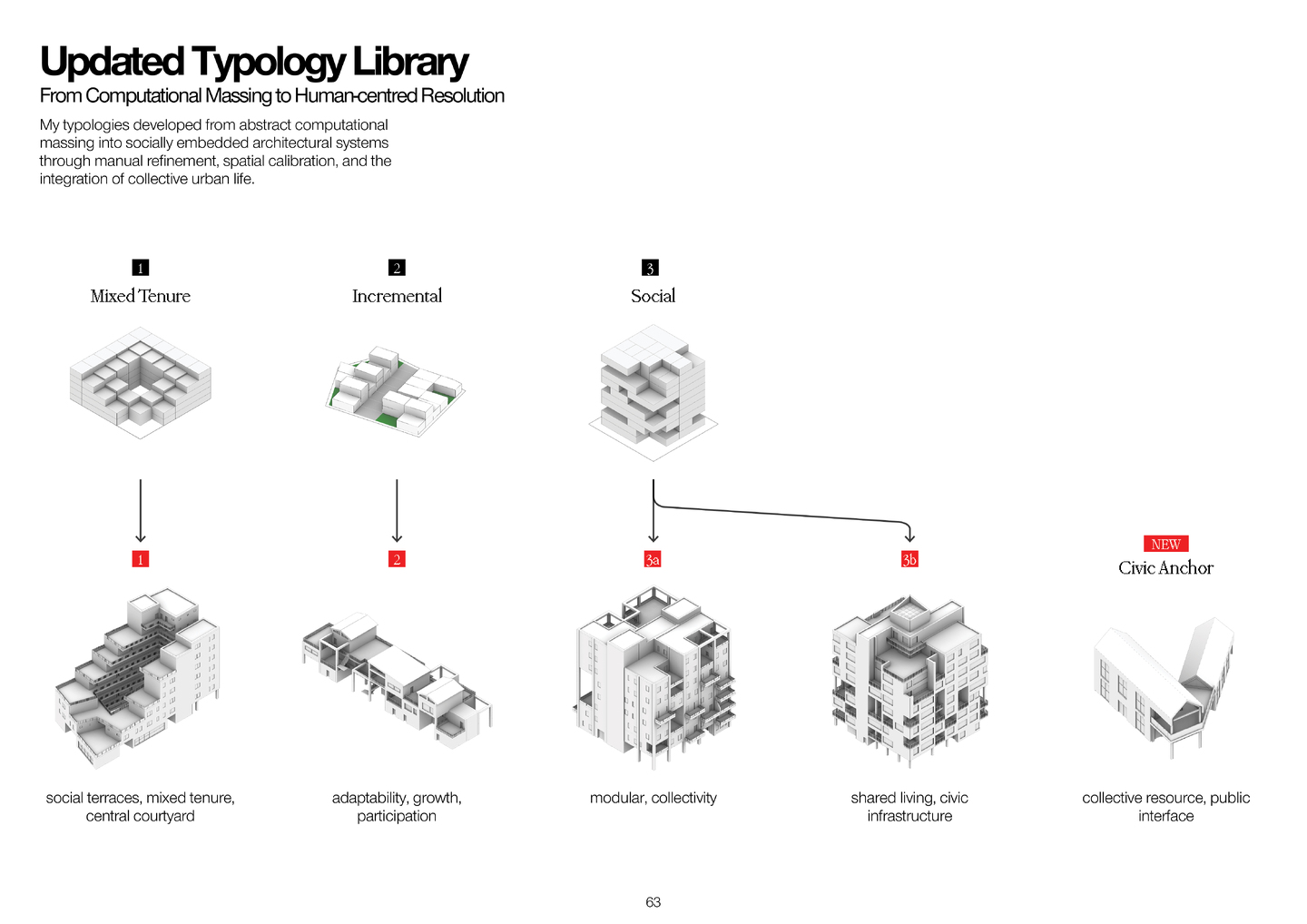
Alongside this technical work, my projects draw heavily on ideas surrounding the urban commons, the Right to the City, participatory design and collective forms of inhabitation. I am interested in how architecture can provide frameworks for communities to shape and evolve their own environments, balancing strategic planning with bottom-up agency. These themes have informed projects ranging from youth-led regenerative urbanism in Sheffield to speculative approaches to equitable urban development in Manchester.
I'm always interested in connecting with architects, urban designers, researchers, and studios exploring innovative approaches to computation, housing, placemaking, and socially meaningful design.