

Weaving the Thread of Moston
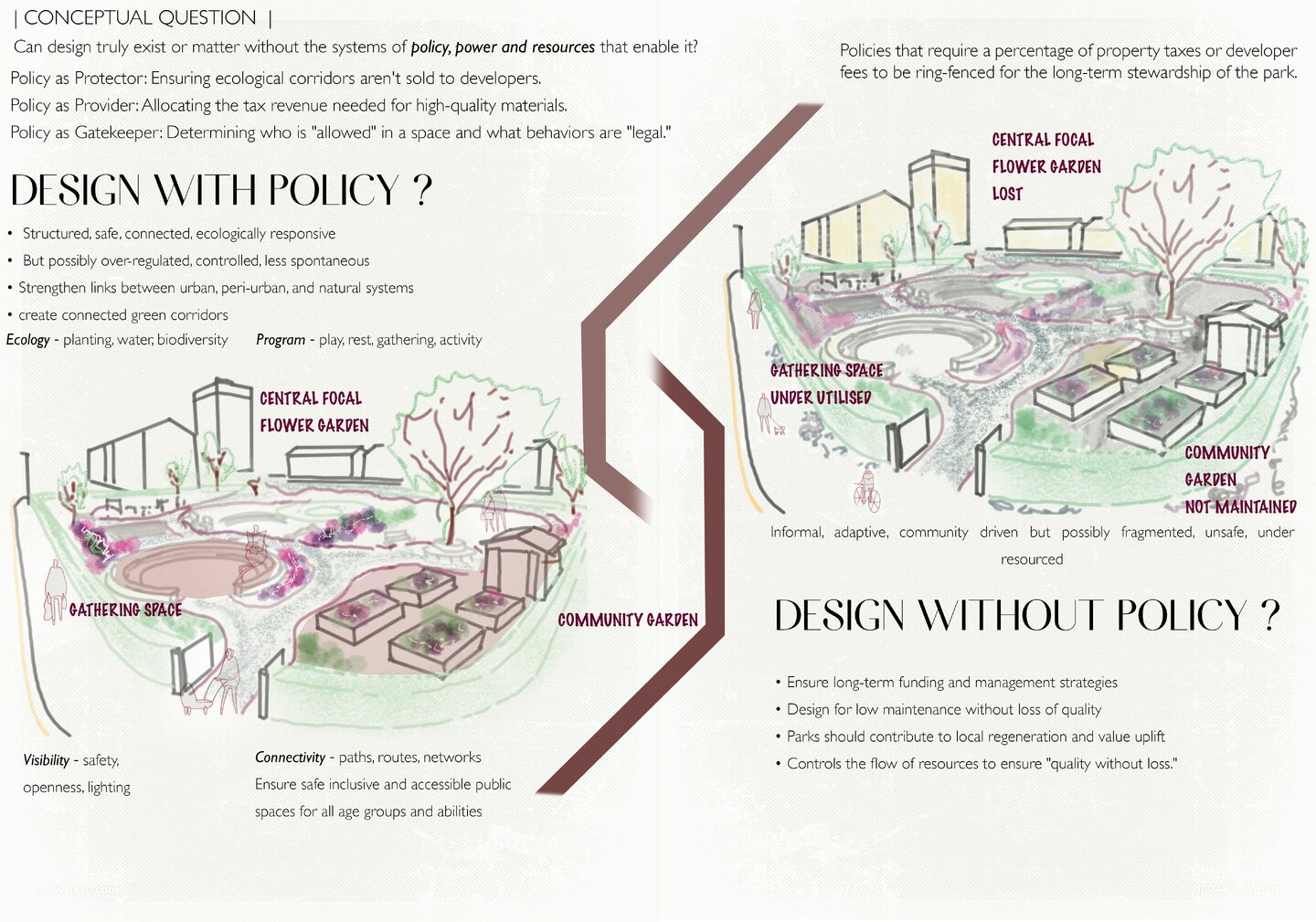
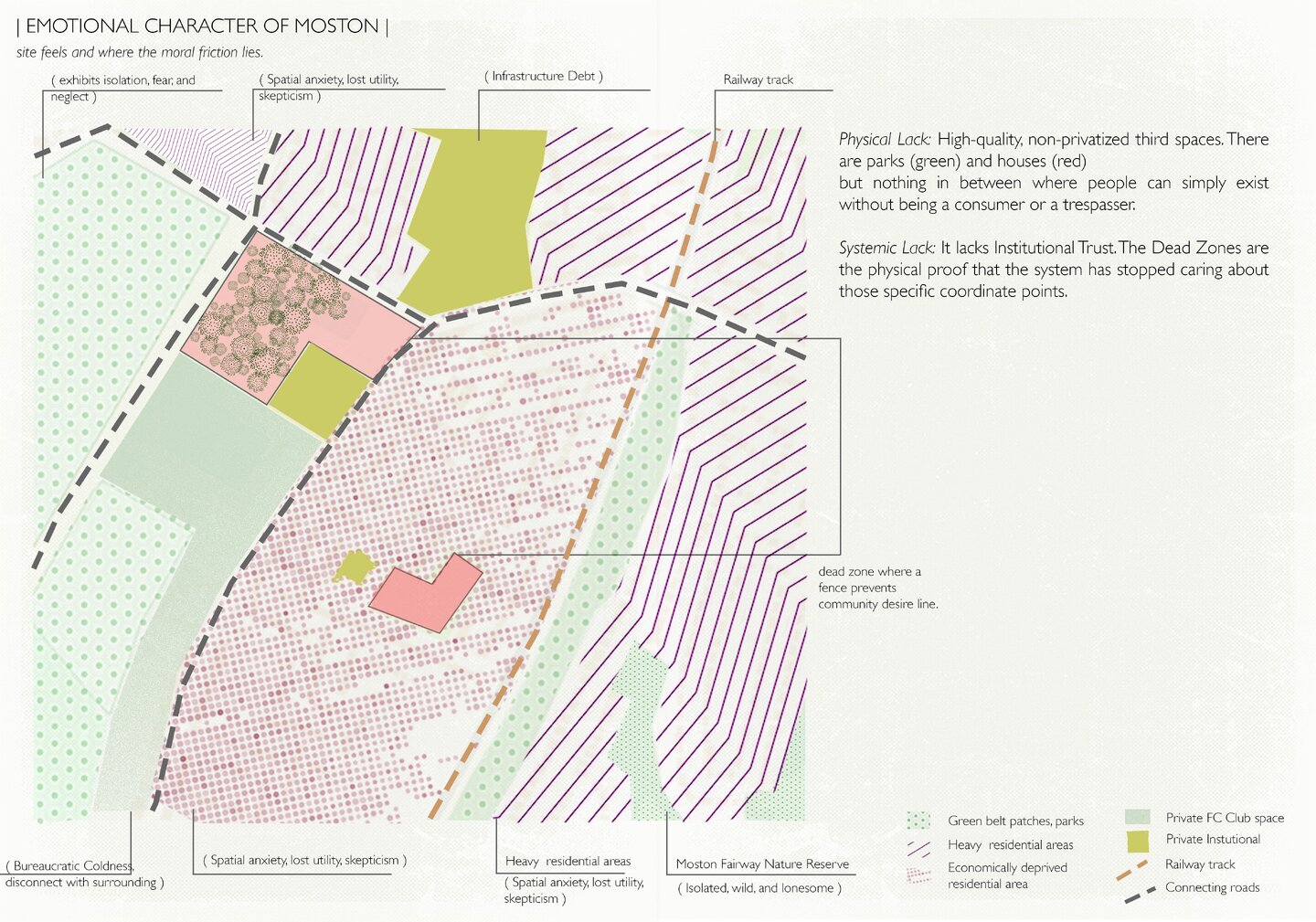
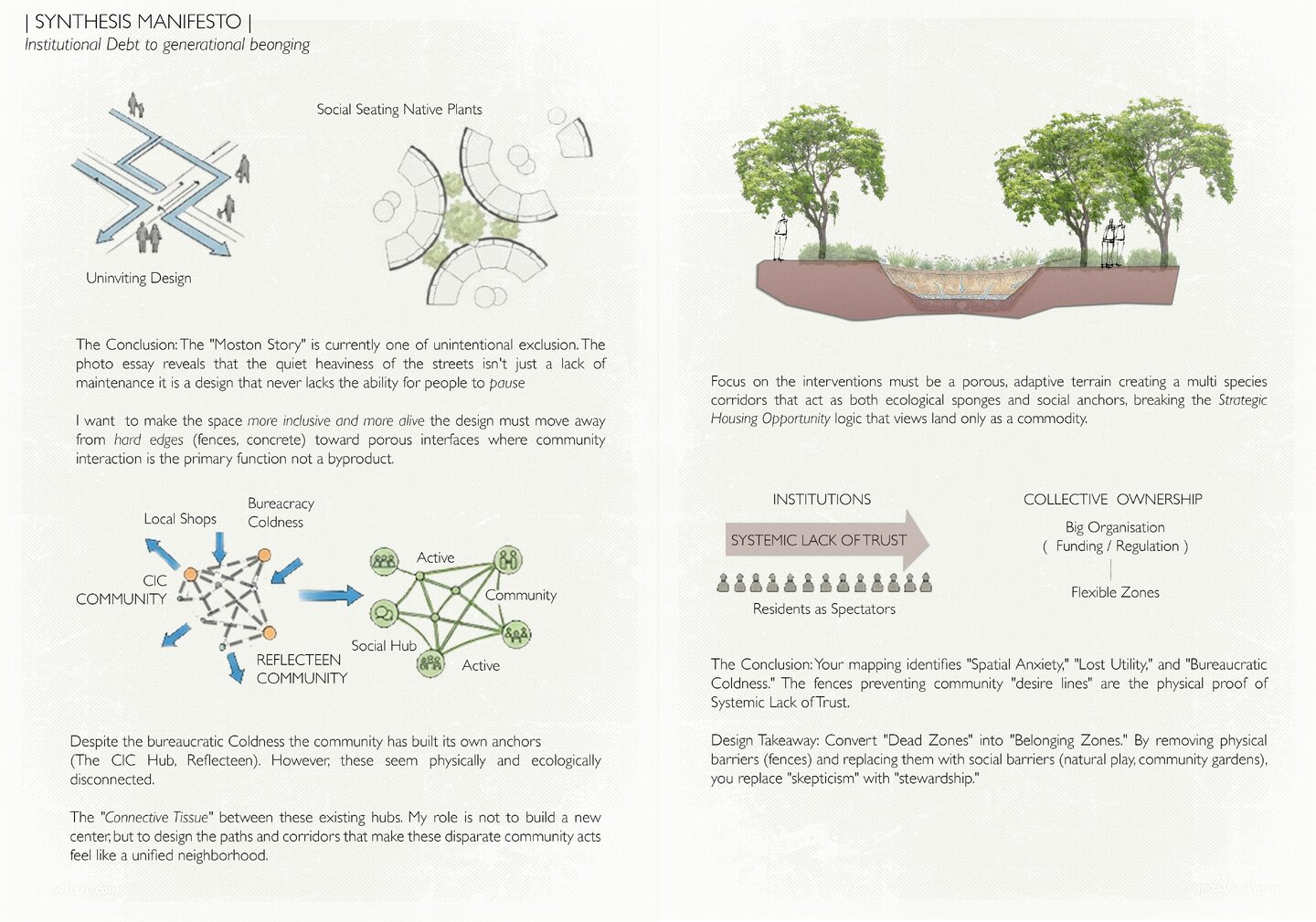
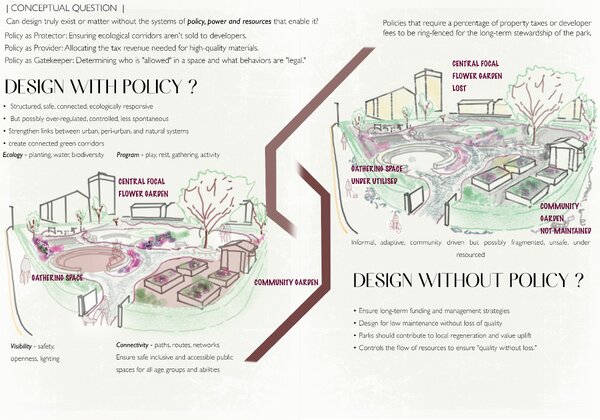
This project positions the landscape architect as a mediator between top-down institutional authority and bottom-up community agency within Moston’s fragmented green voids. The design confronts a systemic disconnect where public spaces exist physically but lack social or ecological integration. It navigates the continuous friction between legislative policy—such as sustainable urban drainage mandates—and the lived reality of an intergenerational neighborhood. Driven by an ethical ambition to shift from imposing healthcare and learning frameworks to enabling community
led well being, the project builds spatial equity for Moston’s youth and elderly. The design resolves the struggle between centralized power and local resource management by addressing the limitations of polarized funding models. Purely grassroots initiatives generate deep emotional ownership but risk volunteer burnout and scaling issues, while institutional funding yields durable infrastructure that often carries a sterile, generic aesthetic.
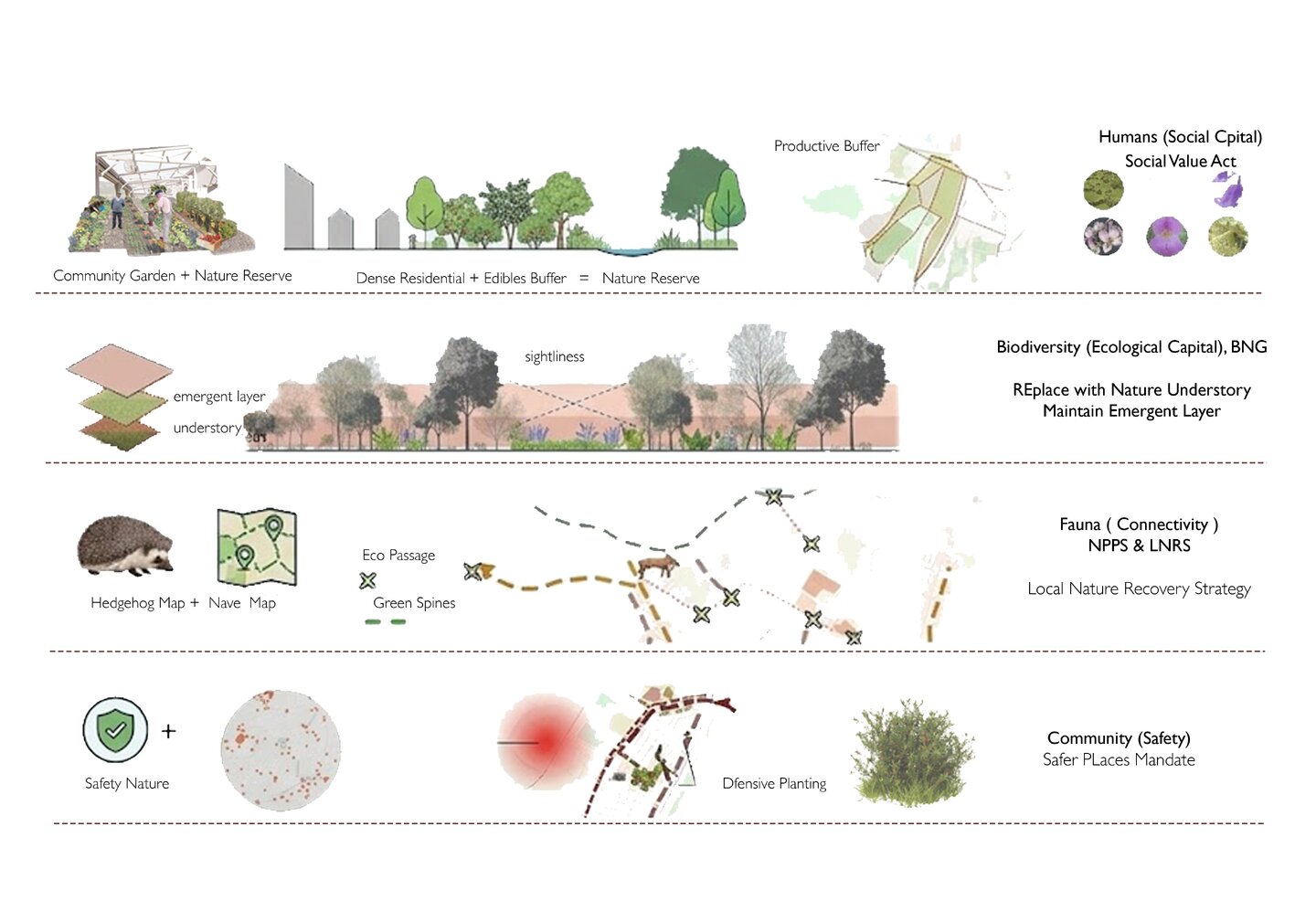
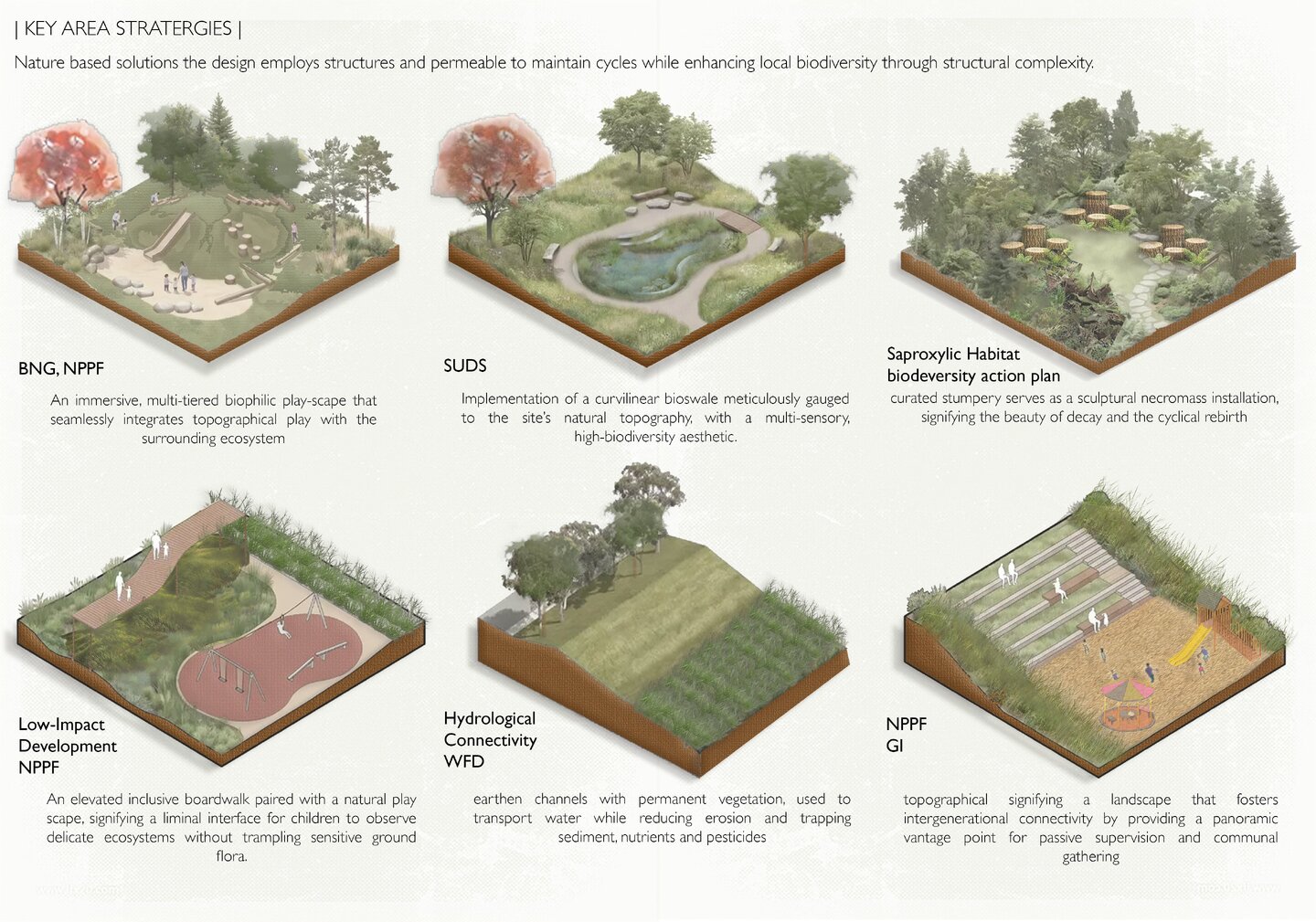
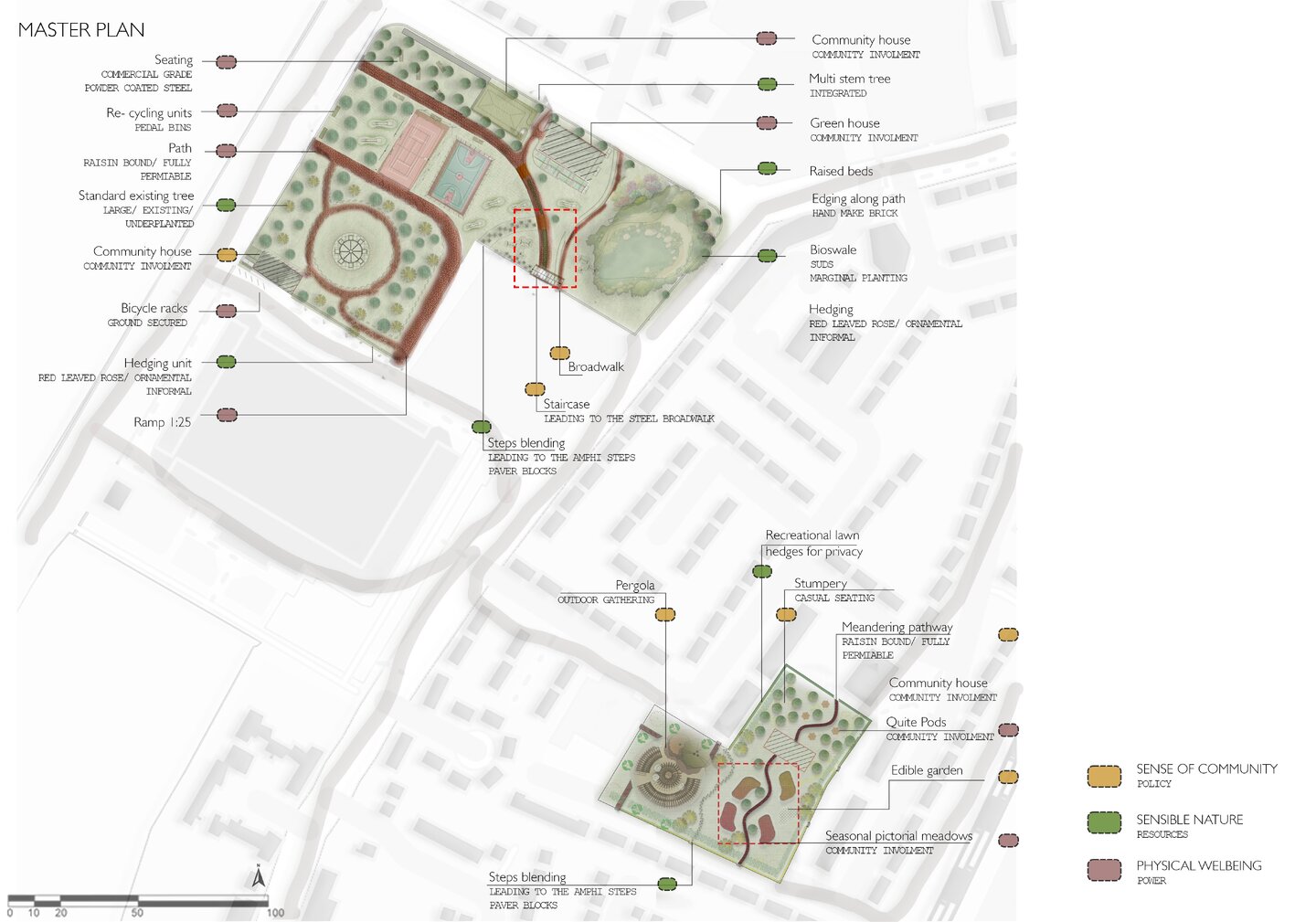
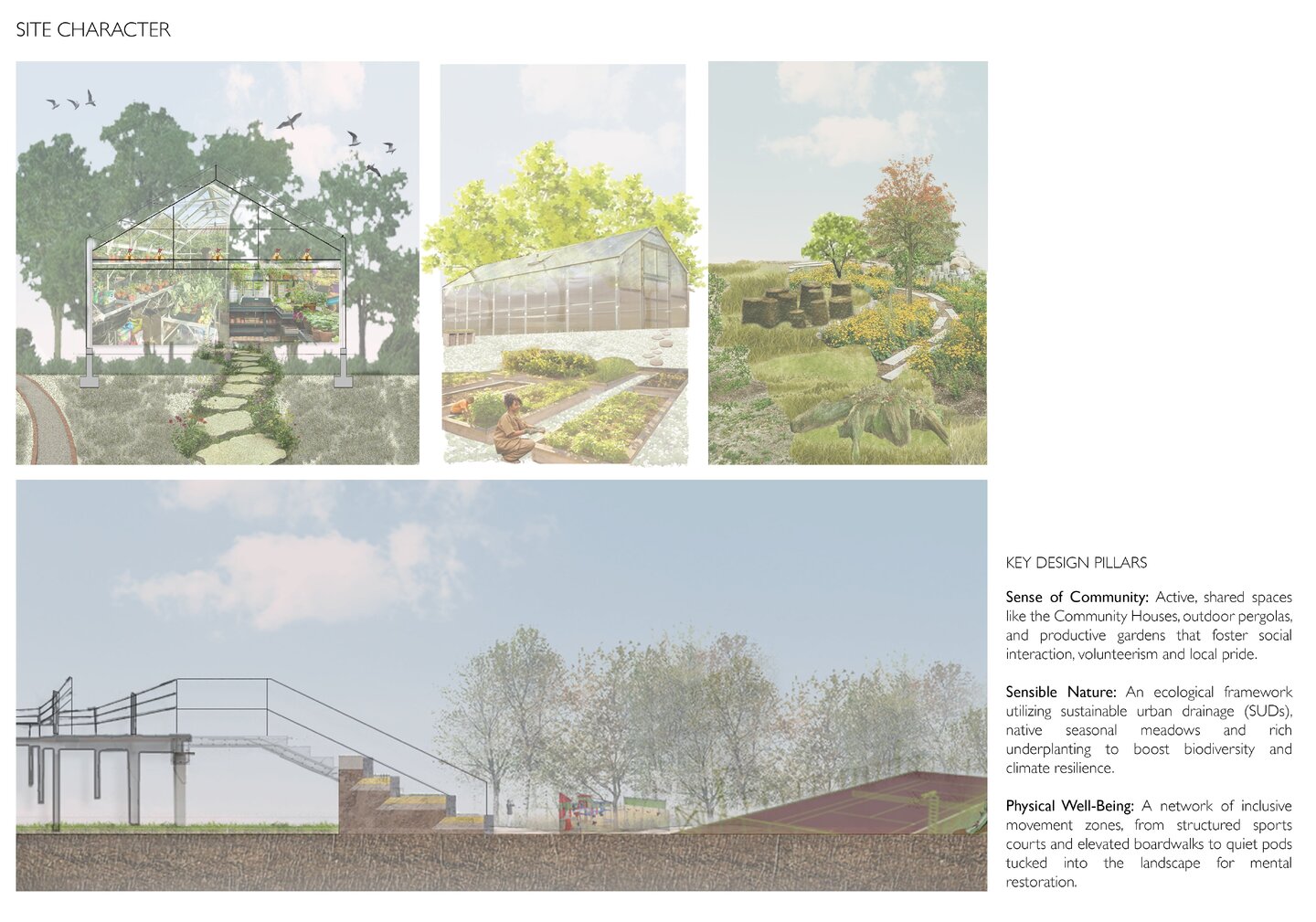
The project ultimately infers that long-term urban resilience requires a symbiotic relationship between power and the people. The design demonstrates that successful public spaces occur when big organizations fund and secure a permanent, durable infrastructural platform, while relinquishing control over daily programming, environmental evolution, and cultural expression to the local community. By organizing quiet pods, community houses, edible gardens, and functional bioswales into a unified network, the master plan proves that landscape architecture
can successfully merge strict policy compliance with genuine grassroots stewardship to establish a permanent
common ground.