

Ecologies of Entanglement
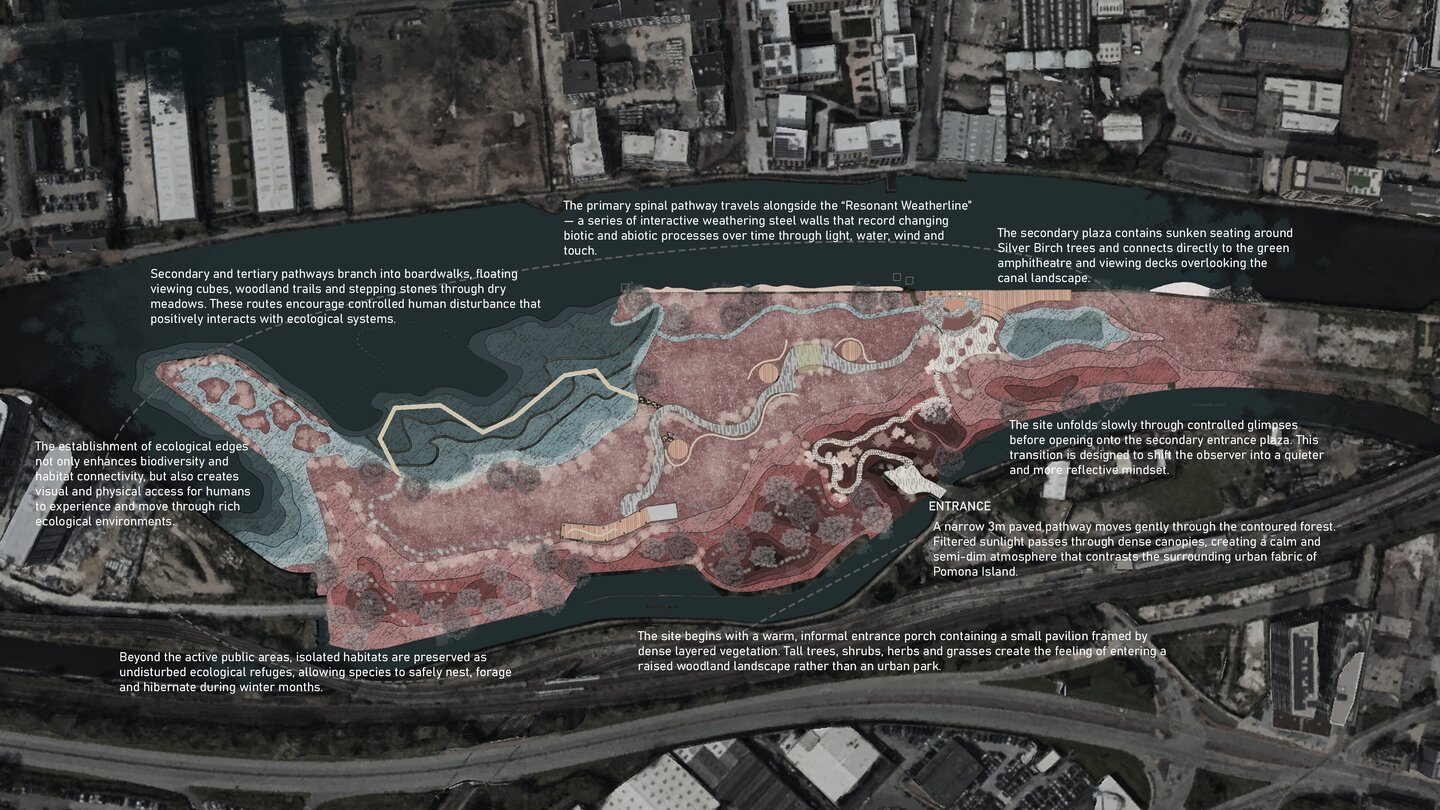
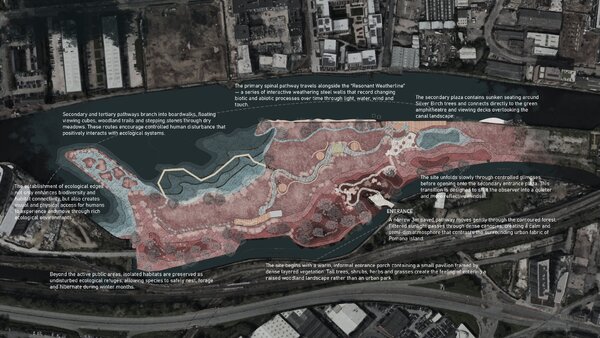
The narrative for the site initiates with the challenging thought every designer faces, how much of the site should be dedicated for humans and how much for the ecology instead? Through my design, I attempt to abolish this sense of duality through entanglement.
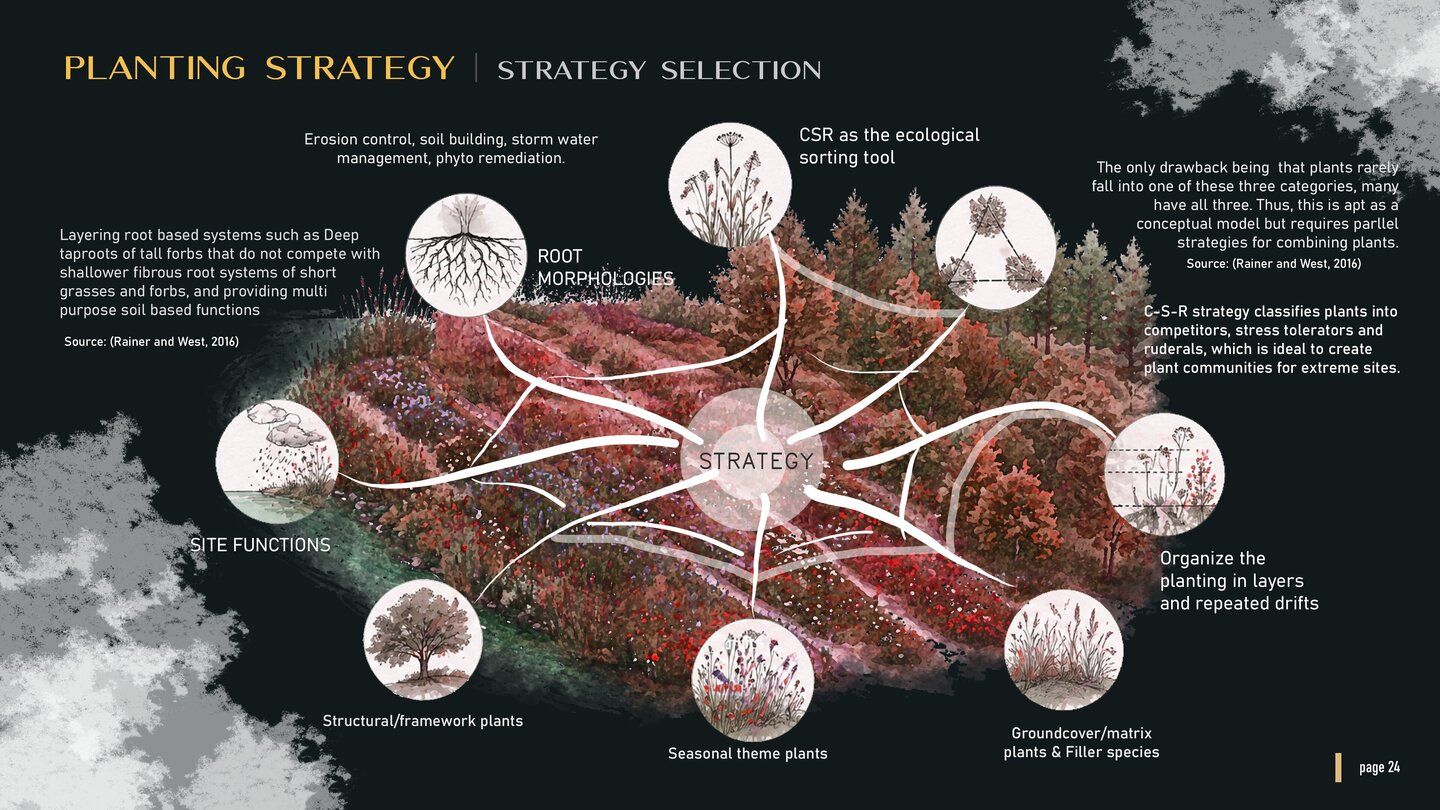
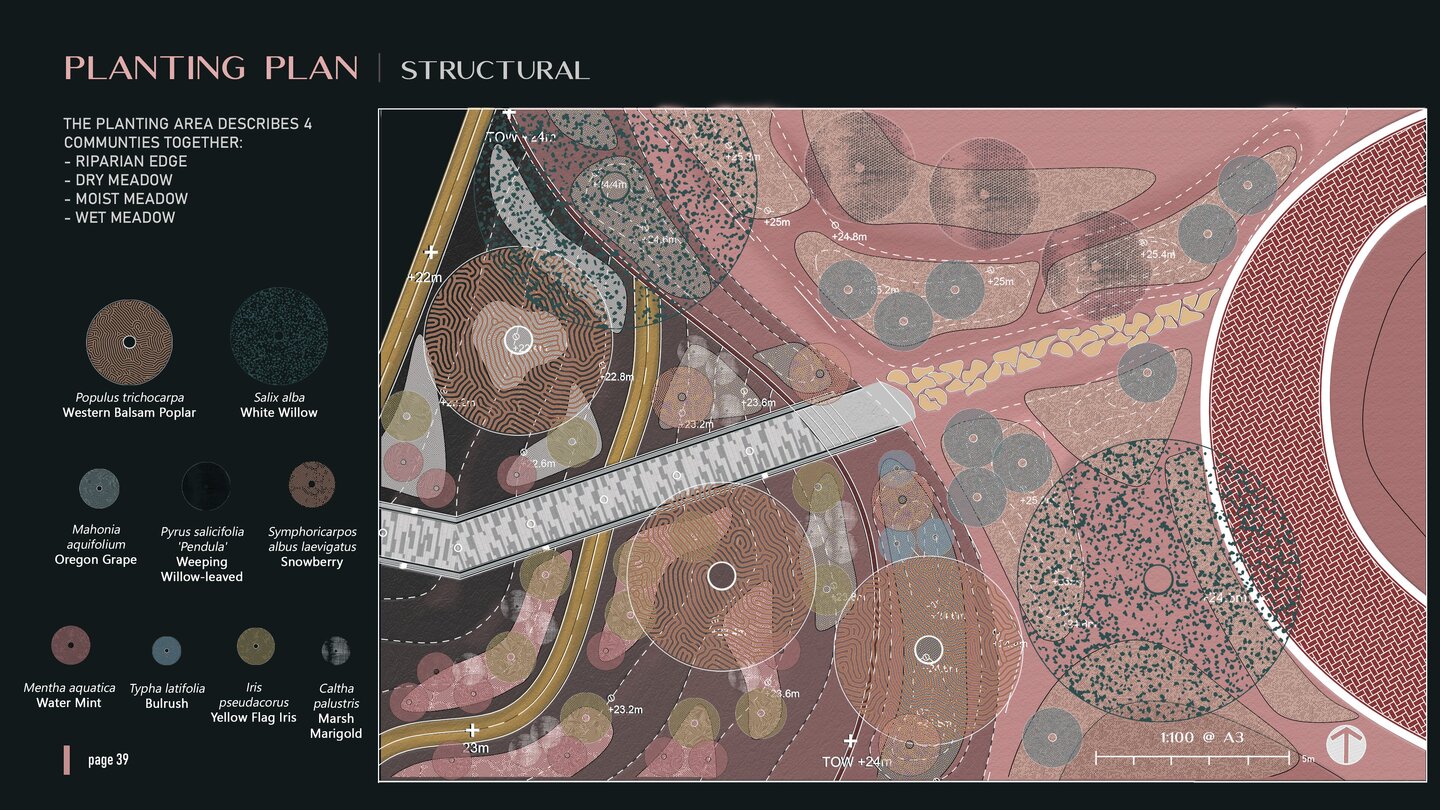
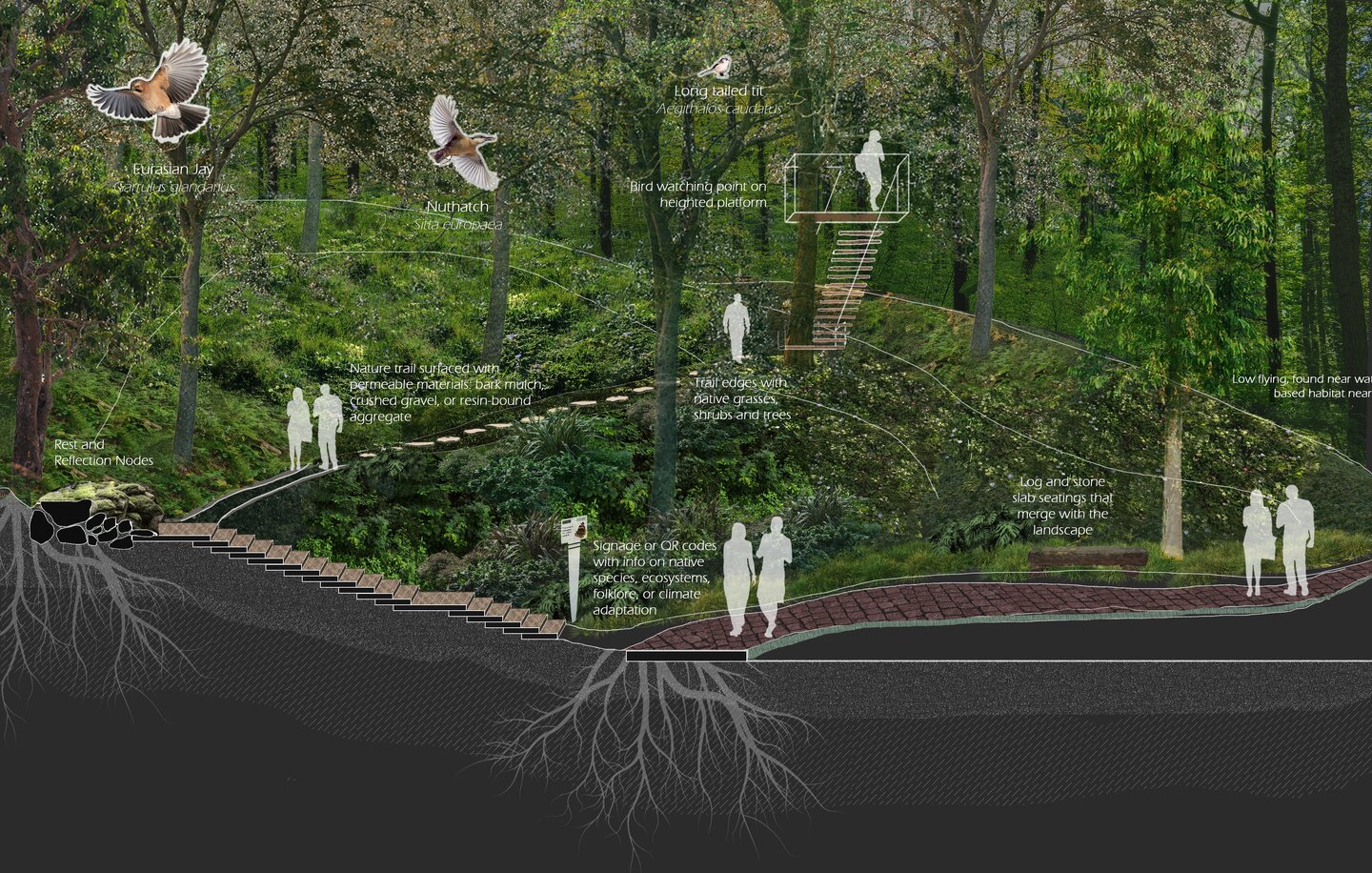
The vision for the site is to become a living landscape of entanglement where humans, water, vegetation, wildlife, material, and time exist not as isolated systems, but as interwoven processes continuously shaping one another. Pomona Island is reimagined as an ecological museum without walls: a landscape that is not simply observed, but experienced through movement, immersion, sound, texture, and seasonal change. Wetlands expand and contract with rainfall, woodland trails reveal shifting glimpses of the river corridor, and meadows evolve through cycles of flowering, decay, and regeneration. Rather than imposing order upon the site, the design allows natural systems to remain visible, active, and expressive.
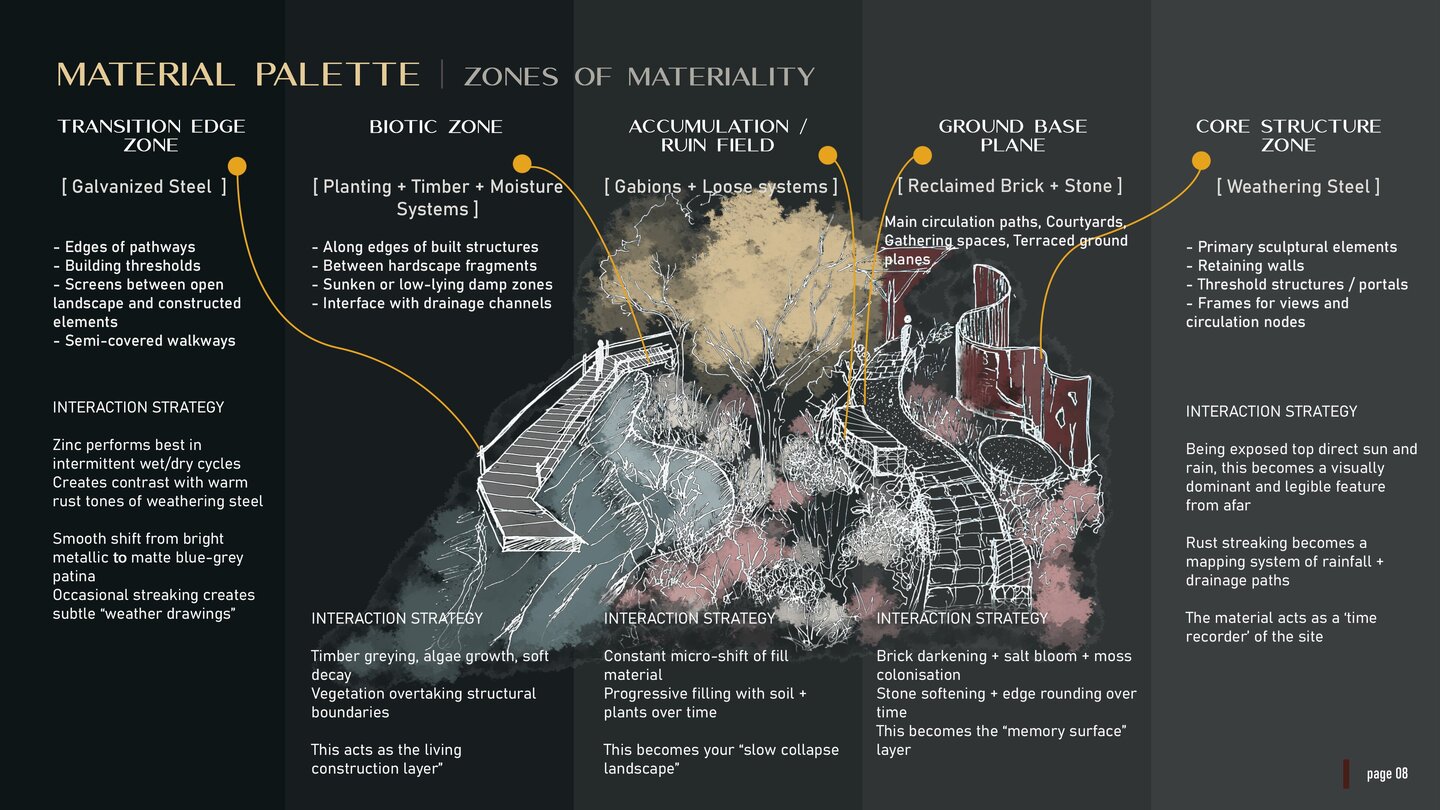
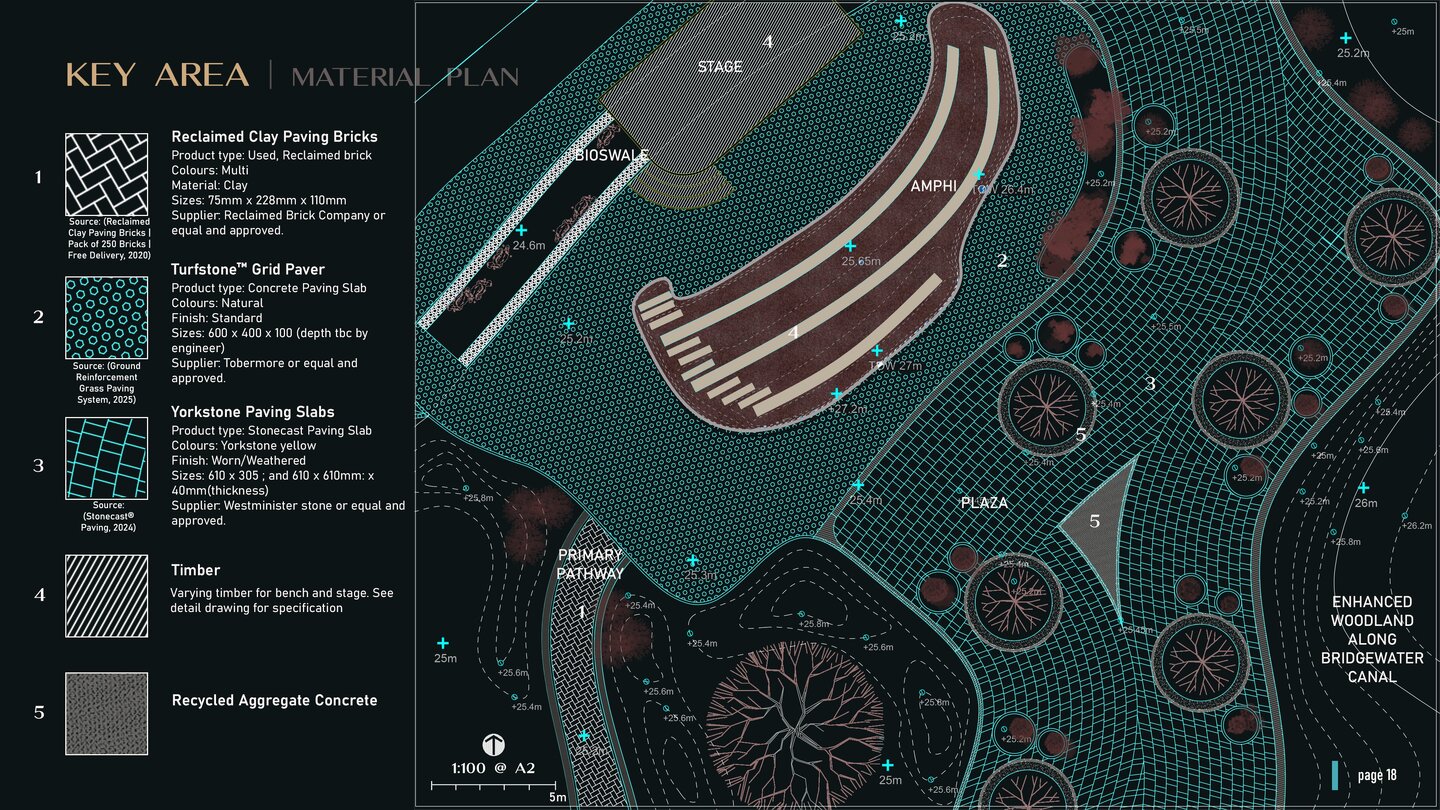
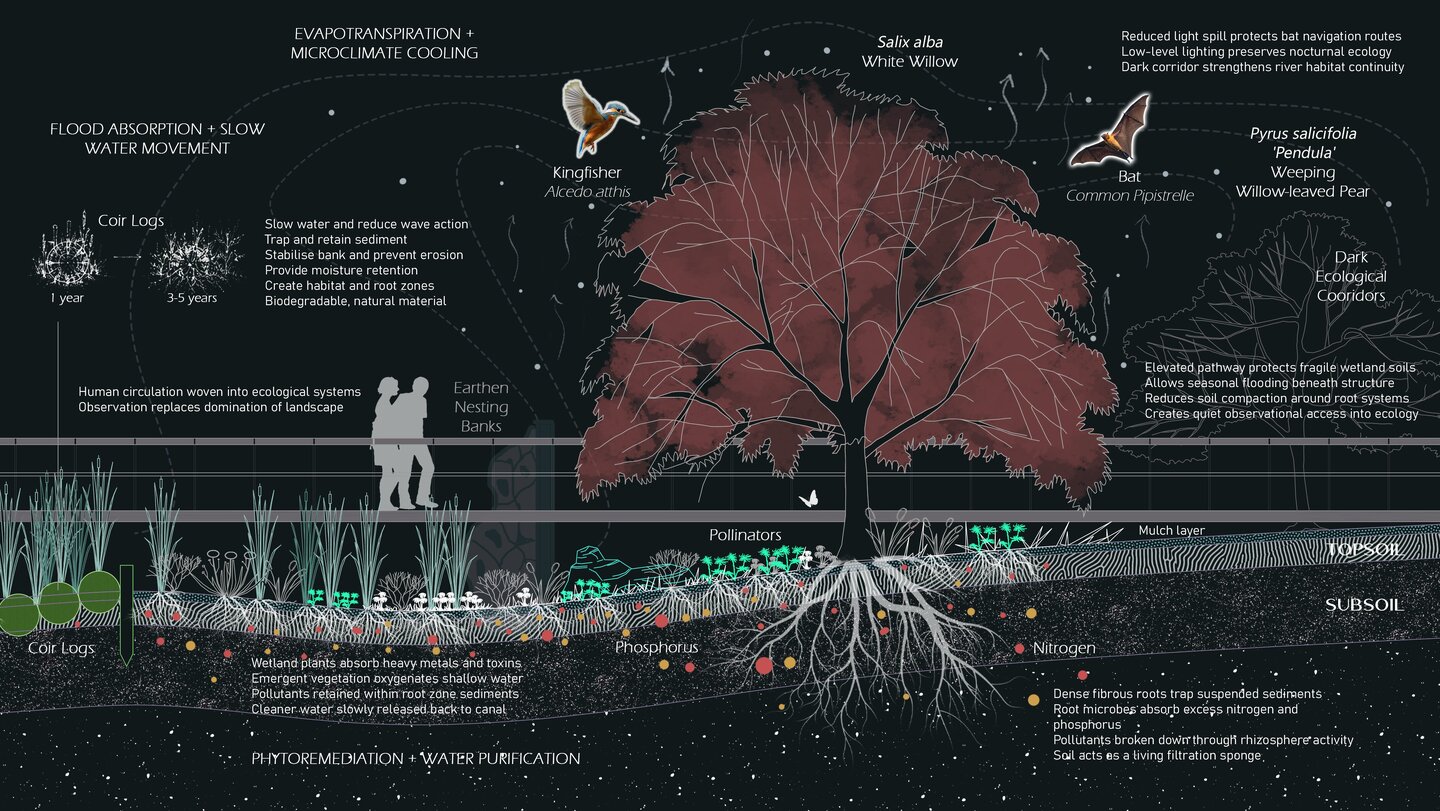
At the core of the proposal lies the idea that infrastructure itself can participate within ecological processes. Weathering steel walls record wind, water, sunlight, and human interaction over time; reclaimed materials age alongside surrounding vegetation; and pathways carefully weave through habitats while protecting spaces of refuge and hibernation. Human occupation becomes a controlled disturbance embedded within broader ecological cycles rather than separate from them. Through this layered relationship between biotic and abiotic systems, the site transforms into a constantly evolving environment one that blurs the boundary between permanence and transformation, architecture and ecology, observer and landscape.