

Special Connections
How can computational deseign methods help in preserving the future of educactional achievemtens?
THE PROJECT AIMS TO DESIGN A BUILDING WHICH ENCOURAGES THE MERGING OF DISJOINTED COMMUNITIES - BOTH WITHIN INSIDE THE INSTITUTION AS WELL AS OUTSIDE OF IT - OF LOCAL RESIDENTS, STUDENTS, RESEARCHERS, PROFESSIONALS ACROSS DIFFERENT FIELDS - THROUGH SHARED SPACES SUCH AS AN EXHIBITION HALL, MEETING AND NETWORKING SPACES, AND MOVEMENT AXIES, ALLOWING FOR CONSTANT KNOWLEDGE EXCHANGE.
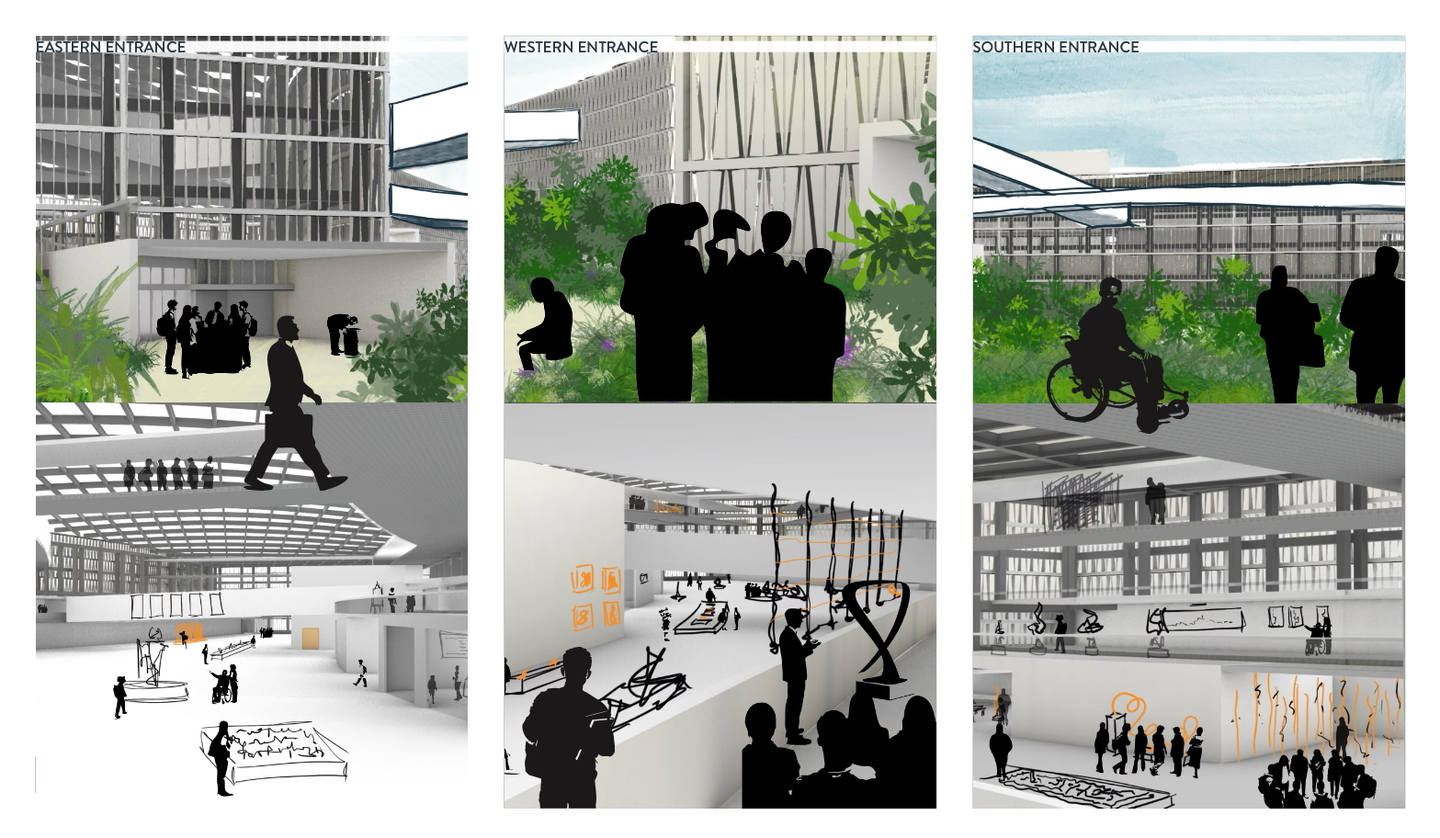
The project centres on a dynamic exhibition building where the main hall captures the university's present - filled throughout the year with student work across disciplines. The walkways serve as permanent exhibition space housing the past, curated by Special Collections from previous years' work. Flexible rooms accommodate teaching, reviews, and networking, while a lecture theatre supports events and education.
The building's core philosophy is adaptability; as the archive grows, the structure can expand, and spaces shift in use to reflect the ever-changing relationship between the university's past, present, and future. This is a direct response to what I have observed during my time at the Manchester Metropolitan University and the MSA. With the most prominent example being the end of year show and exhibition; which disappears after a month and seems to be forgotten. This projects aims to keep what the university produced.
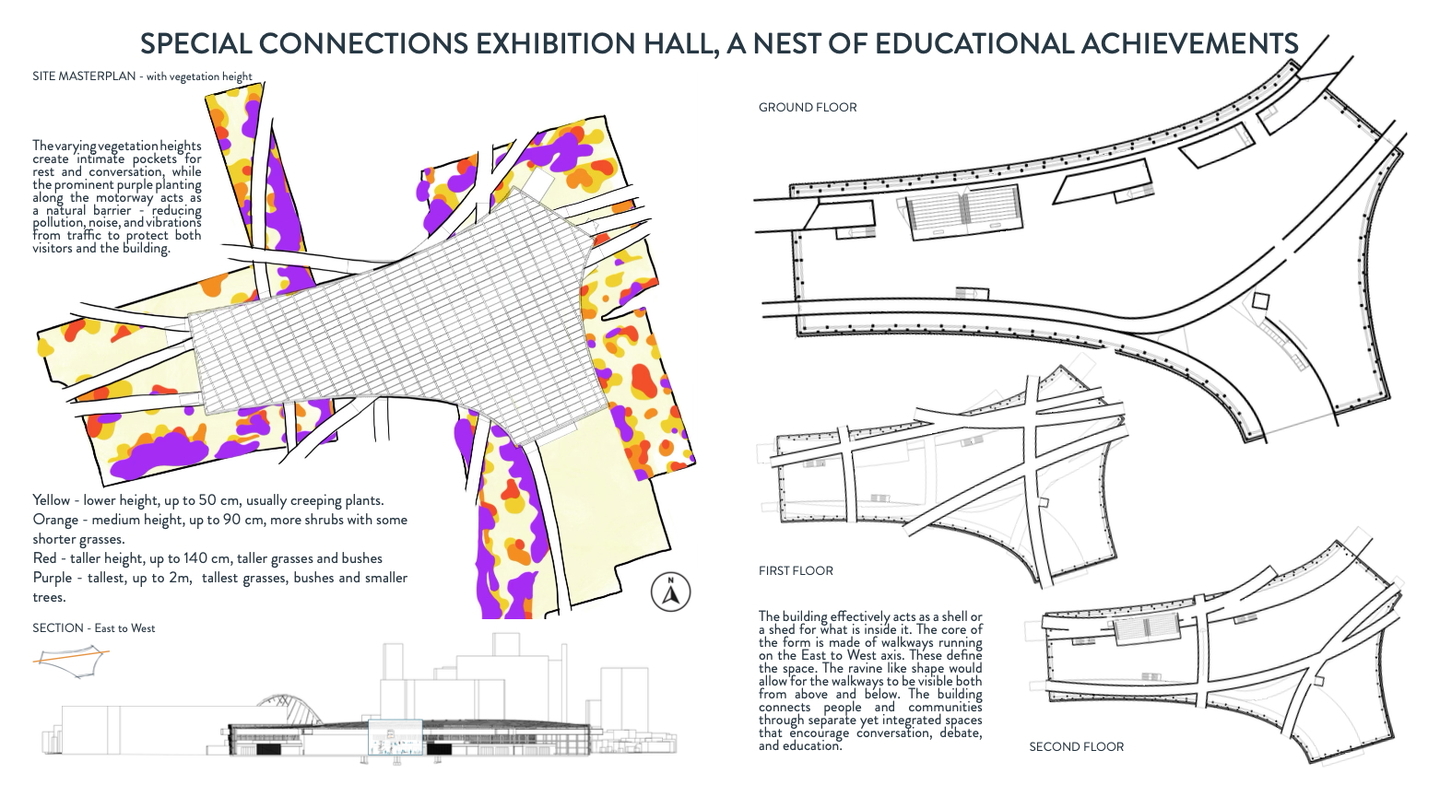
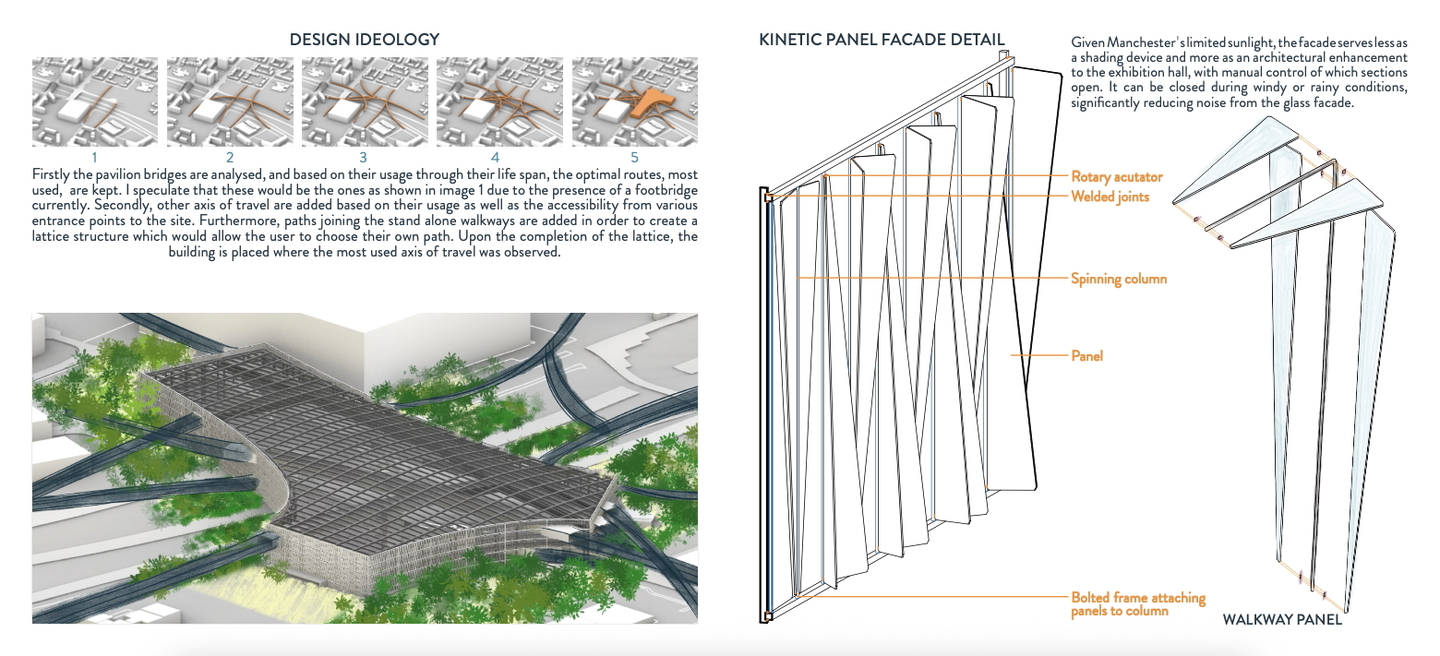
The design begins by analysing pedestrian movement across the site, retaining the most-used routes and layering in additional paths based on accessibility from key entry points. These are then connected into a lattice structure, giving users freedom to navigate the site as they choose. The main building is positioned at the most trafficked intersection of these routes.