

Museum of living habitats:Wetland ecologies for the Common Pochard
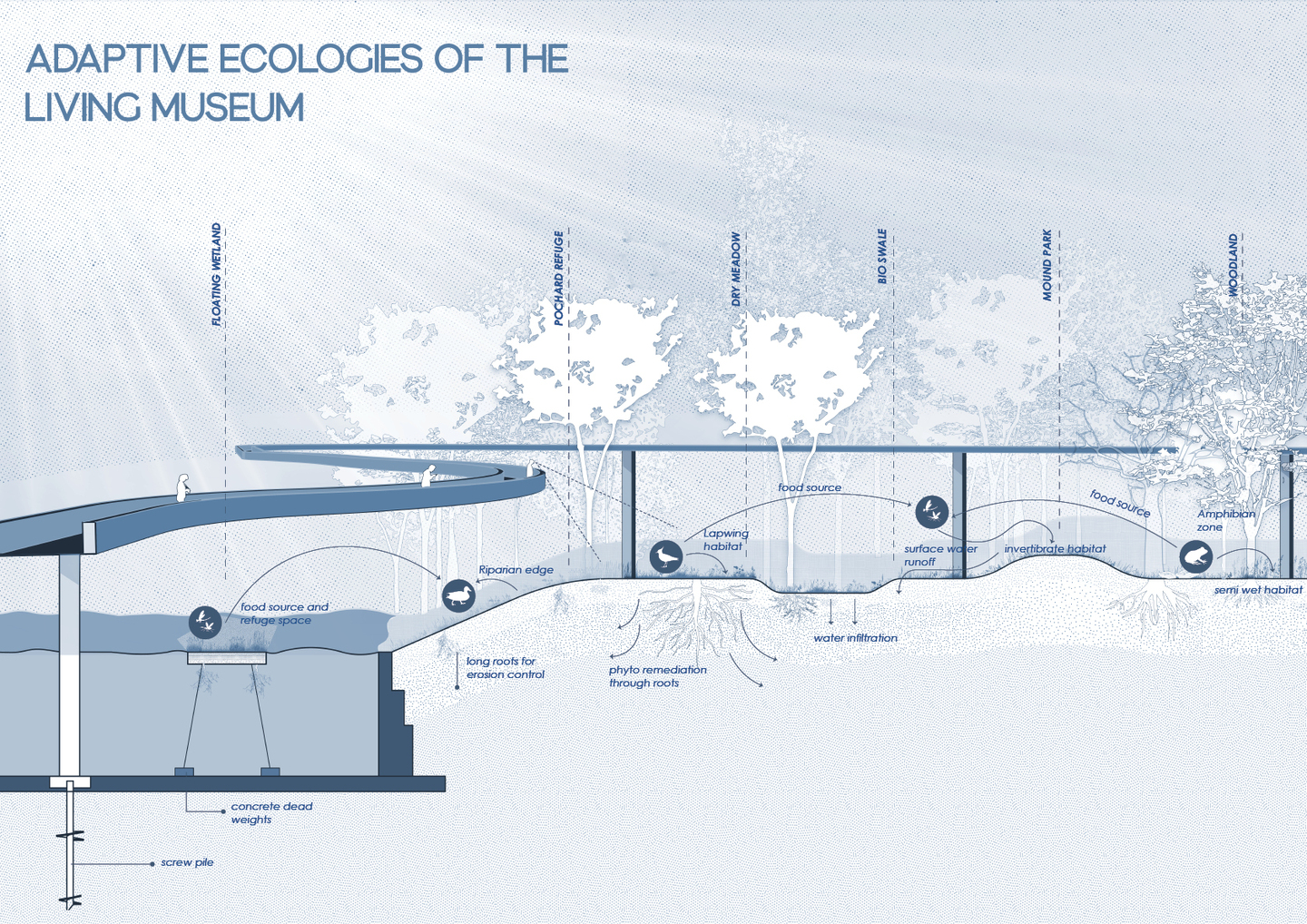
This project reimagines the edge of the Manchester Ship Canal as a living wetland museum focused on ecological regeneration, adaptation, and species recovery. Rather than restoring the site to a previous state, it transforms engineered canal edges into dynamic wetland ecologies that support biodiversity and long-term resilience.
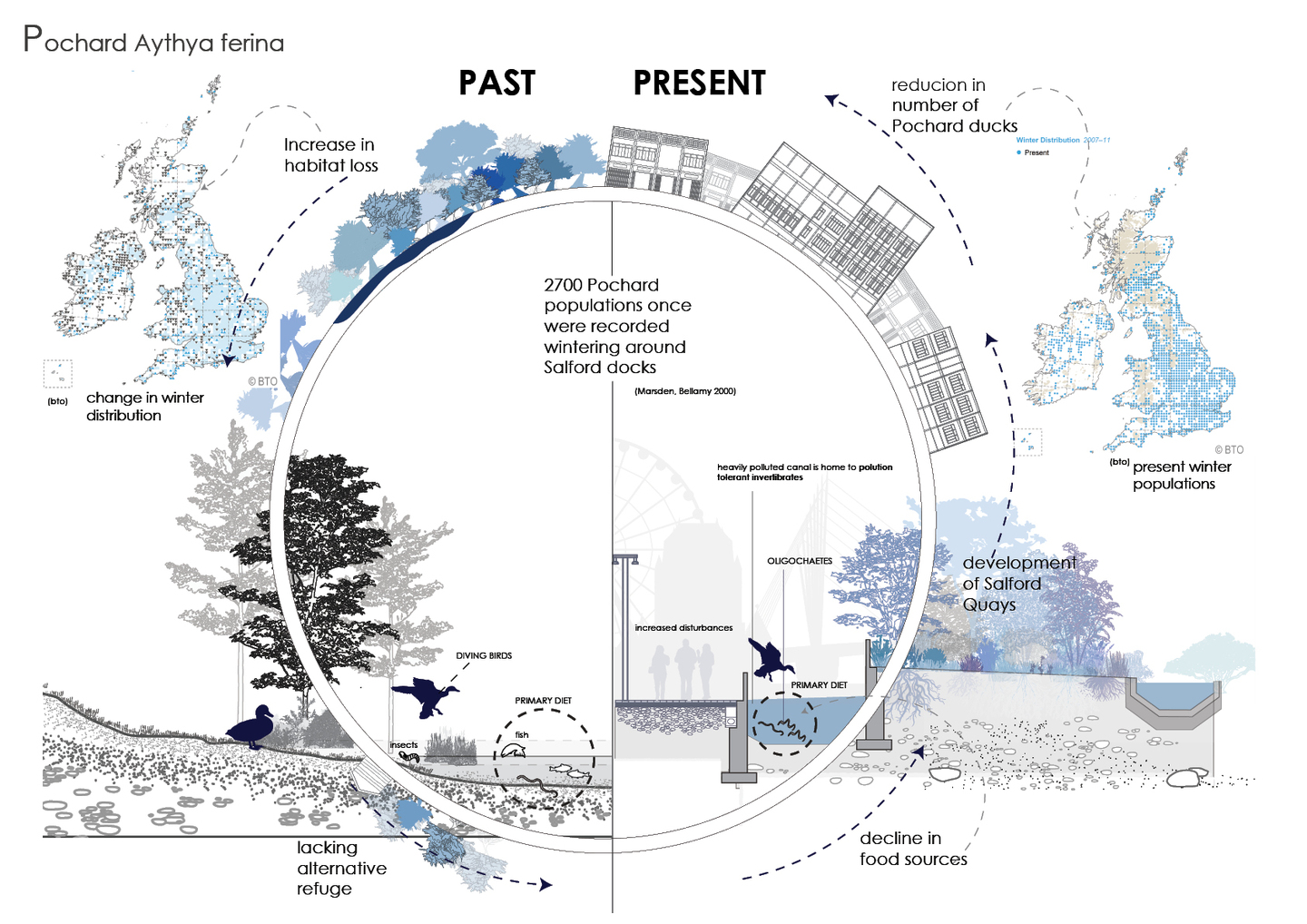
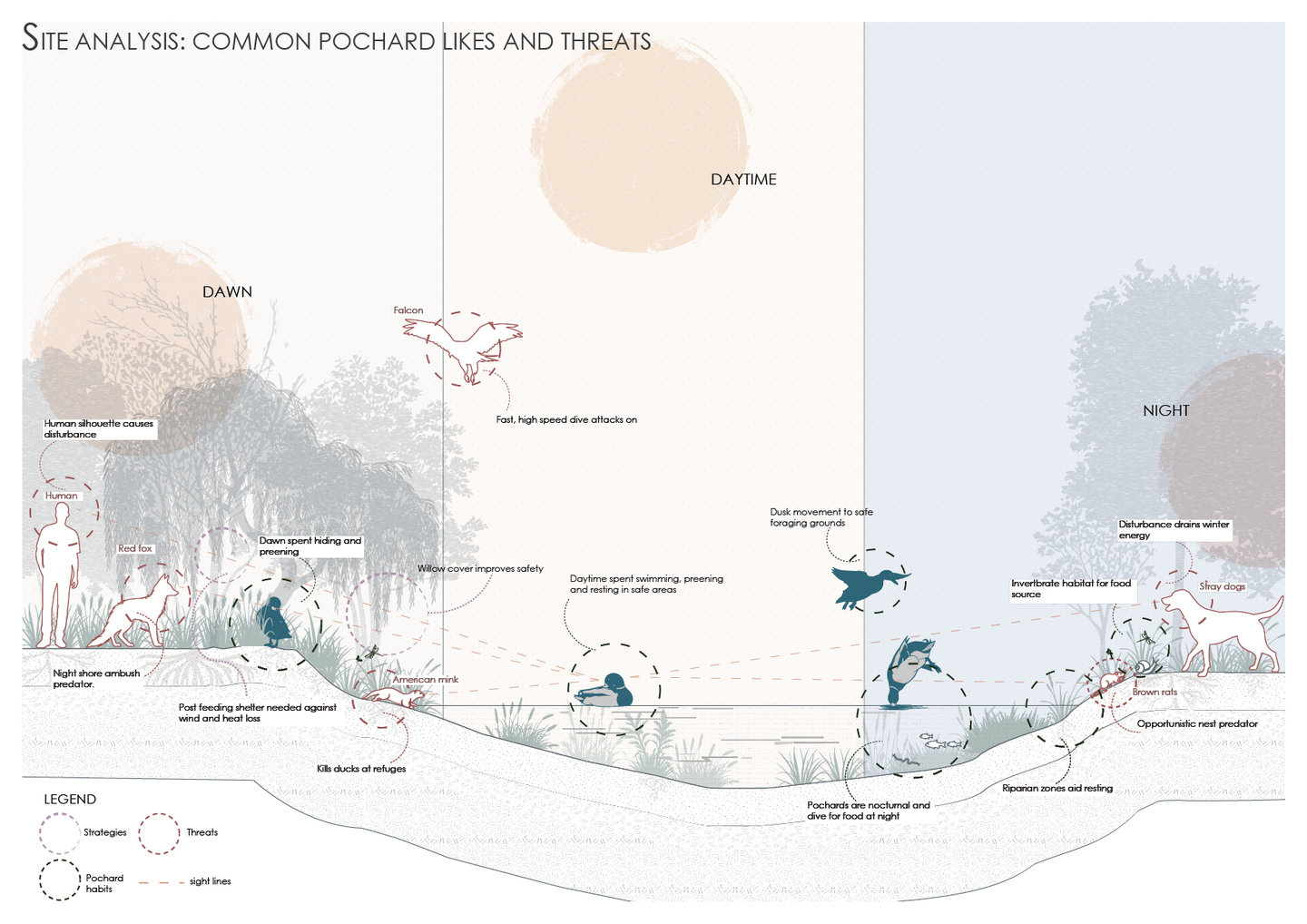
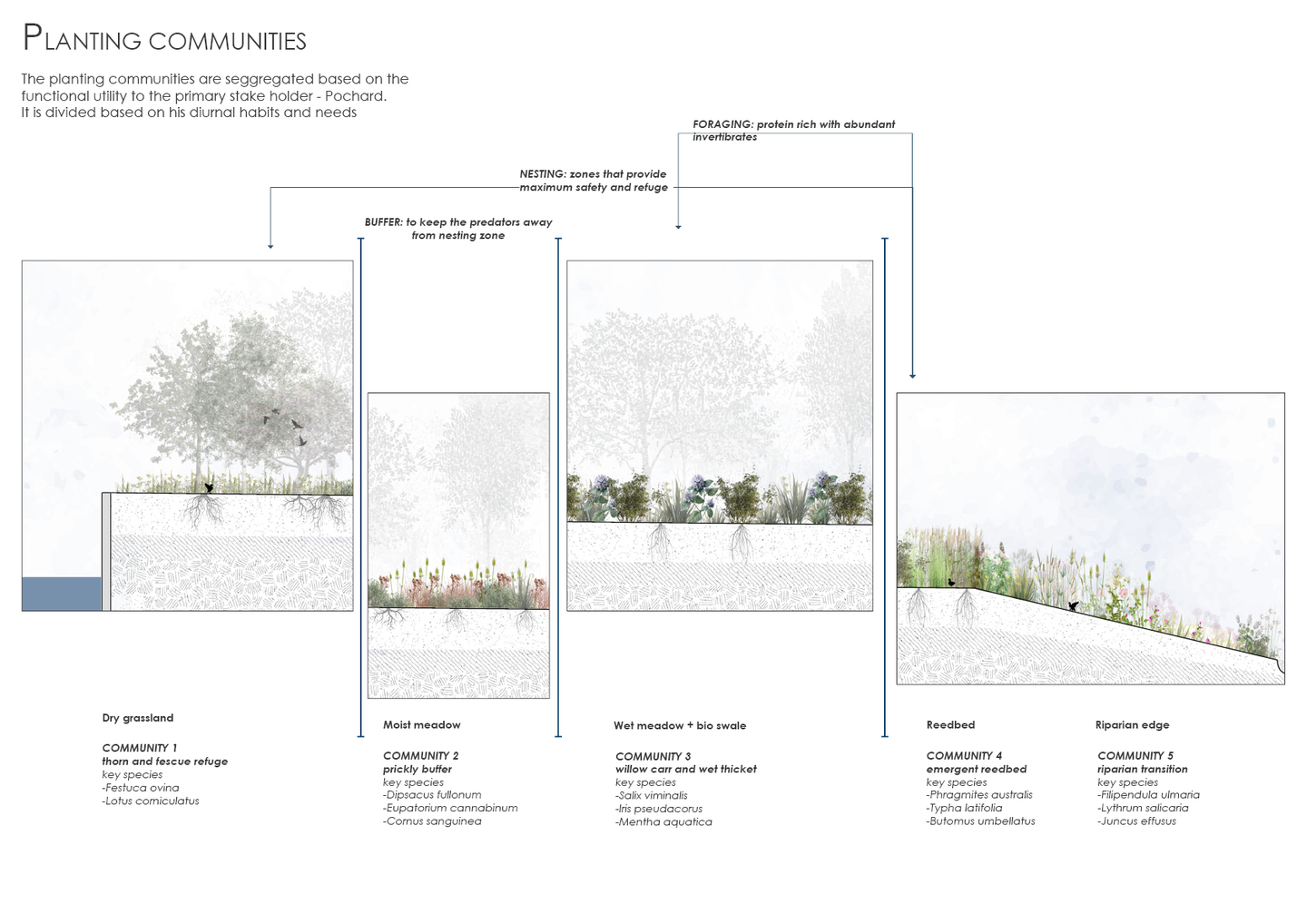
At the center of the proposal is the Common Pochard (Aythya ferina), a diving duck listed as Vulnerable on the IUCN Red List due to significant population decline. Adopting a more-than-human design approach, the project positions the Pochard as a primary stakeholder, shifting the focus from human-centered landscapes to habitats that prioritize shelter, nesting, feeding, and survival. It asks: How can an ecotone-based approach create resilient habitat conditions for the Common Pochard through landscape bio-strategies?
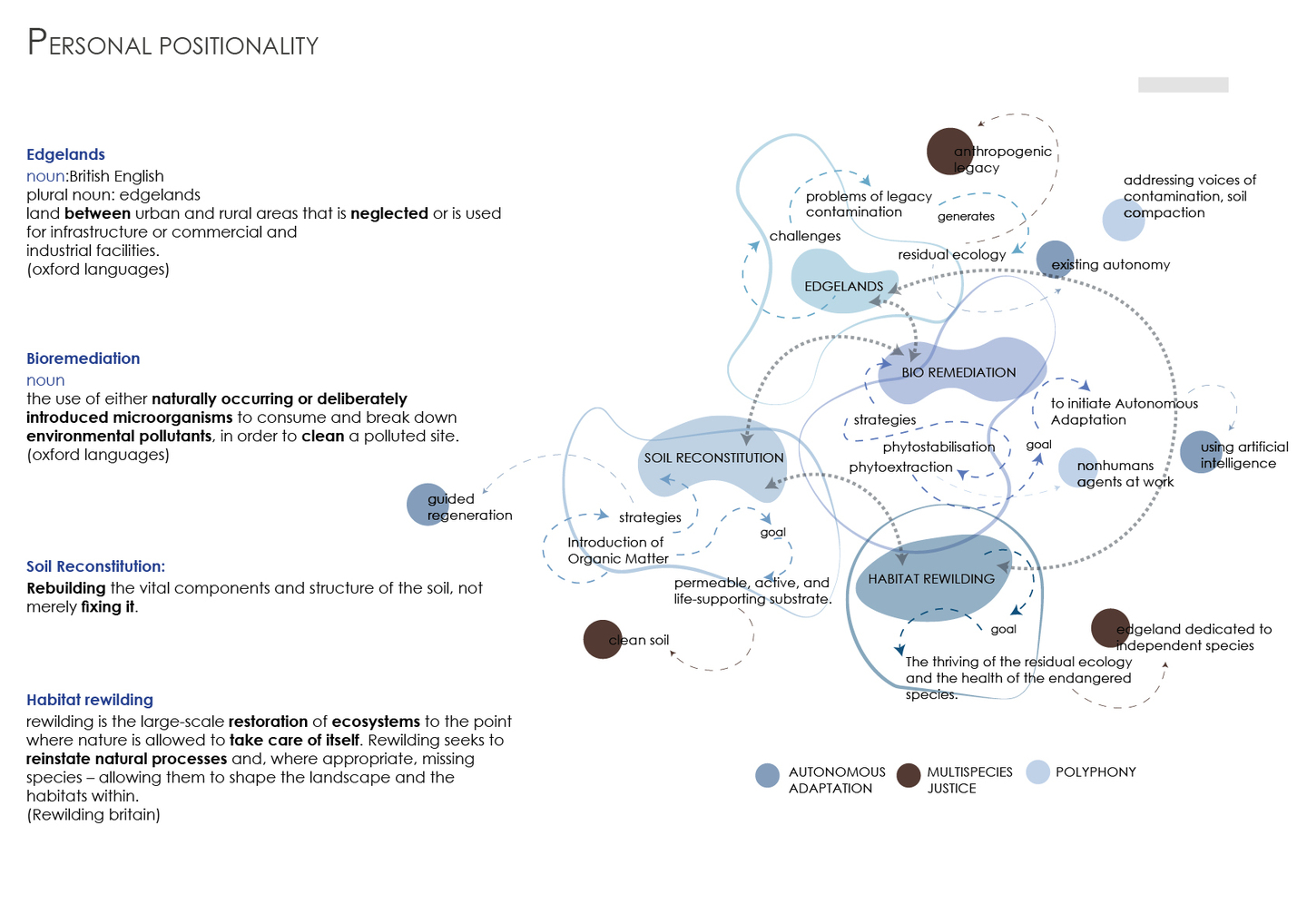
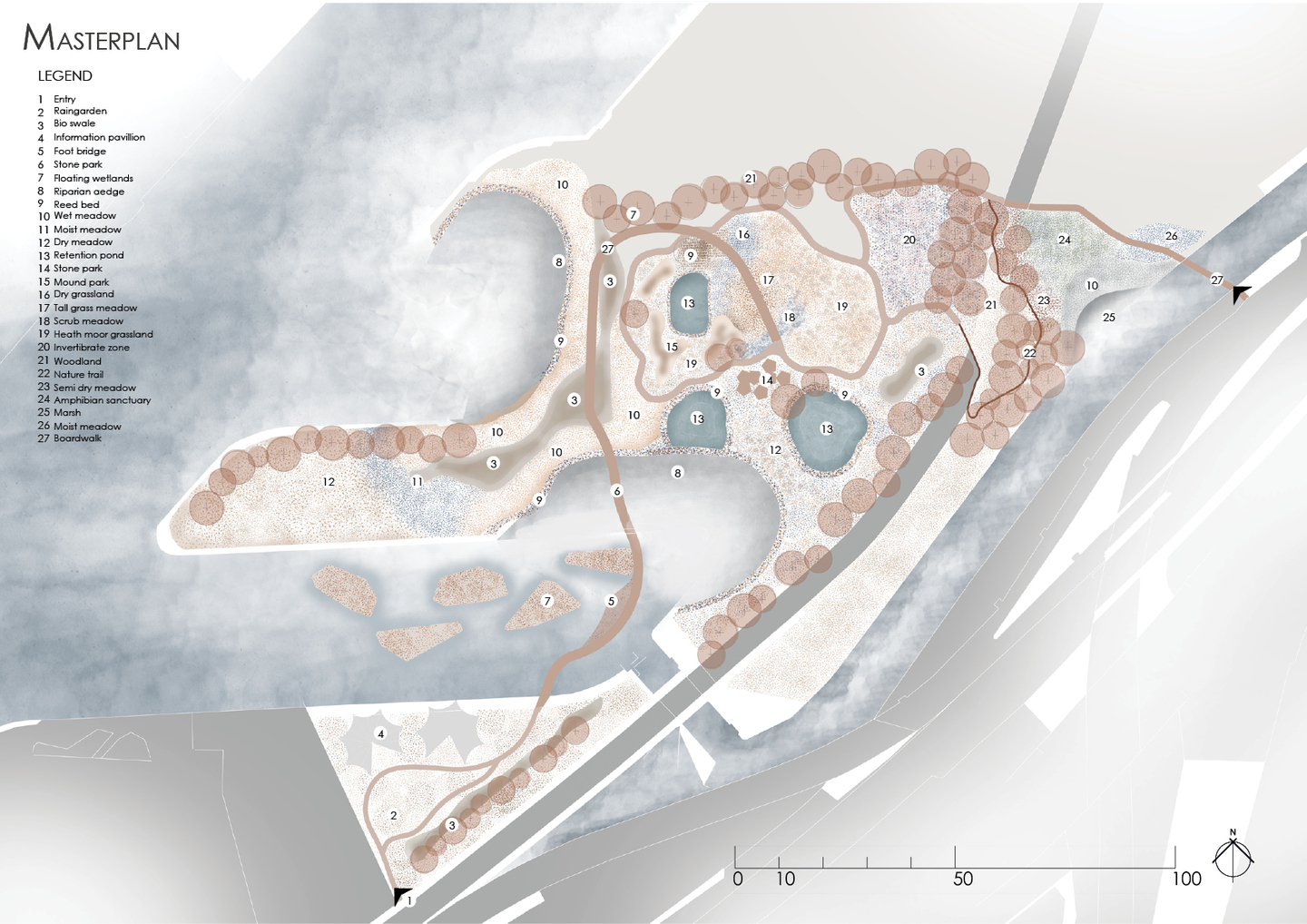
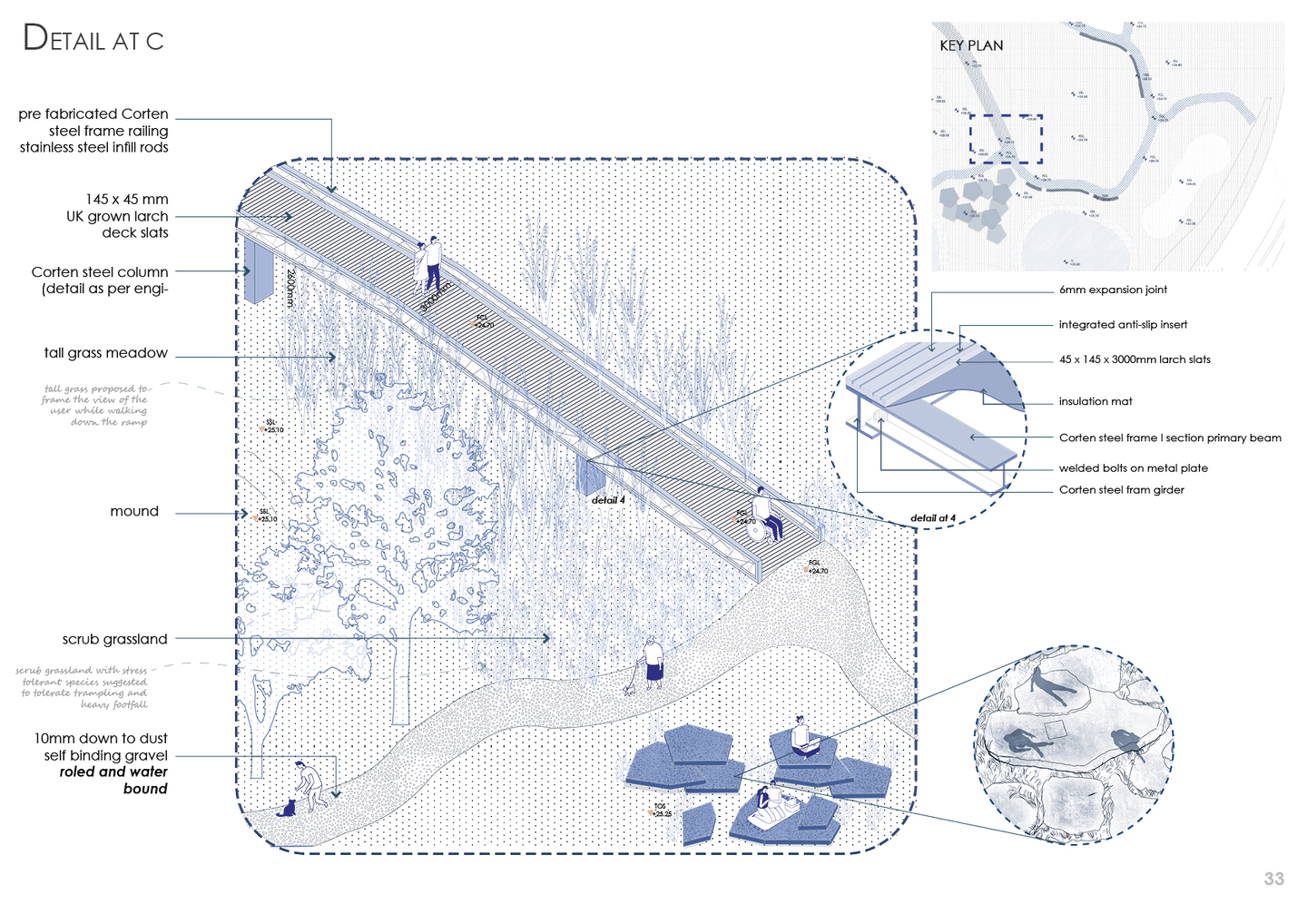
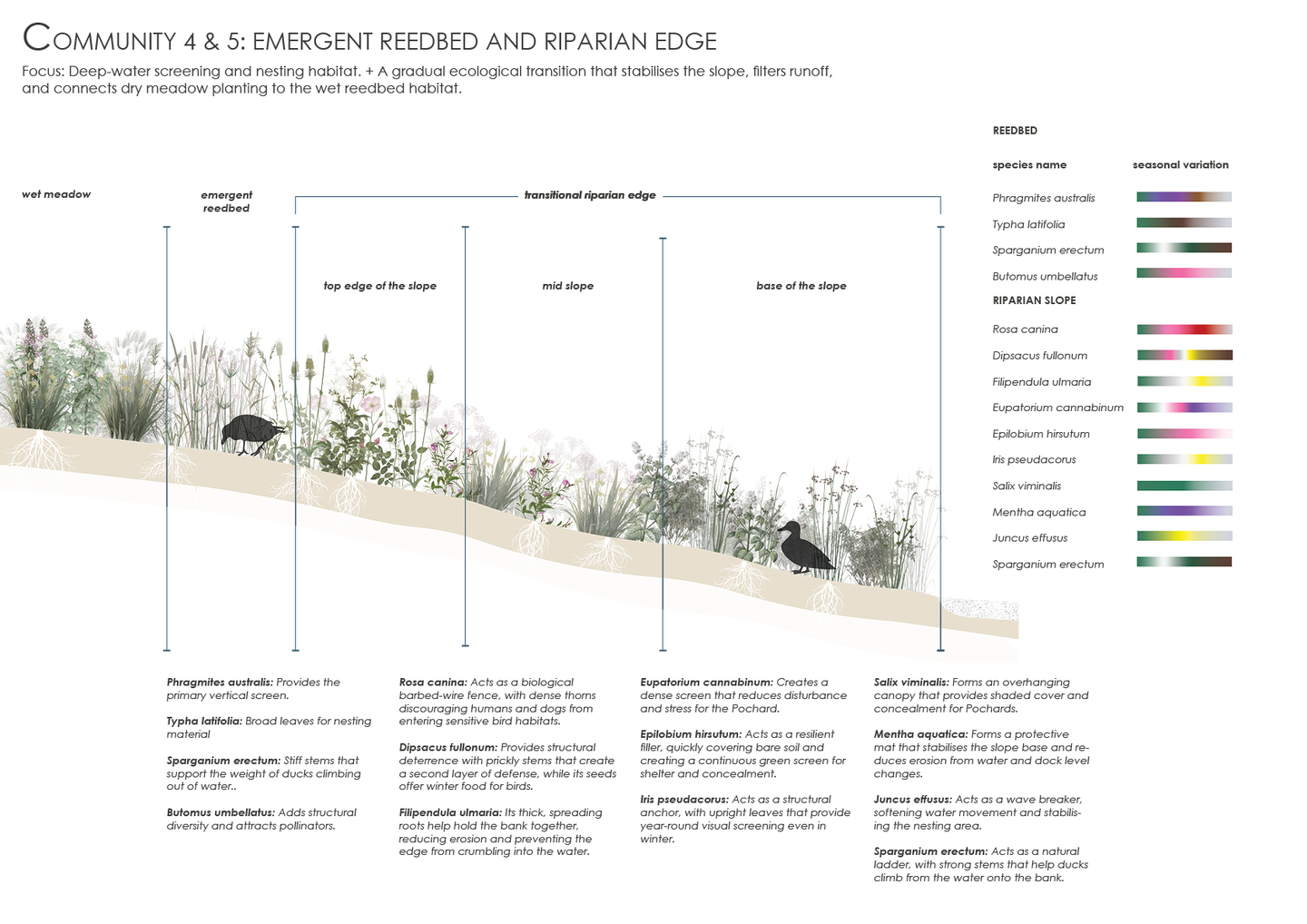
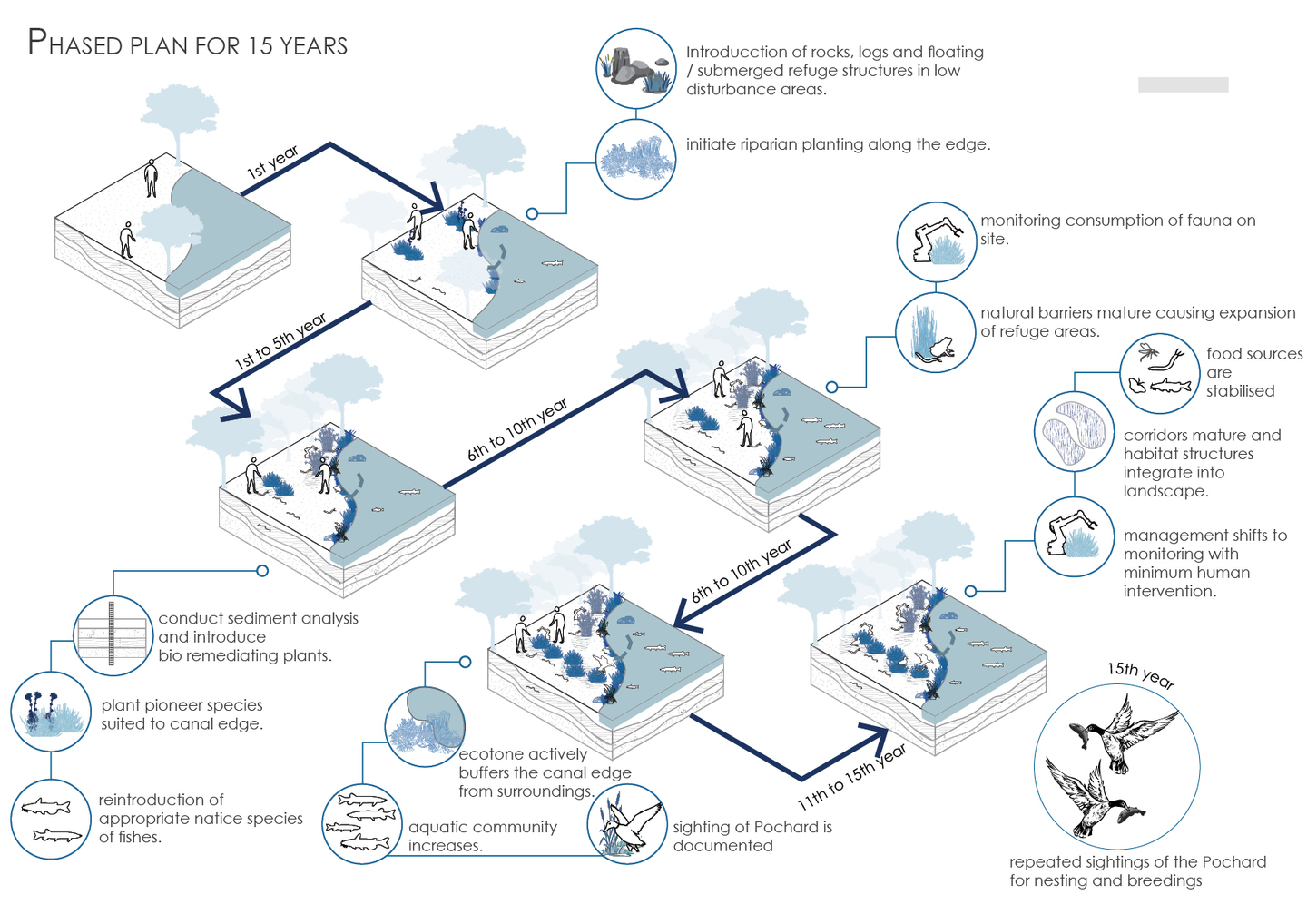
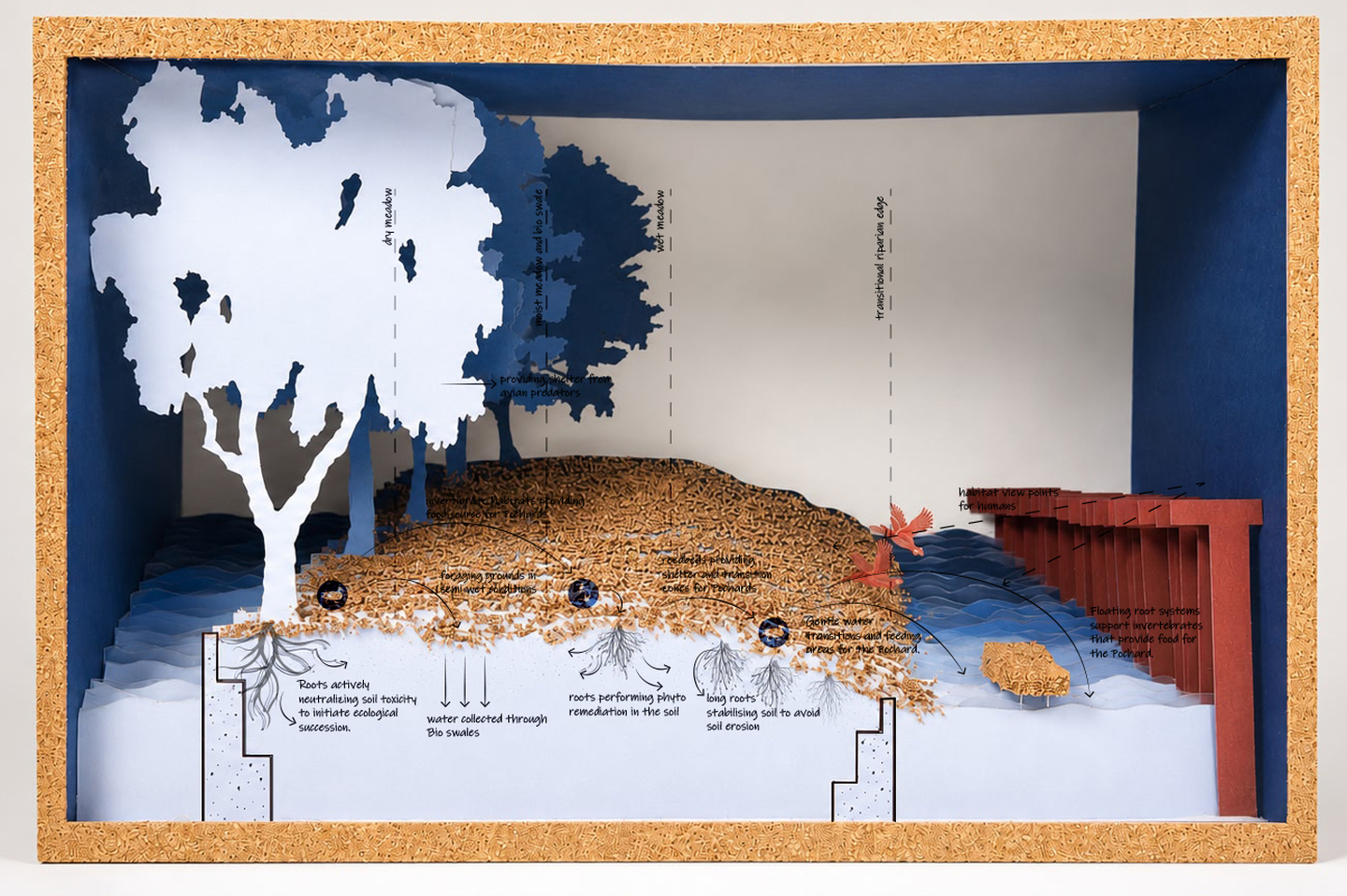
Rather than erasing the site’s industrial heritage, the design works with it. Concrete canal walls are selectively de-engineered to create sheltered wetland pockets, shallow nesting zones, and submerged rubble reefs formed from reclaimed materials. Through phytoremediation, bioremediation, and regenerative planting, the project improves water quality, restores ecological relationships, and establishes layered habitats that benefit both the Pochard and wider wetland species.
The proposal redefines the traditional museum as a living, evolving ecology where habitat becomes exhibit and natural processes become the form of curation. Seasonal flooding, vegetation growth, sediment movement, and bird migration continuously shape the landscape over time. Ultimately, the project explores how landscape architecture can move beyond human-centered design, enabling post-industrial landscapes to become adaptive environments of repair, coexistence, and ecological renewal.