

Calling Home
The traditional suburb was never designed for everyone. Rows upon rows of houses, each within its own bubble of nuclear family life, fail to recognise duality and intersectionality. Carefully curated communities often limit recognition, rooted in biases surrounding who can afford to belong and who can identify with a space and its inhabitants.
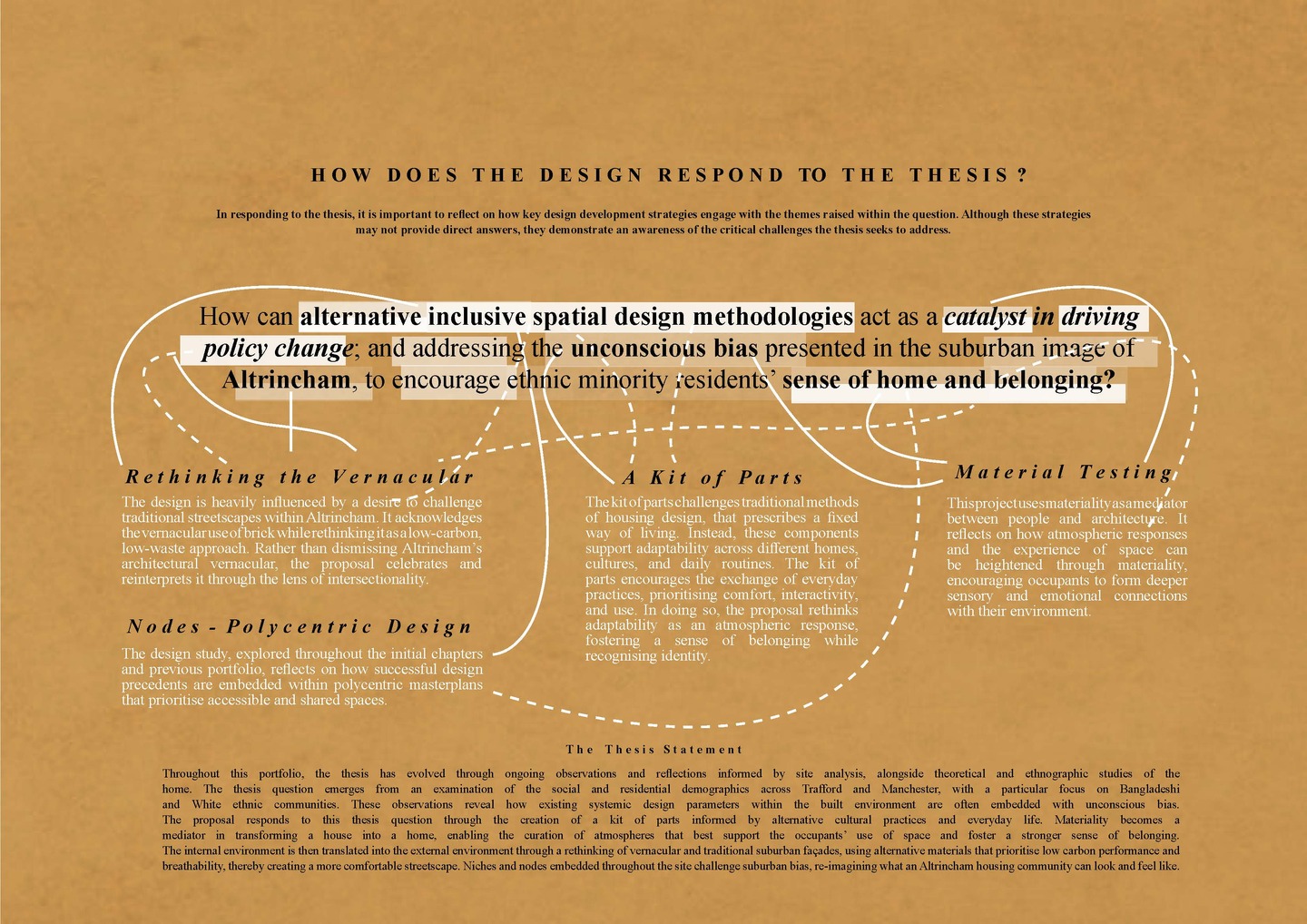
This leads to the following thesis question:
'How can alternative inclusive spatial design methodologies act as a catalyst for policy change, while addressing the unconscious bias embedded within the suburban image of Altrincham, to encourage ethnic minority residents’ sense of home and belonging?'
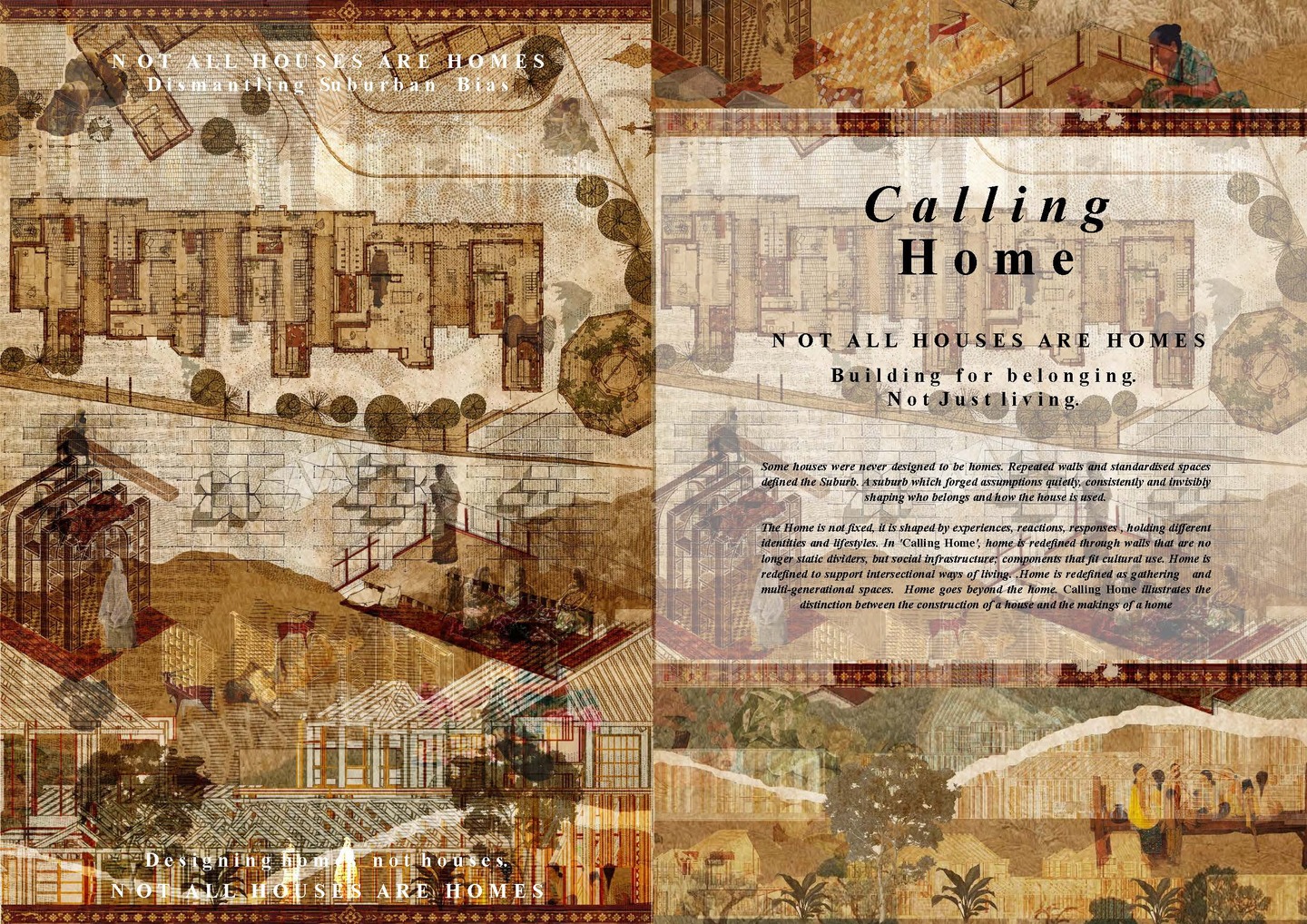
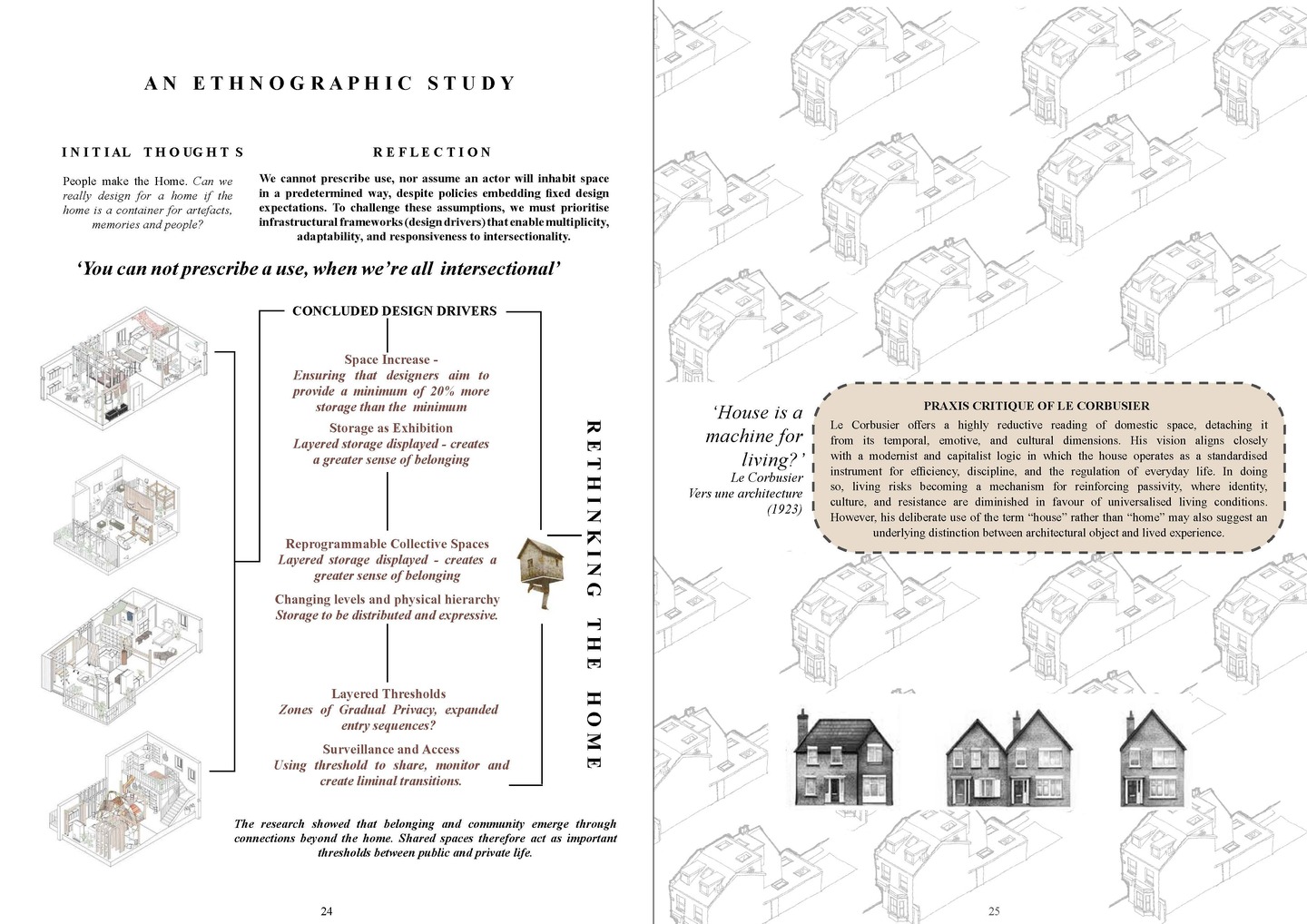
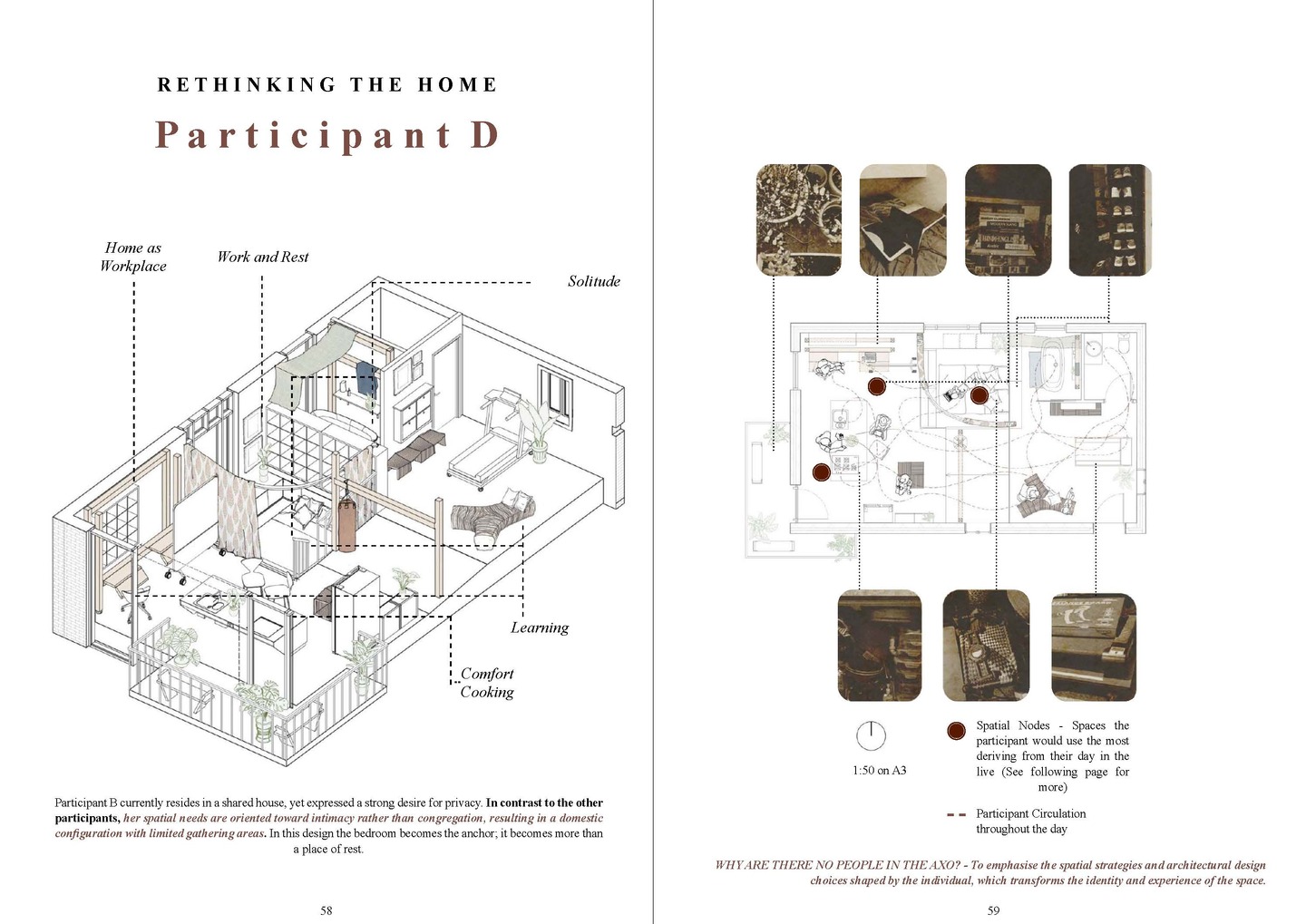
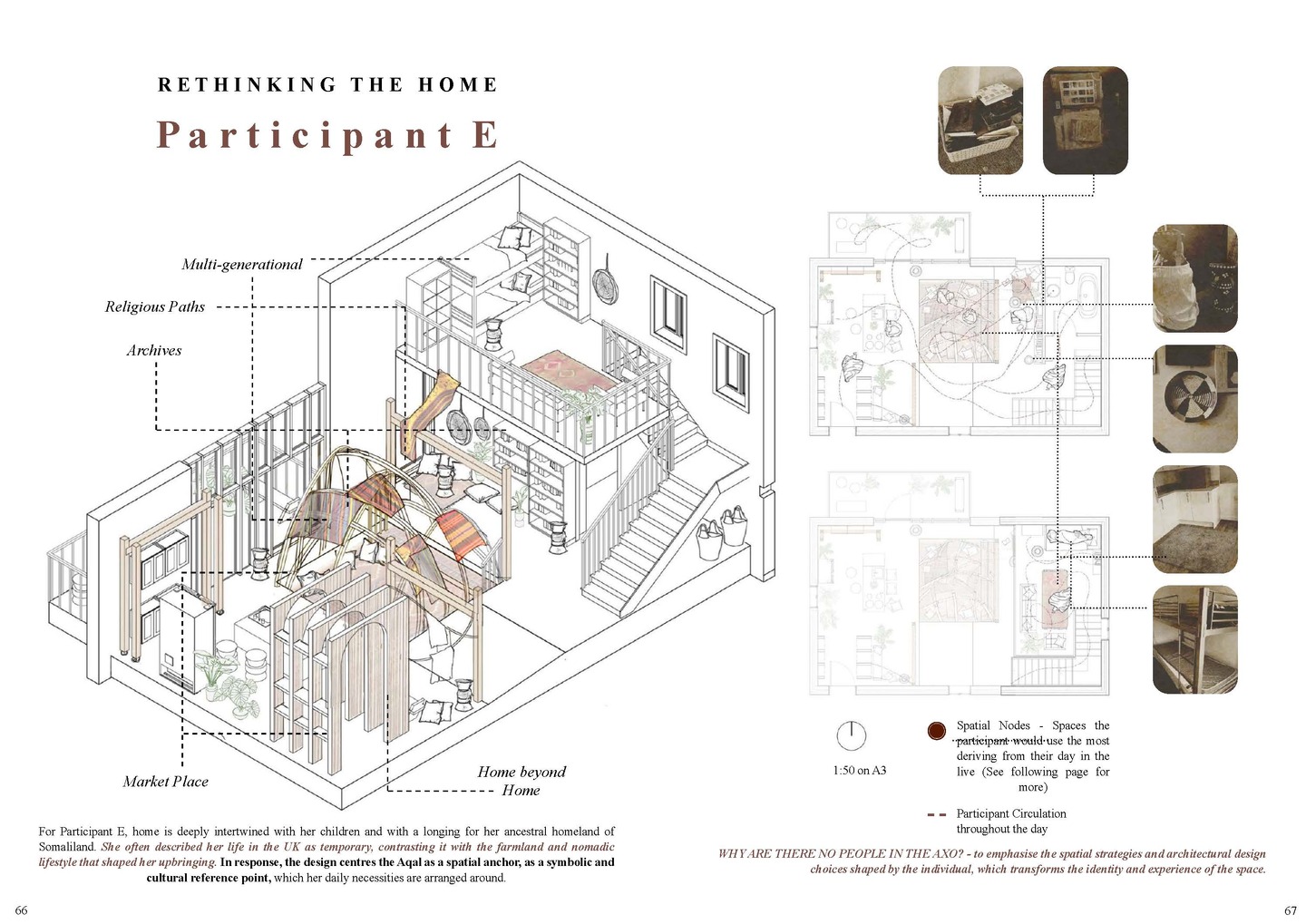
This project responds to the thesis question by reflecting on the idea that some houses were never designed to be homes. Home is not fixed; it is shaped by experiences, interactions, identities, and lifestyles.
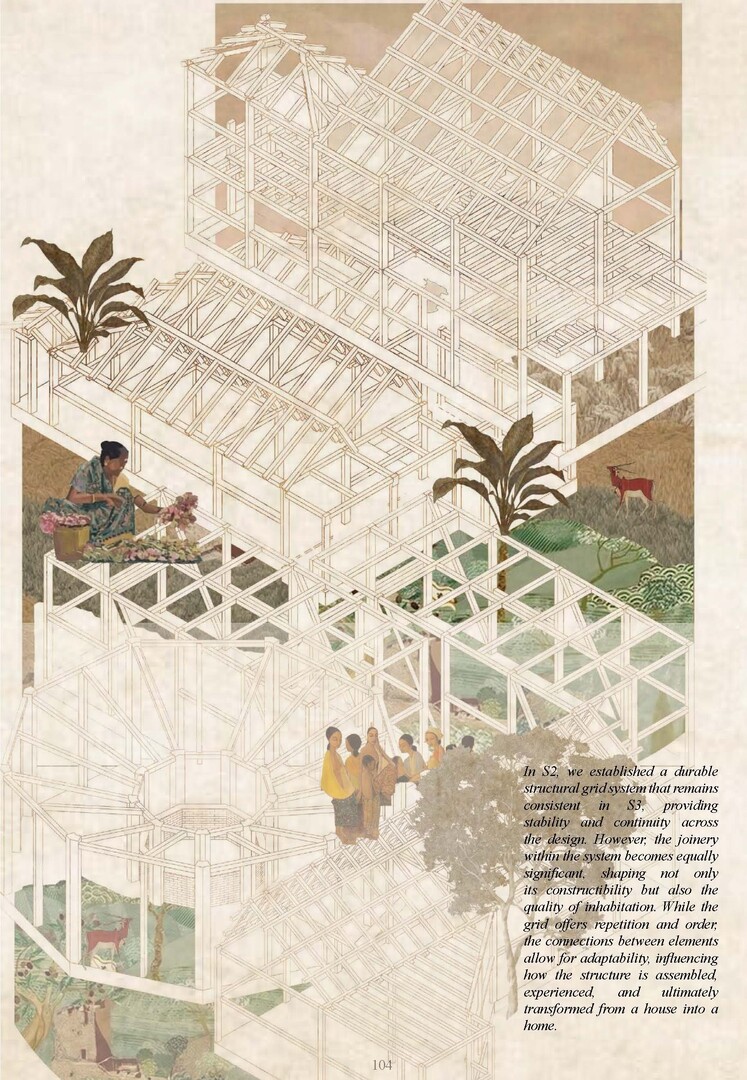
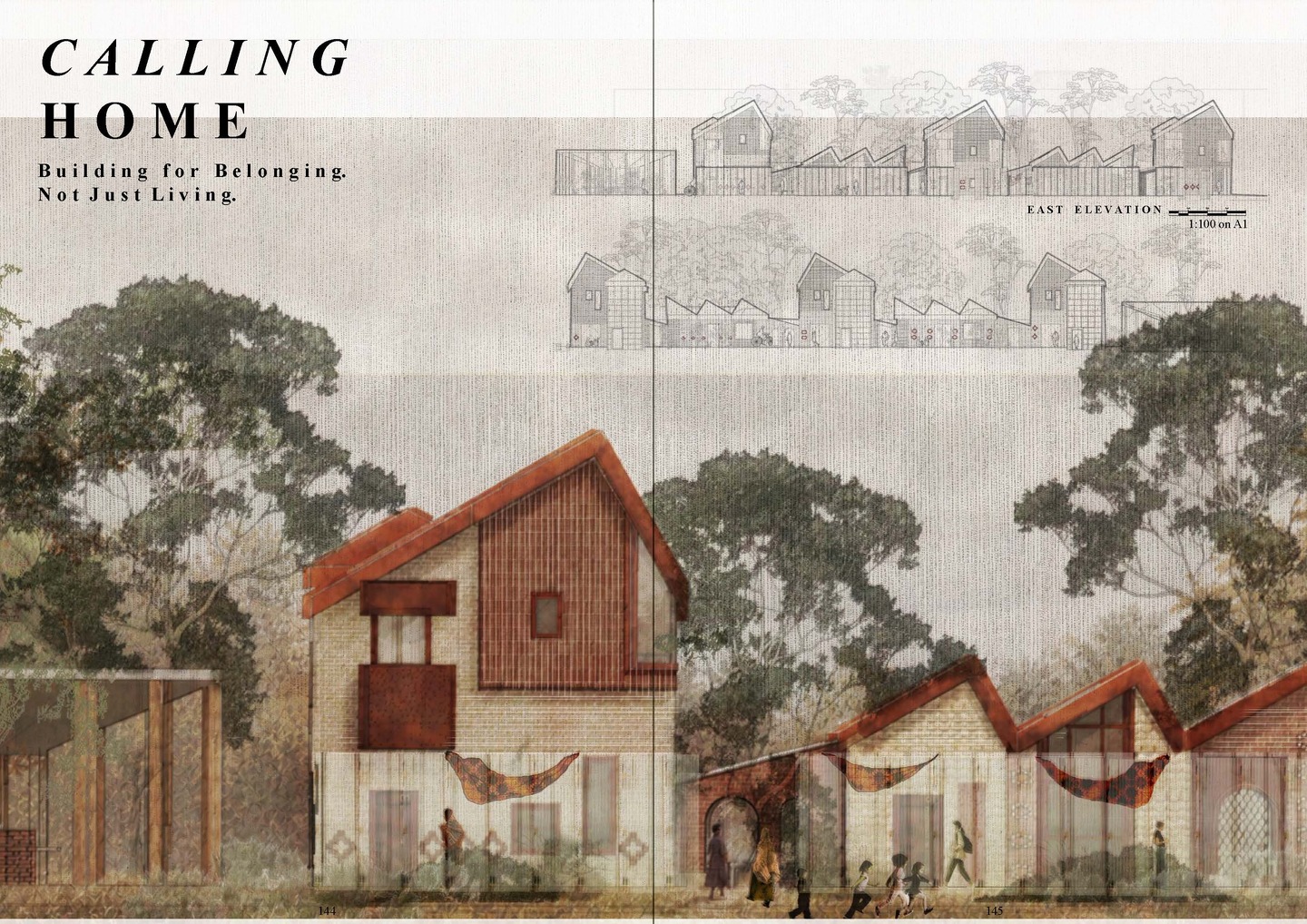
In Calling Home, home is redefined beyond the house. It illustrates the distinction between constructing a house and designing a home. By balancing public and private spaces and exploring materiality, the project transforms a house into a home, shaping atmospheres that support everyday life and foster belonging.
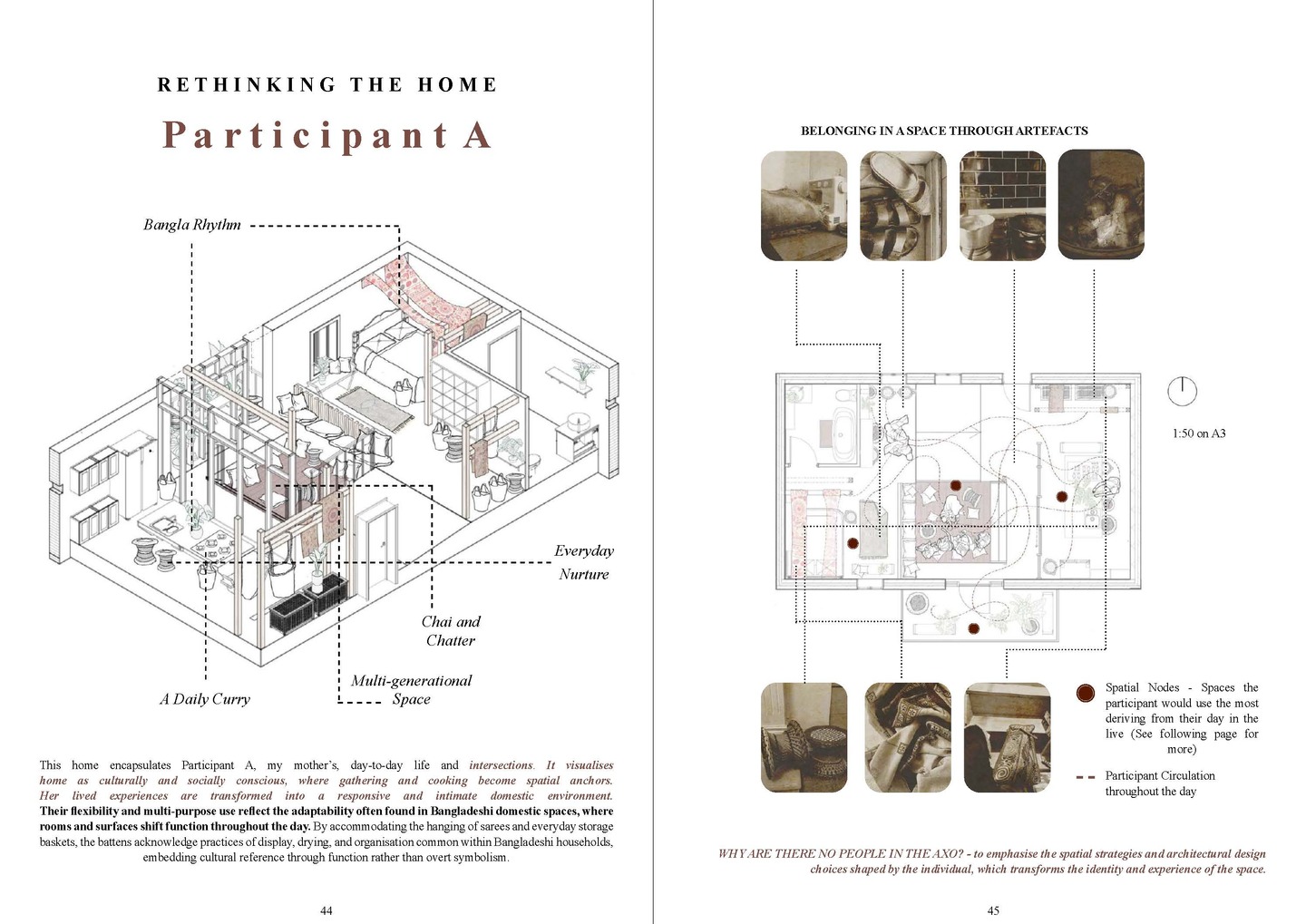
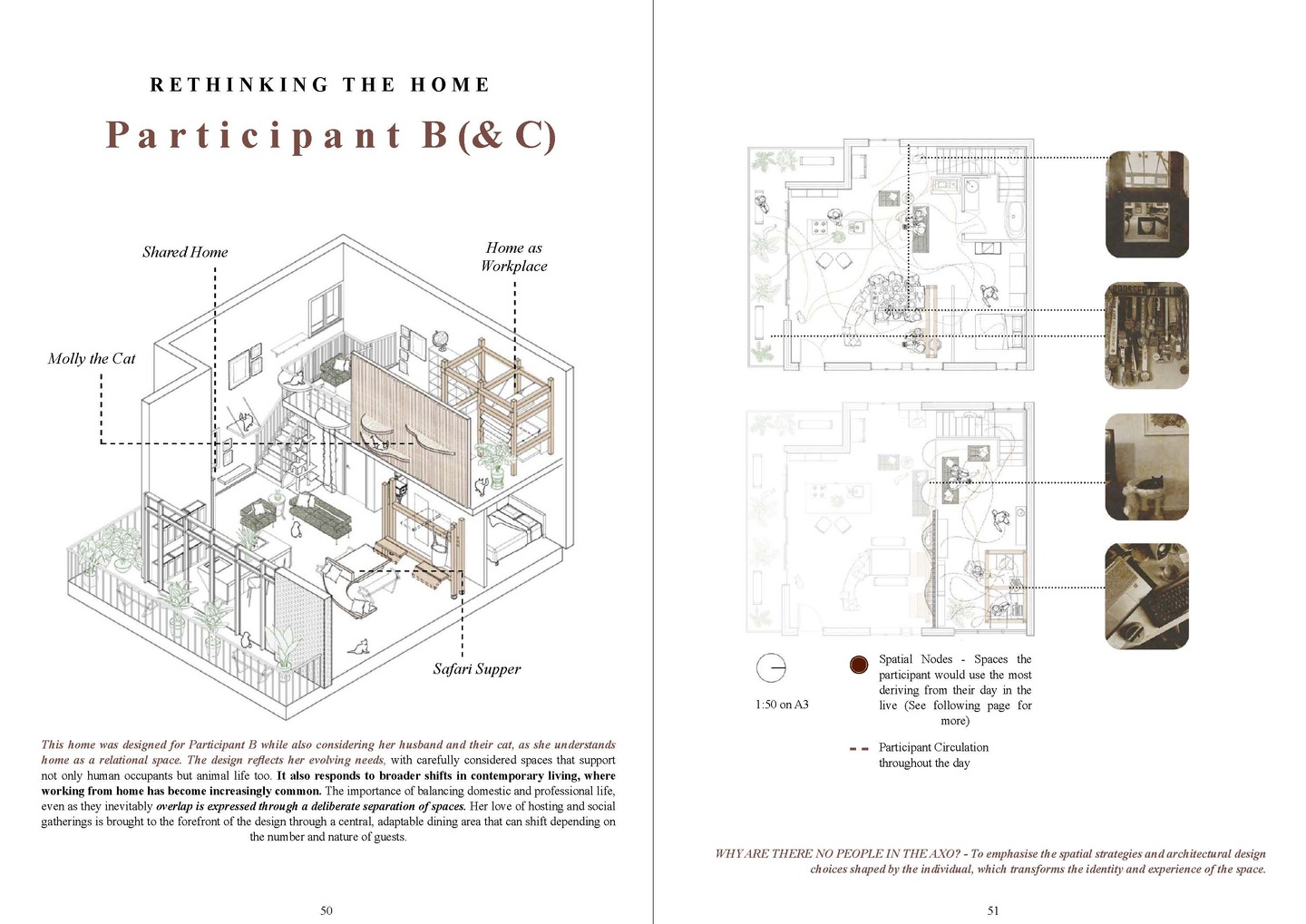
Home is redefined through walls that are no longer static dividers but social infrastructure; components that adapt to cultural use. It supports intersectional ways of living, gathering, and multi-generational households.
The project manifesto targets developers and designers in the hope that, by speaking a language of longevity, adaptability, and necessity, the proposed masterplan can become a catalyst for local authority awareness. By targeting developers first, the project becomes a design mechanism through which interventions act as strategic tools for change. Policy change follows practice. Practice begins with developers.