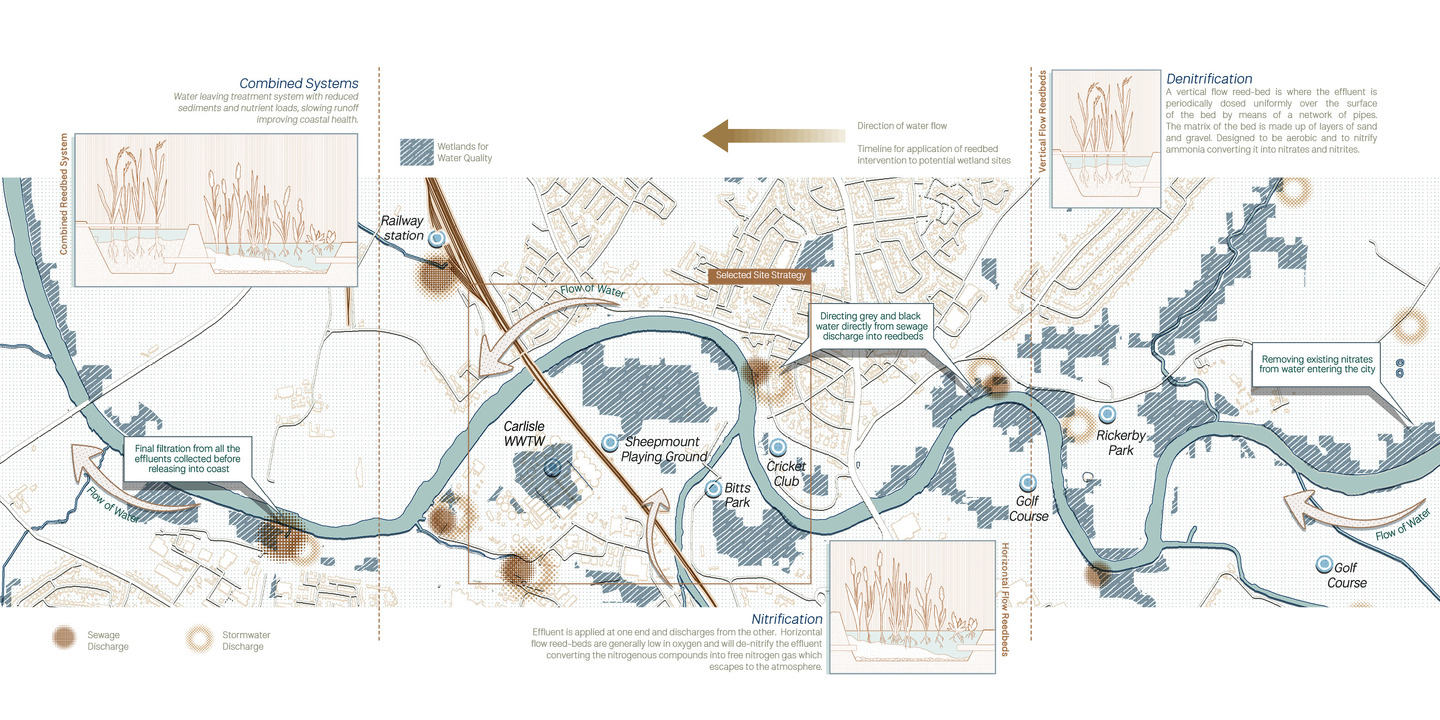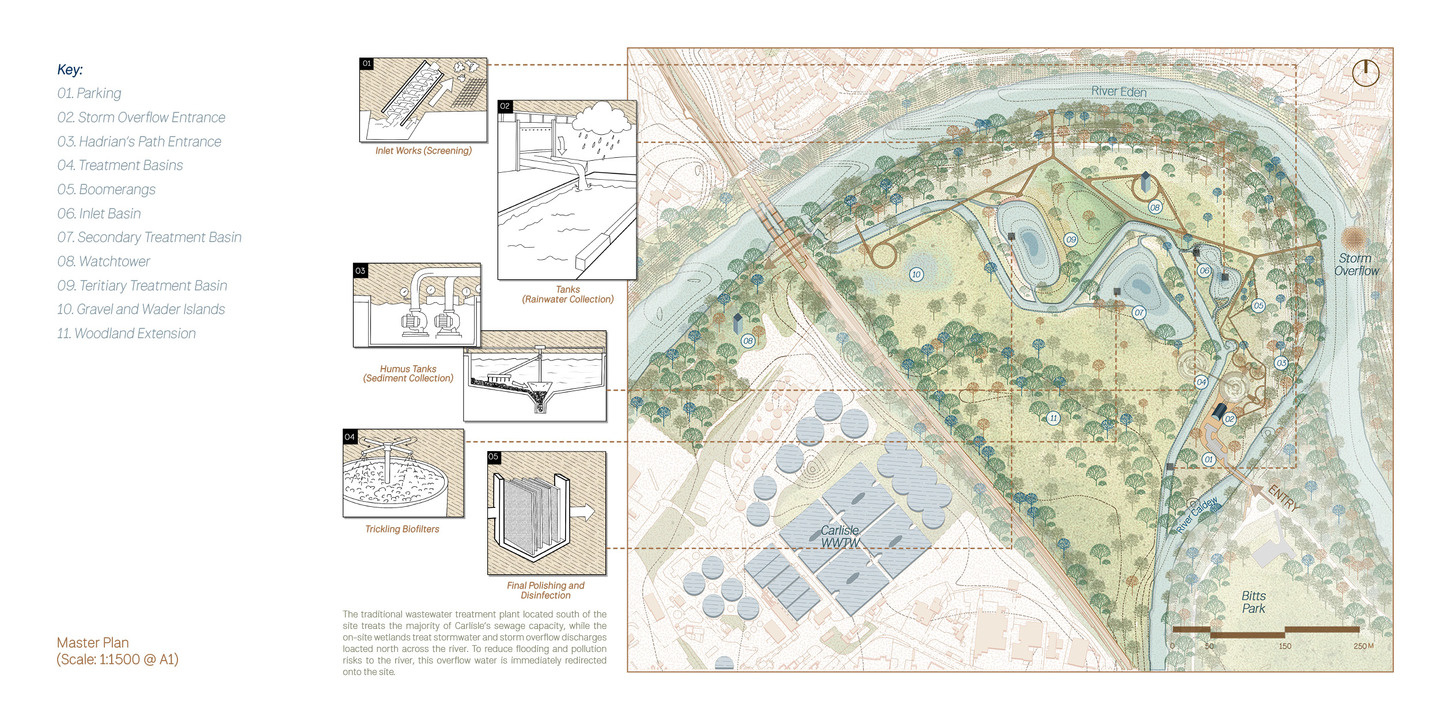


‘The Silent Filter’ landscape intervention is designed to combat Carlisle’s urgent environmental challenges: catchment-wide nutrient pollution, urban flooding, and centralization crises. Triggered by England’s strict Nutrient Neutrality (NN) mandates, which restrict housing development due to additional wastewater burdens, the project introduces a nature-based alternative. Co-located directly adjacent to the traditional industrial Carlisle Wastewater Treatment Works (WWTW), the design utilizes a gravity-fed loop to intercept and naturally treat stormwater and storm overflow discharges before they breach the River Eden and Caldew catchments.
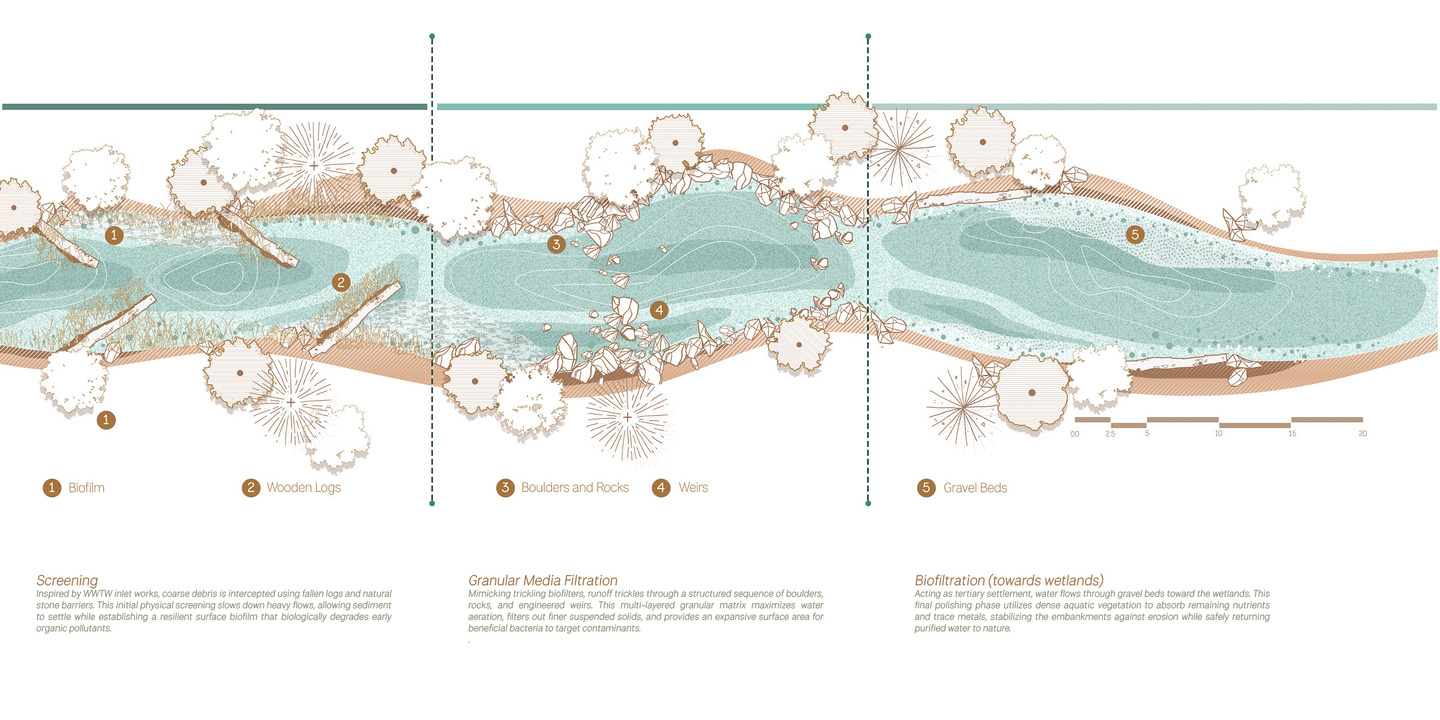
The design aims to create a gradient that seamlessly transitions from industrial hard engineering into soft engineering (from a wastewater treatment plant to a multi-stage living filtration park). The water journey progresses through five highly visual, transparent phases:
Screening: Intercepting large debris using natural fallen log barriers.
Sedimentation: Dropping heavy silt into sediment basins and utilizing boomerang swales.
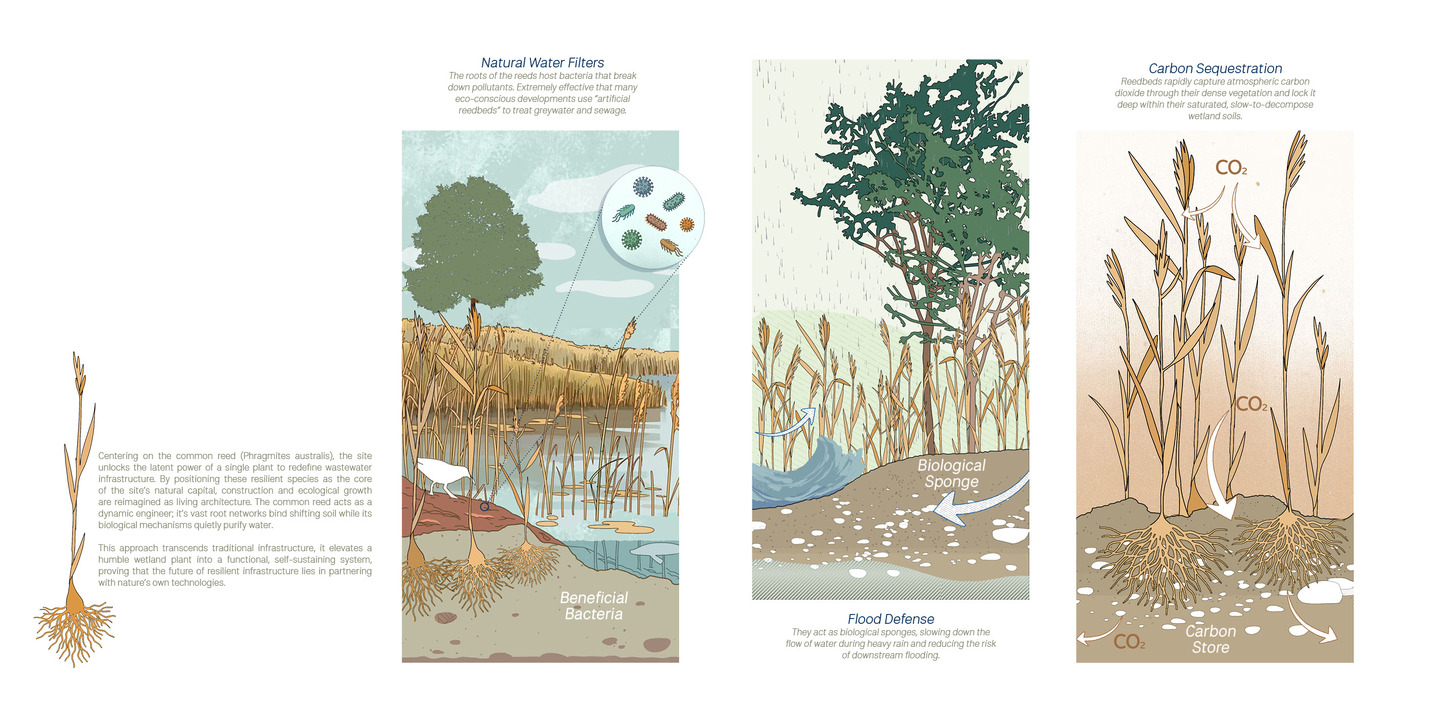
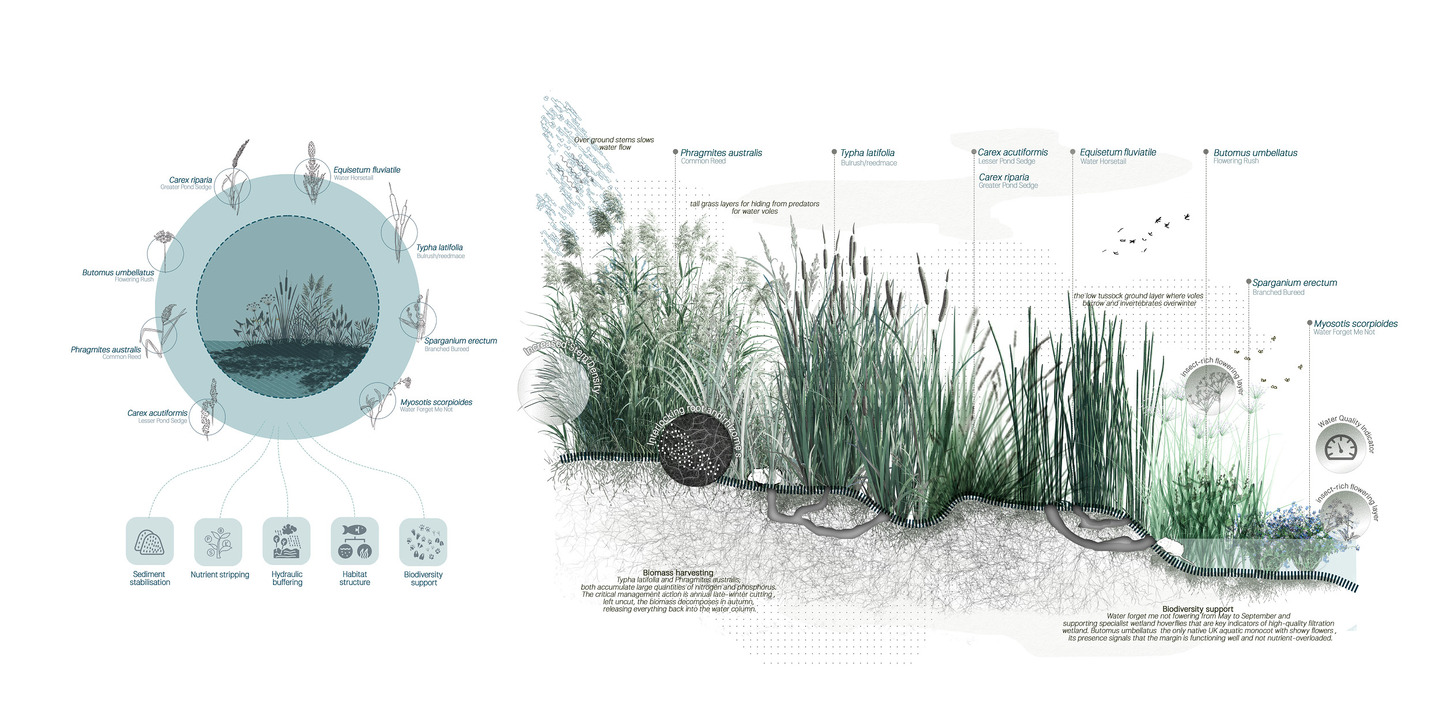
Phyto-remediation: Harnessing common reed (Phragmites australis) matrices to strip excess nutrients.
Percolation: Mechanical filtration through structured stone, gravel, and sand beds.
Final Polish:Discharging filtered water into open, sunlit ponds before returning it to the river ecosystem.
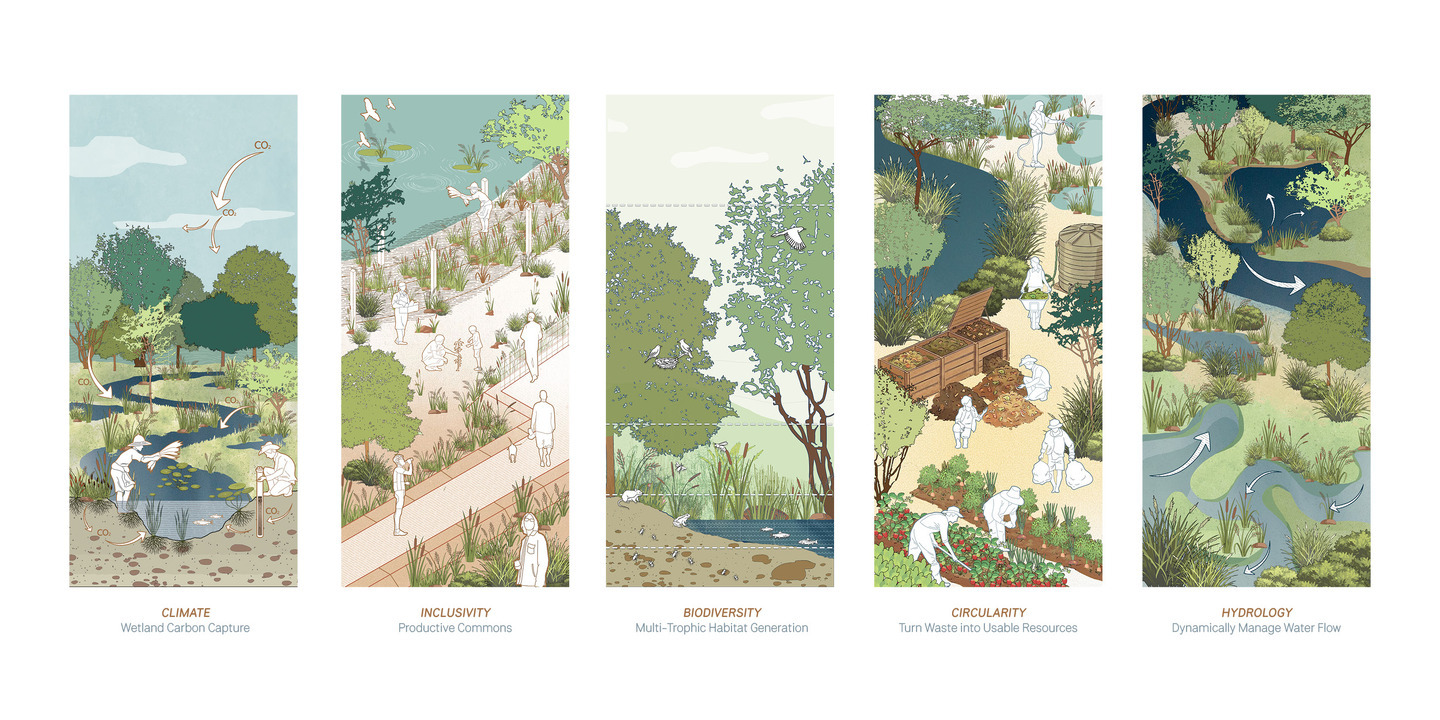
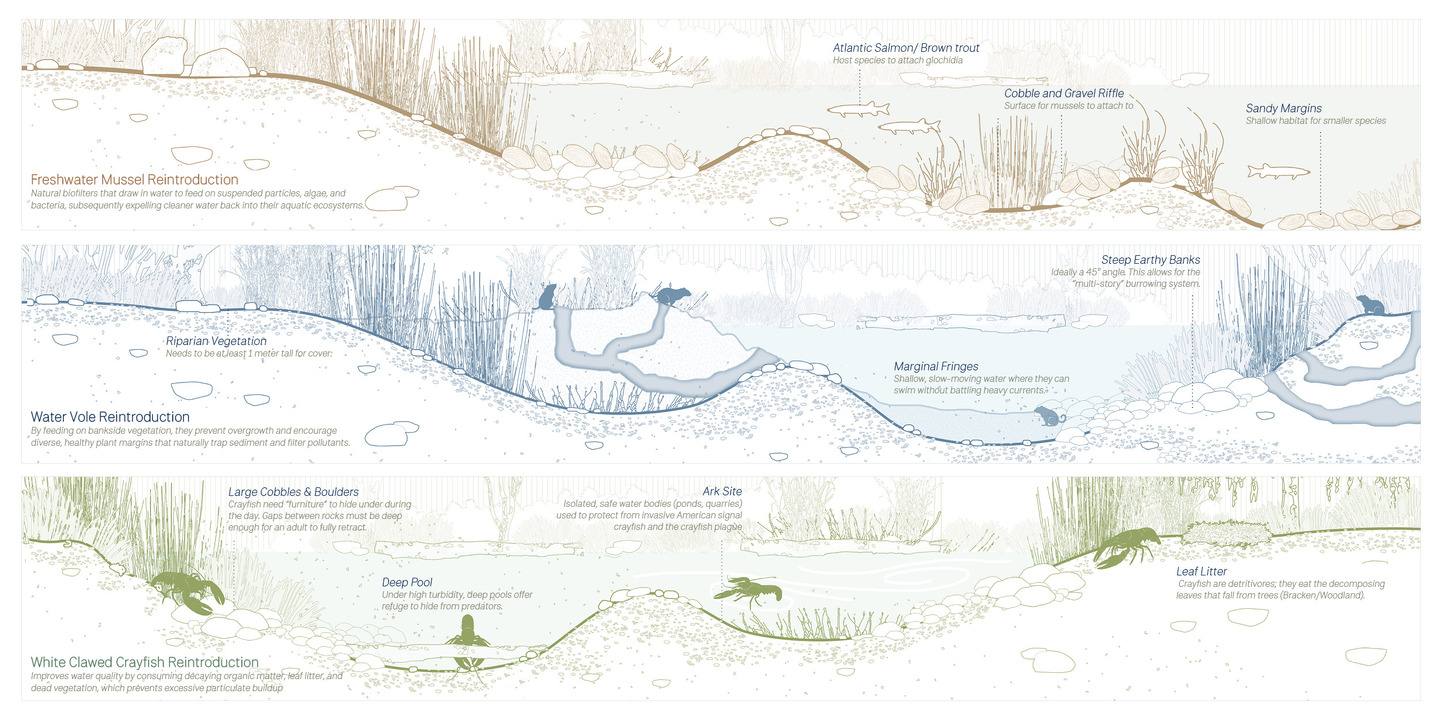
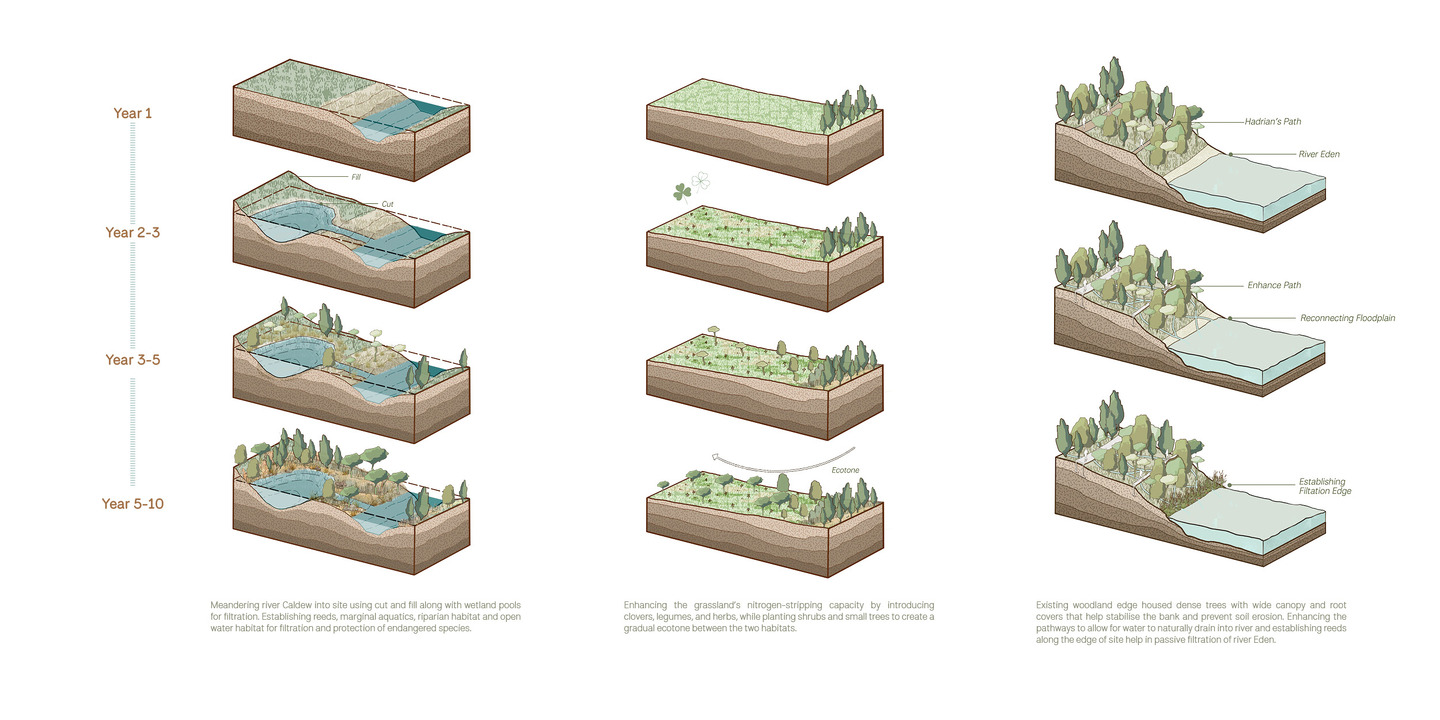
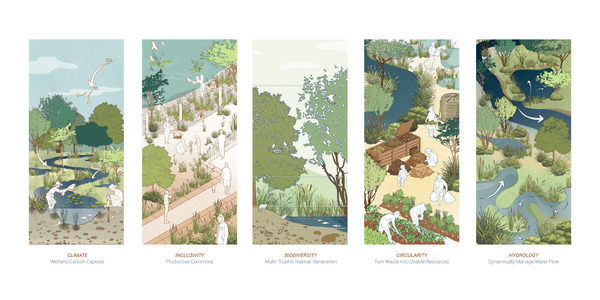
The layout also establishes a habitat succession gradient, transitioning from submerged aquatic zones to terrestrial mixed woodlands. Strategically engineered to support target endangered and bio-indicator species such as the white-clawed crayfish, freshwater mussels and water voles. The park reinforces ecological loops to drive local ecotourism and green finance via BNG, carbon, and nutrient credits.
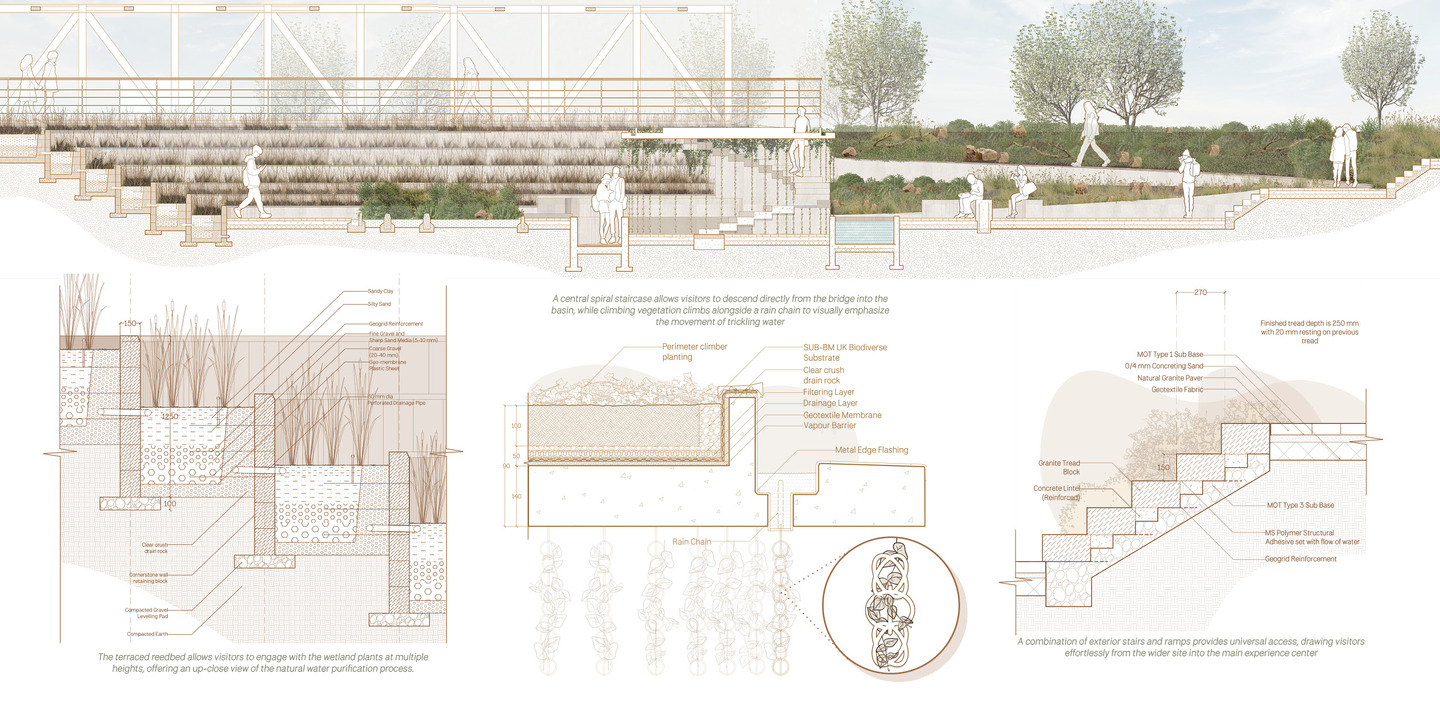
Interventions such as a vertical-flow Reedbed Education Zone terrace, an elevated timber watchtower, human-scale water-level indicators, and conceptual seating are designed to educate the public on regulatory constraints and the actions they can take to combat them. This transforms a critical infrastructure asset into a highly interactive, legible "living science" sanctuary.