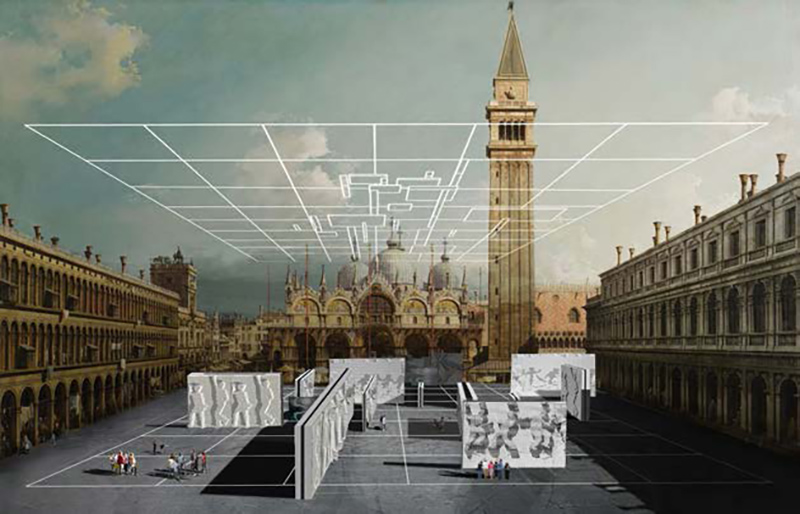


We are poised on a threshold where systematic and holistic ecological models will promote a paradigm shift in the concept of development. This qed has applied to the contexts of air, land and water. The atelier is concerned with the operation of buildings over time; employing the four T's (topos, typos, tectonics and time) in the generation and evolution of the communicated design. This is framed within strategic parameters of sustainability the four E's (equality, economy, environment and evolution). As a result the unit agenda promotes simulation as a point of departure for conceptual thinking and a methodology for presenting the flow of design construction, use and adaptation.
Rethinking the ecology of building and landscape use and the instrumental competence of materials, construction and environmental systems in an increasingly urban world is a critical aspect of the unit agenda. Understanding the concept of ecology promotes the development of strategic attitudes to sustainability and ecologically viable approaches to building design, use and adaptation that meet the challenges or exceed the expectation of aspirations for our relationship with the environment in a global ecology.
qed enters international competitions and employs live scenarios as an embedded part of the learning culture to develop the acuity of student understanding in a global discourse on sustainability. This approach also reinforces excellence in the communication of research led design consistent with professional aspirations.

